

Drain Line Repair Huntington Beach
Drain line repair in Huntington Beach is for when a drain problem isn’t just a clog anymore. If the same line keeps backing up, you’re seeing leaks under the house or slab, you smell sewer odor near one area, or a camera shows a break, offset, sag, or root intrusion, repair is usually the right next step. Also, when a home has no usable clean outs or access points, reaching the problem can take longer and require extra setup—so part of our job is making the repair serviceable for the next time you need drain work.
Your Home First: shoe covers on, floors protected, and we keep the work zone tight and tidy while we diagnose and repair. Then we do a clear walkthrough with you at the end—what we found, what we repaired, and what to watch for going forward.
This page is about drain line repair in Huntington Beach, not a full sewer replacement or a remodel.
Fast Clues (Before You Scroll)
If you clear a clog and it comes right back, the line may be damaged or holding debris in a low spot.
If multiple fixtures back up together, the issue is often in a main branch or main line section.
If a camera shows a crack, belly (sag), offset joint, or root entry, clearing alone usually won’t last.
Tap to Jump
- Quick Answers
- What “Drain Line Repair” Usually Means
- Signs You Might Need Repair (Not Just Clearing)
- Problems We Commonly Repair
- Pipe Types + Typical Repair Time
- How We Confirm the Real Cause
- Repair Options (Without the Long Lecture)
- What We Do to Keep It Serviceable
- Common Mistakes That Make It Worse
- Huntington Beach Notes
- Related Drainage Services
- Online Booking + Contact
- FAQs
Quick Answers
Most area drain problems are either a clogged inlet/drain box, a line packed with sediment, or a blocked outlet.
If the drain “works” for a minute and then backs up, the pipe is often restricted farther down.
If the pipe is crushed or separated, cleaning alone won’t hold and a repair is usually the real fix.
What “Drain Line Repair” Usually Means
A drain line carries wastewater from sinks, tubs, showers, toilets, and laundry to the main sewer connection. When that pipe is damaged or poorly sloped, you get repeat problems.
Drain line repair can involve:
- Replacing a damaged section of pipe
- Correcting a misaligned or separated joint
- Fixing a sag (belly) that holds water and debris
- Sealing or replacing fittings that leak
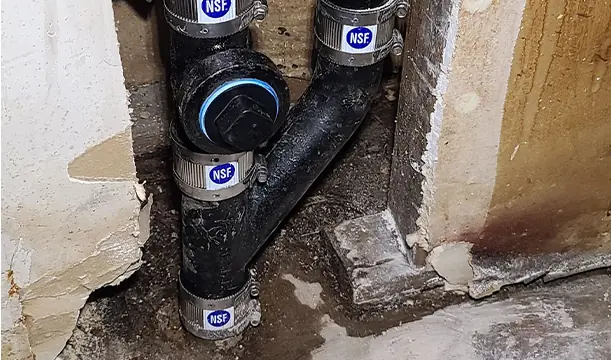
- Adding clean out access so the line can actually be serviced
Signs You Might Need Repair (Not Just Clearing)
- Repeat stoppages in the same area: If you clear a kitchen line or bathroom line and it clogs again soon, something is usually catching debris.
- Slow drains across multiple fixtures: When more than one fixture is slow, the restriction may be deeper in a shared branch or main line.
- Odors that keep coming back: Sewer odor near one area can point to a broken line, a loose joint, or a leak allowing gas to escape.
- Wet spots, soft ground, or unexplained moisture: Moisture under a cabinet is one thing, but wet areas around the home can be a drain leak that needs repair.
Problems We Commonly Repair
- Cracked or broken pipe
Cracks can catch debris and leak. Breaks can collapse a section and create a constant backup point. - Offset joints or separated connections
This is when two pipe sections aren’t lined up. A cable may pass through, but waste gets hung up. - Belly (sag) in the line
A low spot holds water and solids. You can clear it today and still have the same issue next month. - Root intrusion
Roots often enter at joints and cracks. Clearing roots is temporary if the opening stays there. - Corrosion and rough interior pipe
Older pipe can build up scale and roughness that grabs debris and reduces flow.

Pipe Types + Typical Repair Time
Most drain line repairs depend on what pipe you have (ABS/PVC plastic, cast iron, or clay) and how easy it is to reach the damaged section. Many spot repairs are often done the same day when access is straightforward. If the line is under concrete, tight crawl space, or needs a slope correction, it can take longer—sometimes 1–2 days—based on what we find on-site.
How We Confirm the Real Cause
We keep diagnosis practical and visual.
- We ask what fixtures are affected and when it happens
- We check access points (clean outs, vent access, fixture access)
- When needed, we recommend a sewer line video inspection to confirm what’s actually happening before repairs start
If you want the inspection path, here’s the related page:
https://profplumbinc.com/huntington-beach-plumber/drainage-service/sewer-line-video-inspection/
Repair Options (Without the Long Lecture)
Every home is different, but the options usually fall into a few buckets.
- Spot repair: Replace or repair the damaged section and reconnect cleanly. This is common when the rest of the line is in decent shape.
- Re-slope / belly correction: If the problem is a sag, the fix is usually correcting the grade so water and waste move the way they should.
- Root-entry repair: Remove the root access point by repairing the joint/section where roots get in, then confirm flow with water testing.
- Access improvement: If there’s no usable clean out, we often recommend adding access as part of the repair so future drain clearing doesn’t turn into a bigger project.
What We Do to Keep It Serviceable
Drain repairs shouldn’t make the next service call harder.
- We aim for clean, reachable access points when the layout allows
- We keep connections aligned so they don’t become “catch points”
- We leave the area clean and explain what the repair changed (and what it didn’t)
Need a Local Plumber In Huntington Beach?

Professional Plumbing provides free inspections for current homeowners during business hours. A small fee applies for homes in escrow or for sale; this fee can be credited toward repair costs if we’re hired.
Common Mistakes That Make It Worse
- Chemical drain cleaners: They can damage pipes, especially older lines, and they rarely fix a mechanical problem like an offset or belly.
- Over-cabling the same spot: Repeated aggressive snaking can damage weak pipe or worsen a crack, especially if the line is already compromised.
- Ignoring early warning signs: A line that backs up “once in a while” often becomes a line that backs up at the worst time.
- Burying access: If a clean out is installed but ends up hidden or blocked, it doesn’t help when you actually need it.
Huntington Beach Notes
Huntington Beach has a mix of older homes and newer layouts, and drain systems vary a lot by build era. The smartest drain line repairs are the ones that fix the real restriction and keep the line serviceable—so future drain clearing or camera work is straightforward instead of disruptive.
Related Drainage Services
Online Booking + Contact
Book online: https://profplumbinc.com/huntington-beach-plumber/book-online/
Call: (657) 272-7713
Address: 9631 Sailfish Dr, Huntington Beach, CA 92646
Hours: Mon–Sat 8am–5pm (Emergency service available 24/7)
Drain Line Repair FAQs
If clearing fixes it and it stays clear, repair usually isn’t needed. If it clogs again quickly, affects multiple fixtures, or a camera shows a break, belly, offset, or roots, repair is often the smarter fix. The goal is to stop the repeat problem, not just push it down the line.
Yes, a lot of drain problems are localized. A spot repair, joint correction, or belly correction can solve the issue when the rest of the line is in decent shape. A camera inspection helps confirm whether a targeted repair makes sense.
A belly is a low spot where water sits instead of flowing out. That standing water holds solids and sludge, which causes repeat clogs and slow drains. Clearing may give short-term relief, but the long-term fix is correcting the slope.
Not always. Roots usually enter through a weak joint or crack. If we can repair the entry point and confirm flow, you may not need a full replacement. If the line is heavily damaged or collapsing in multiple areas, bigger work may be the right answer.
Sometimes, depending on where the damaged section is located. Many repairs can be planned to minimize disruption, but access and pipe location matter. We’ll explain the approach before work starts so there are no surprises.
Usually no. Chemicals don’t fix broken pipe, offsets, bellies, or root entry points, and they can be harsh on older plumbing. If you’re seeing repeat backups, it’s better to confirm the cause and fix it correctly.
Many repairs can be completed in a day, but it depends on access, pipe material, and location. If we’re correcting a slope or working in a hard-to-reach area, it can take longer. We’ll set expectations after we diagnose and choose the repair plan.
Yes. A usable clean out makes future drain clearing and camera inspections faster, cleaner, and more predictable. If your home has poor access, adding a clean out during repair can reduce headaches later.