

Plumbing repair service in Orange County: what we fix and how we work
William Horsky founded Professional Plumbing, Inc. in Orange County in 1985. The company holds California Contractors State License Board license 517514, classification C-36.
What this article covers
You hear a drip you cannot stop. A toilet that flushes itself in the middle of the night. A small puddle under the kitchen sink that was not there yesterday. A faucet handle that turns and turns without shutting the water off. These are the moments a homeowner reaches for a plumber.
Plumbing repair service is what we do when a piece of your home’s water, drain, or fixture system needs to be taken apart and put back together to stop a leak, restore function, or remove a failed part. The work covers a wide range of jobs, from a five-minute flapper swap on a toilet to a full pressure-regulator replacement at the front of the house, and it sits at the heart of what a residential plumber does day to day in Orange County.
Key Takeaways
- Plumbing repair service covers any plumbing work that involves taking something apart to fix or restore an existing system.
- Hard Orange County tap water, common in the 8 to 19 grains-per-gallon range, accelerates wear on angle stops, aerators, and shower valves.
- Most under-sink leaks start small and become cabinet damage because nobody looks under the sink for months.
- Pressure regulators fail open, so a failed regulator can let full city pressure into a home and cause supply lines to leak or blow off.
- If a repair quote comes in at $2,500 or more, you have the right to a free second opinion before signing.
What repair service covers in our work
Repair work, the way we use the term, is any plumbing job that involves taking something apart to fix or restore an existing system. That includes water lines, drainage at the fixture level, irrigation valves, and even compressed-air lines on a repair basis. A leaky faucet, a dripping hose bib, a fallen garbage disposal, a split copper line in the attic, a corroded angle stop under a sink, a failed pressure regulator at the front of the home all sit inside this category.
Some categories that sound like repair are routed to other parts of our service map. Natural gas work, including a leaky flex connector on a range or water heater, falls under our natural gas service. Slab leaks, water heater replacements, main-line drain and sewer work, and fresh fixture installations each have their own service line. The clean test we use on every call is straightforward: if the work involves taking something apart to fix an existing system and it does not belong in one of the other six categories, it is a repair.
We do not work on fire sprinkler systems, which require a separate license. We do not work on medical gas systems, which also require a license we do not carry. Irrigation sprinkler valves at the front of a residence are in scope. Fire sprinkler valves are not.
Why repair work looks the way it does in Orange County
Three local factors shape the repair calls we run on a typical week.
Water hardness. Orange County tap water runs at roughly 8 to 19 grains per gallon, with the regional average closer to 13. That mineral content builds scale inside aerators, on the seats of angle stops, inside cartridge faucets, and around the impeller of a recirculation pump. A hard-water home produces predictable repair work over decades, especially on the small valves and stops that touch water every day.
Housing eras and pipe materials. Homes built before roughly 1965 in Orange County often have galvanized steel branch piping feeding individual fixtures. The galvanized nipples that come out of the wall behind a sink corrode from the inside, lose their inside diameter to scale and rust, and eventually leak. From the mid-1960s onward, copper became the standard, with some homes from the 1970s and 1980s using thinner Type M copper that has aged out earlier than the heavier Type L. Homes built between roughly 1978 and 1995 sometimes have polybutylene water service running from the meter to the house, which the section below covers in detail.
Climate. Orange County does not have the freeze-thaw cycles that wreck plumbing in colder regions, and we do not have the wide seasonal temperature swings that strain plastic pipe. Most of the repair work we run traces back to age, water chemistry, or original-installation choices, not weather.
The common repair calls we run in an average month
These are the bread-and-butter repair calls we handle, in roughly the order of how often they come in.
1. Toilet repairs and resets
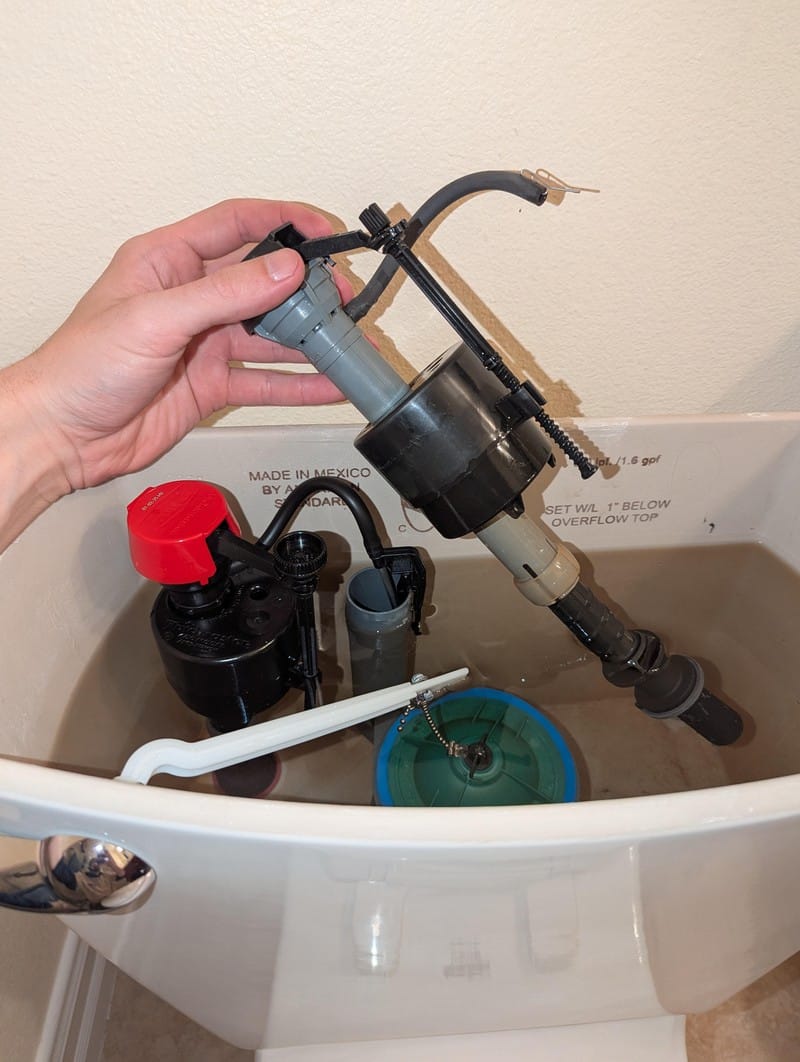
The most common toilet calls are a flapper that is letting water seep from the tank into the bowl, a fill valve that is running on, or a toilet that has loosened from its wax seal at the floor.
When we arrive on a toilet call, we check everything before we recommend a part. The supply line, the tank-to-bowl gasket, the flush handle, and the bolts at the floor all matter, and a homeowner who thinks “it is probably just the flapper” is usually right but not always. Most of the time the fix is a flapper plus a fill valve. Sometimes the right answer is a toilet reset, which means lifting the toilet, replacing the wax seal, and bolting it back down so it sits tight to the floor.
One firm line on toilets: if the porcelain has a hairline crack anywhere in the tank or the bowl, we will not touch the repair. The toilet has to be replaced. A cracked porcelain toilet under pressure from a fill valve is a flooding event waiting to happen, and no rebuild is worth that risk to the home.
In William's voice
When somebody calls about water around the base of their toilet, we always ask one question before we head out: do you have a small dog? Sometimes the dogs smell the humans there and decide to mark that territory. The actual problem is that the dog is peeing on the toilet, and there is nothing wrong with the wax seal. We have saved a lot of customers a repair call by asking that one question first.
2. Drippy faucets
Most faucet drips today trace back to the cartridge, the small replaceable insert that controls water flow inside the body of the faucet.
Different brands behave differently when it is time to repair. Moen faucets are generally easy to repair if the technician has the right cartridge puller. Kohler faucets we approach differently: we ask the homeowner to send us a photo so we can identify the cartridge, then we tell them to call Kohler directly. Kohler regularly sends out replacement cartridges at no charge, and we come back to install it. That workflow saves the homeowner the cost of the part on every Kohler call where the cartridge would otherwise run $50 to $200. Price Pfister cartridges typically need a new stem or a new seat, both of which are straightforward.
Delta cartridges have become difficult to repair with after-market parts, and the parts we have access to do not hold up the way the original-equipment parts did. For that reason, we no longer warranty Delta faucet repairs the way we warranty Moen, Kohler, or Price Pfister work. We tell the homeowner that up front before we touch the faucet, and the decision on whether to repair or replace stays with the homeowner.
3. Angle stops and washing-machine valves
Angle stops, the small shut-off valves under sinks and behind toilets, are throwaway items. When one starts to leak or gets too hard to turn off, the right move is to pull the old valve out and put a new one in. Rebuilding an angle stop is a waste of the customer’s money. The same applies to washing-machine valves and to the small in-line shut-offs that feed icemakers and dishwashers.
The risk on these jobs is the line above the valve. On older galvanized supply piping, the act of turning a corroded angle stop hard enough to remove it can twist the galvanized nipple in the wall above, which moves the failure from a five-minute repair to a wall-opening repair. We always warn the homeowner before we touch any valve on an older galvanized system. The repair-vs-replace section below covers this in detail.
4. Leaks under the kitchen sink
The most common cause of a leak under a kitchen sink is the garbage disposal. The disposal moves slightly every time it cycles on, and over months that movement loosens the slip-joint connections on the drain side. The pipes come apart at the rubber washers, and water drips into the cabinet.
Other common causes under a kitchen sink: a corroded galvanized nipple coming out of the wall on an older home, a basket strainer that has come loose at the sink, an air gap on a dishwasher that is overflowing, a supply line at the faucet that is weeping at the connection, and the underside of the faucet body itself. Our diagnostic workflow under a kitchen sink is to clear out whatever the homeowner has stored under there, get a flashlight on every connection, run the disposal, run the dishwasher, run both faucet handles, and watch where the water is coming from. Sometimes the answer is as simple as tightening a slip-joint nut that has worked loose.
5. Hose bibs that drip
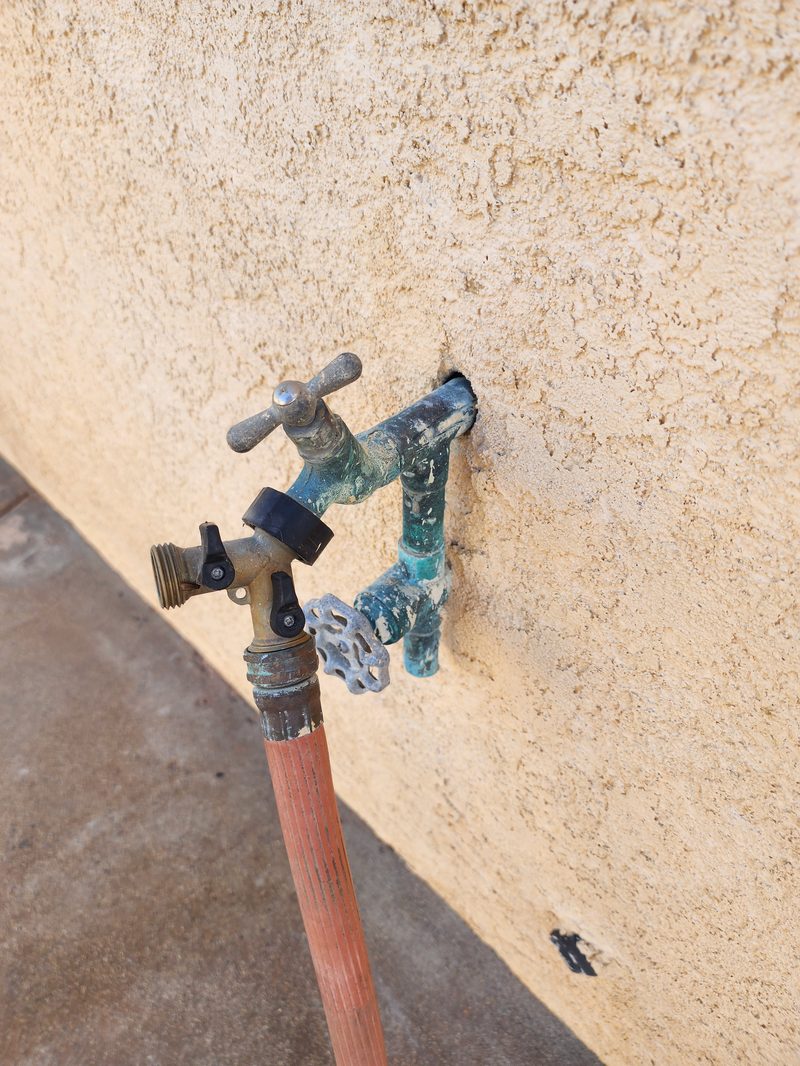
Hose bibs, the outdoor faucets that connect to a garden hose, drip when the washer at the seat wears out or when the packing nut at the handle gives up. On a newer hose bib we can sometimes rebuild it. On an older one, the body itself is corroded enough that replacement is the right move. The job is short either way: shut the water off at the main, swap the hose bib for a new one or rebuild the existing one, turn the water back on, and test.
6. Larger fixture repairs
Some repairs are larger than a flapper swap but still sit inside the repair category. Replacing the waste-and-overflow assembly on a tub is one example. The hardware behind the tub spout, the overflow plate, and the drain that runs down through the floor all connect to a single brass or PVC assembly that ages over decades. When it leaks, the repair involves removing the tub spout, removing the overflow plate, getting at the connection inside the wall, and either rebuilding the assembly or replacing it. Air-gap overflow at the dishwasher-disposal connection is another example. The fix involves clearing the gap, checking the disposal inlet, and reseating the air gap so that water no longer spills onto the counter.
Less common repair calls that catch homeowners off guard
The repairs in this section show up less often than the ones above, but they are some of the most consequential calls we run.
Pressure regulator failures
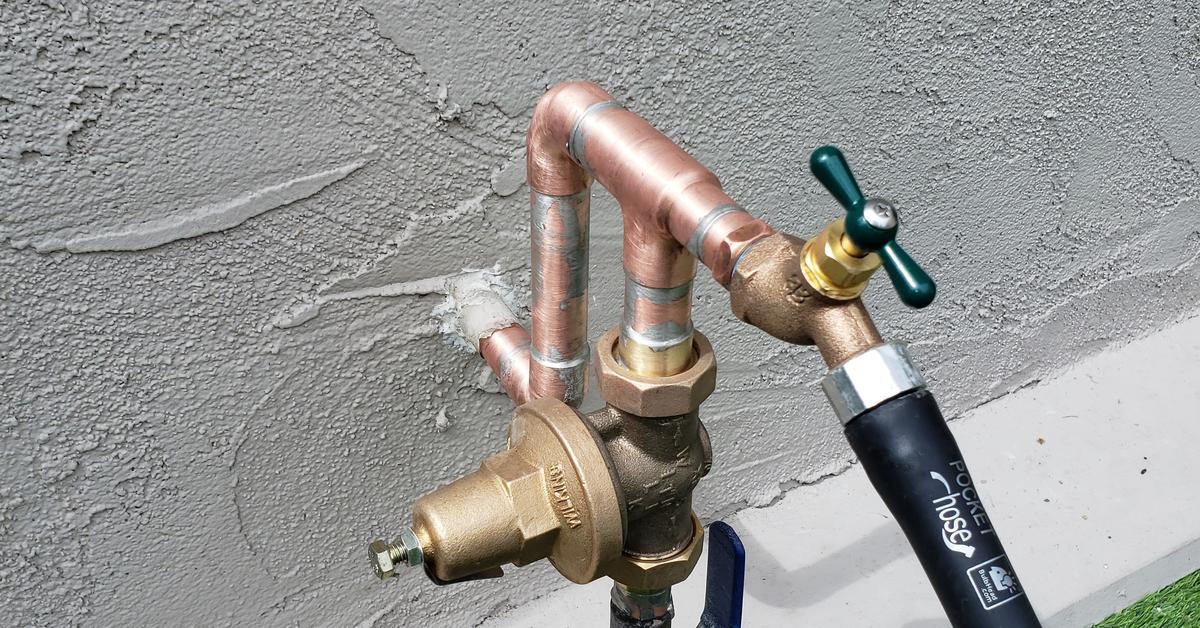
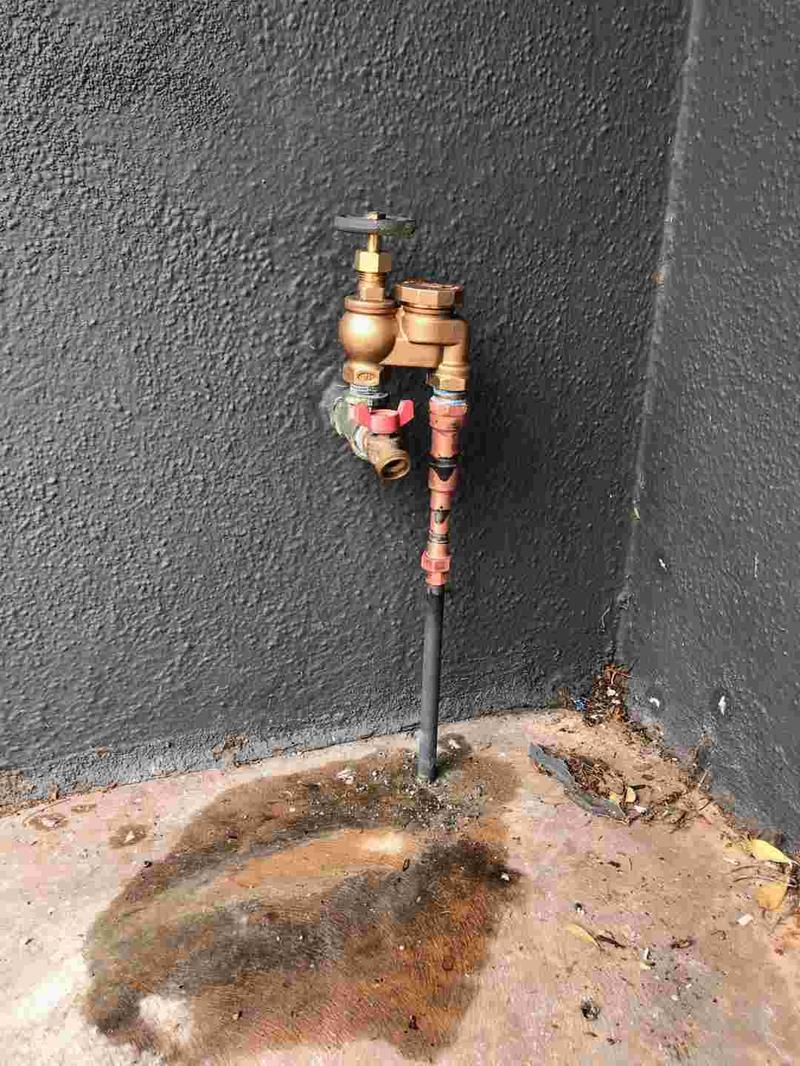
A residential pressure regulator sits at the front of the house, near where the water service comes in from the city main. The regulator throttles the city’s pressure down to a usable range for fixtures and appliances inside the home. When a regulator fails, it usually fails fully open, which means the home suddenly sees full city pressure.
California Plumbing Code Section 608.2 requires a pressure regulator on any building where static water pressure exceeds 80 psi, and the code caps the post-regulator pressure at 80 psi or below. Manufacturers like Watts and Wilkins recommend setting the regulator between 45 and 65 psi for the best balance of usable pressure and long fixture life, though the specific setpoint is a manufacturer recommendation, not a code requirement.
The reason a failed regulator matters is water hammer. When a dishwasher solenoid or a washing-machine fill valve closes suddenly against high static pressure, the pressure spike traveling back up the supply line can reach several hundred psi. The Joukowsky equation, which engineers use to predict water hammer, shows spikes commonly in the 300 to 500 psi range for residential systems at 80 to 100 psi static. Sioux Chief, a manufacturer of water hammer arresters, uses 400 psi as its design test spike. At those pressures, supply lines either leak at a fitting or blow off entirely, and both happen in homes with failed regulators.
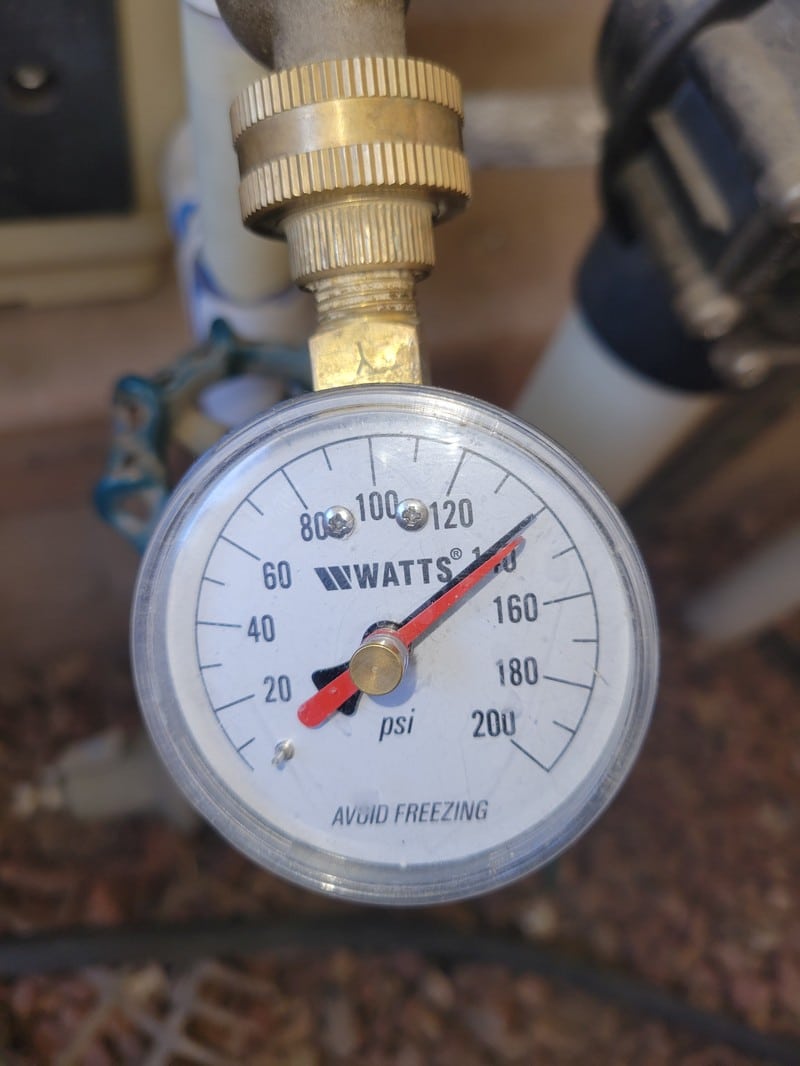
Because the cost of a missed regulator failure is so high, we now take a water pressure reading on every house we work on. A reading above 80 psi is the trigger to talk with the homeowner about a regulator replacement before something fails downstream.
Recirculation pump failures
A recirculation pump moves hot water through a closed loop in the home so that hot water arrives at the fixture faster when a tap opens. When the pump fails, the symptom most homeowners describe is “I have always had hot water at my shower, and now it takes a while.” The diagnostic is fast, and the repair is a pump replacement.
Expansion tanks
An expansion tank absorbs the pressure increase that happens when water inside a closed system heats up. Most older Orange County homes did not have one, but newer plumbing rules and the spread of backflow preventers and check-valve pressure regulators have changed the picture. Without somewhere for the thermal expansion to go, the pressure inside a closed system builds, and the strain shows up in supply lines, fixture seats, and the water heater tank itself. We now install expansion tanks on a meaningful share of jobs that involve replacing or working on the water heater or the pressure regulator.
Polybutylene water services
A polybutylene water service is the section of plastic pipe that runs from the meter to the house on homes built roughly between 1978 and 1995. The material was used widely as a budget alternative to copper for water service lines, and the 1995 class-action settlement against the manufacturers led to its phase-out.
The failure mode on polybutylene is the seam. The pipe was extruded with a seam running the full length, and when the seam fails, the pipe splits along that seam. The reason a spot repair will not hold on a failing polybutylene service is that the seam runs the entire length of the pipe. A patch in one spot leaves the rest of the seam in the same condition, and the next failure happens somewhere else along the same run. The honest answer for a homeowner with a polybutylene service that has started to split is replacement, not repair.
Mystery odors and broken vent lines
Some of the hardest plumbing diagnostics are the ones where the homeowner reports a smell and the source is not obvious. The vent system, the network of pipes that runs from each fixture drain up through the roof, can fail in places that nobody looks at for years.
In William's voice
We had a restaurant call us about a bad smell they could not figure out. We walked through the whole place trying to find it. Eventually we crawled up into the attic above the bathroom and found a broken vent line in the ceiling. When they turned on their exhaust fans, it literally sucked the sewer gases into the unit and the whole building stunk. We had to crawl all over their attic to finally find that one.
How a repair call works, from arrival to written price
The first thing we do on a repair call is talk with the person at the home. The homeowner has information we cannot get from looking at the problem on our own: how long the issue has been happening, when they first noticed it, any sounds, any smells, anything they have already tried. Those answers shape the diagnostic and often shorten it.
After the conversation, we look at the problem. If we can see what is wrong and we know what the fix is, we give the homeowner a price for the repair on the spot. That estimate is free during normal business hours. Estimates of work we can see and price on site are part of how a free-estimate plumber serves a homeowner, and there is no charge to the customer for that visit.
If finding the problem requires a tool to come off the truck, the conversation changes. The moment we need a camera, a leak detection unit, a pressure-decay test, or any tool that takes a tool to remove something else, the visit moves from a free estimate to a billable diagnostic. We always talk with the customer before the charges start. The diagnostic fee is quoted in writing, the customer agrees in writing before we begin, and the customer is on the hook for the diagnostic fee whether or not they accept the repair. If they decline the repair after the diagnostic, all they owe is the diagnostic fee.
The repair itself is quoted in writing before any repair work starts. Once the customer accepts the repair price, the work begins. If a small repair turns out to require additional parts or additional time once we have the system open, we stop, talk with the customer, and update the written price before we proceed.
Arrival windows and after-hours work
During normal business hours, we give a two-hour arrival window. We believe the customer’s time is as valuable as ours, and a two-hour window respects that. We send a text and call when the truck is on the way, usually 20 to 30 minutes out, so the homeowner can run a quick errand and still be back before we arrive.
After hours and on Sundays, we narrow the window to one hour. When a customer is paying after-hours rates for an emergency, sitting around waiting is not part of the deal. The honest version of how this works at 2 or 3 in the morning is that we are a family-owned business, and we are not sitting up all night waiting for a call. A middle-of-the-night call needs a little extra time for the technician to wake up and get on the road, and we tell the customer that up front when they call.
After-hours and Sunday calls require a credit card deposit covering the minimum charge for the visit. The deposit amount is communicated to the customer before the card is charged and before the technician is dispatched. The deposit covers the overtime fee and the diagnostic work. Until the customer accepts the repair quote, all they owe is the overtime charge they already approved. If the repair can wait until normal business hours, we tell the customer both prices, the wait-until-morning price and the do-it-now price, and the choice stays with them.
Why we quote a flat price up front
Most homeowners eventually ask the same question: would the job be cheaper if you billed by the hour? The honest answer is no, and the reason is California Business and Professions Code Section 7159, which requires contractors to provide a written contract with the total price for any residential home improvement project where the combined cost of labor and materials exceeds $500. Flat pricing in writing is the law on most jobs, and even on smaller jobs it is the practice we apply across the board.
Two natural follow-up questions come up. What if you finish faster than expected? You still pay the quoted price, which is part of why flat pricing exists. What if it takes longer? You still pay the quoted price, which is why customers want flat pricing once they understand it. The price you accept in writing is the price you pay.
Repair or replace: how we handle the harder conversations
Some repair calls turn into a different conversation once we open things up. Galvanized supply lines, aging fixtures with parts no longer made, and toilets that have been rebuilt more than once or twice are the most common situations where “fix this one thing” becomes a real choice between continuing to repair and starting fresh.
Galvanized water lines: the warning before we touch anything
Galvanized water lines are old by definition. The threads at every fitting are corroded together, and the pipe upstream and downstream of any one fitting is just as brittle. Trying to twist a fitting loose without holding the pipe steady can move the run on either side and create new failures at fittings the homeowner did not call us about.
Before we put a wrench on any galvanized fitting, we tell the homeowner what could happen. The repair could go cleanly, in which case we tighten the connection or swap the fitting and we are done. The repair could also surface new failures upstream or downstream, in which case the small job becomes a larger one. The customer makes the call before we start. To be honest, we do not love chasing galvanized pipe. It is dirty work, it is slow, and the homeowner does not enjoy the cost when it grows. The repair-vs-replace conversation on a galvanized system is one we have often, and the answer for many homeowners is to plan a re-pipe rather than to keep paying for spot repairs that compound the next failure.
Our technicians have been doing this work for ten years or more. In most cases they see the trouble before they touch it and warn the customer before any tool comes out.
When a homeowner asks to replace something that does not need replacing
The other direction of the same conversation happens too. Sometimes a homeowner calls and asks us to replace a fixture that they have already bought, and once we get there, we see that the existing fixture only needs a repair.
In William's voice
Sometimes the owner already knows the fixture did not need replacing. They just did not like the way it looked or the way it worked. Other times they did not know there was an easier repair, and sometimes they just do not want to take the new product back to Home Depot. We always let the customer know if there is a less expensive repair available and let them make a decision on their home. We do not assume they did not know. We assume they made an informed decision and chose replacement, but we do not want to do the replacement unless they are absolutely aware that other options exist.
Tell it like it is. If the repair is going to be more expensive than replacing the fixture, or if the parts for the fixture are no longer available, then we give them options. We have had customers spend thousands of dollars to repair fixtures because they liked the look of what was there. We have had others spend thousands of dollars getting rid of fixtures that worked perfectly well. Either choice is theirs to make. Our job is to make sure they know what the options are.
A standard on rebuilds
If a toilet has been rebuilt twice and still leaks, the toilet is trying to tell you something. The tank-to-bowl gasket is wearing, the flush valve mating surface may be worn, the porcelain may have a hairline crack that nobody has caught. A toilet should not have to be rebuilt three times. When the rebuild count climbs, the conversation moves from “another rebuild” to “let us look at replacing this one.”
DIY guidance and the phone-help offer
Some plumbing repairs are safe and reasonable for a homeowner with basic tools. Cleaning or replacing a faucet aerator. Swapping a toilet flapper or fill valve. Tightening a visible compression fitting. Pulling a P-trap to clean it out under a sink. Resetting a garbage disposal at the bottom button when it hums but does not spin. Identifying the location of the main water shut-off so it can be reached in an emergency.
Honest opinion on DIY work: if we can do a small repair, chances are most homeowners can do it too. We have more training, more practice, and the right tool for each job, so we do the work faster and with fewer surprises. The reason to call a plumber on a small job is the speed and the certainty, not because the homeowner could not do the work themselves.
What does not belong in DIY scope, regardless of what a YouTube video suggests: any natural gas work, any work inside an electrical panel, water heater installation, slab leak repair, sewer line repair, whole-house or partial re-piping, backflow assembly installation or testing, and anything that requires a permit. Permits exist to protect the consumer, and the permit process catches mistakes that would otherwise compound silently inside walls and floors. If a homeowner is unsure whether a job needs a permit, the right move is to ask before starting. We can usually answer that question on the phone in two minutes.
When a DIY project needs a second set of eyes
Not every plumbing question is worth the cost of a service call. If you are partway through a project and need someone to talk through the next step, we are happy to help by phone. We like to help our community, and giving you that little push to get the job finished is part of how we do that. Give us a call.
Permits and code
Major plumbing work in California requires a permit, and the permit exists to protect the consumer. Pulling a permit means the work gets inspected at the right stages, and a problem caught at inspection is far cheaper than a problem found years later inside a wall.
On a small repair call, the cost of pulling a permit can be more than the repair itself, which would not serve the homeowner. On those small jobs, we tell the customer what the permit requirements are and let them decide whether to pull a permit themselves or to proceed without one. Each Orange County city handles the permit process slightly differently. Some cities accept online filings for most plumbing permits, others require an in-person visit. Huntington Beach, for example, lets you apply for permits, pay, and schedule inspections online through its HB ACA system, and Newport Beach offers online permitting through its iPermit portal. Some cities allow homeowners to pull permits directly, others only license-holders. Commercial permit handling is a different process again. The reliable rule is to confirm with your local building department before any major work begins.
When a true emergency repair has to begin before a permit can be pulled, California Building Code Section 105.2.1 allows the work to start, provided the permit application is filed with the local building department by the next working business day. That timing is narrower than many homeowners assume, and it is one of the reasons we work the permit process as part of the job rather than leaving the homeowner to handle it after the fact.
Misconceptions worth pushing back on
A few patterns come up on repair calls often enough to address directly.
“I thought it was easy” and “I thought it was a disaster”
Homeowners regularly call us about a problem they expect to be a quick fix that turns out to be more complicated, and they call us about a problem they expect to be catastrophic that turns out to be a small repair. The pattern works in both directions because nothing about how a plumbing problem looks from outside a wall or a fixture is a reliable predictor of what is broken.
That is the reason we look first, before we quote. A homeowner who has already decided the repair is small and easy can hear the larger picture in plain language when we find something more involved. A homeowner who is bracing for a disaster appreciates a small bill when the real repair is straightforward. Either way, the homeowner gets the truth instead of a guess.
Home warranty companies
Home warranty plans serve a real purpose for some homeowners by capping the immediate out-of-pocket cost on a covered repair. The trade-off built into the home warranty model is that the warranty company contracts with a plumber on a low-payment, high-volume basis, which makes it harder for experienced plumbers to stay in the network for long. Skilled tradespeople move on when the pay does not justify the work. The work the warranty company delivers reflects who stayed.
Beyond plumber turnover, home warranty contracts often have a cap on what the company will pay for any single job, and the homeowner pays the difference. A homeowner whose pressure regulator goes bad and who pays the warranty deductible can still end up paying a large portion of the regulator replacement on top of the deductible if the work exceeds the cap. The Costa Mesa story below is an example of how that pattern plays out.
“If they finish faster, will it cost less?”
Flat pricing on a repair means the price does not change with how long the work takes. We covered this in the pricing section above. The reverse is also true: if a job takes longer than we expected, the homeowner still pays the quoted price. That is the protection the flat-price model gives the homeowner, and it is the reason California Business and Professions Code Section 7159 requires written contracts with total pricing on residential work over $500.
Repair stories from Orange County homes
Real examples from recent jobs across Orange County, anonymized so no specific property can be identified.
Costa Mesa: a pressure regulator and a home warranty quote
We were on a repair call at a Costa Mesa home where the buyers had moved in less than a year earlier. The homeowner’s water pressure reading came back over 90 psi, and we let them know the regulator needed attention. They called their home warranty company, who sent a plumber to test pressure. The warranty plumber’s test read 62 psi, comfortably within range, and the warranty company closed the call.
The homeowner asked us to come back. William personally did a second pressure test with the homeowner watching: static pressure read 94 psi, and the reading dropped into the 60s when the customer turned on a faucet or the sprinklers. The first plumber’s reading was almost certainly taken while a fixture was running, which dropped the dynamic reading into the safe range. The static pressure, which is what the regulator is supposed to manage, was high. The regulator was bad.
Because the warranty company had a cap on what they would pay for any single job, the warranty quote came in at $1,700 over the deductible for the regulator replacement, even though the warranty was supposed to cover the work for the cost of the deductible alone. The homeowner asked us to quote the job. The regulator at this home was a larger size, and even with the upsized part our quote was more than $500 lower than what the warranty company would have charged on top of the deductible.
Unincorporated near Stanton: a fire-hydrant strike on a community well-water system
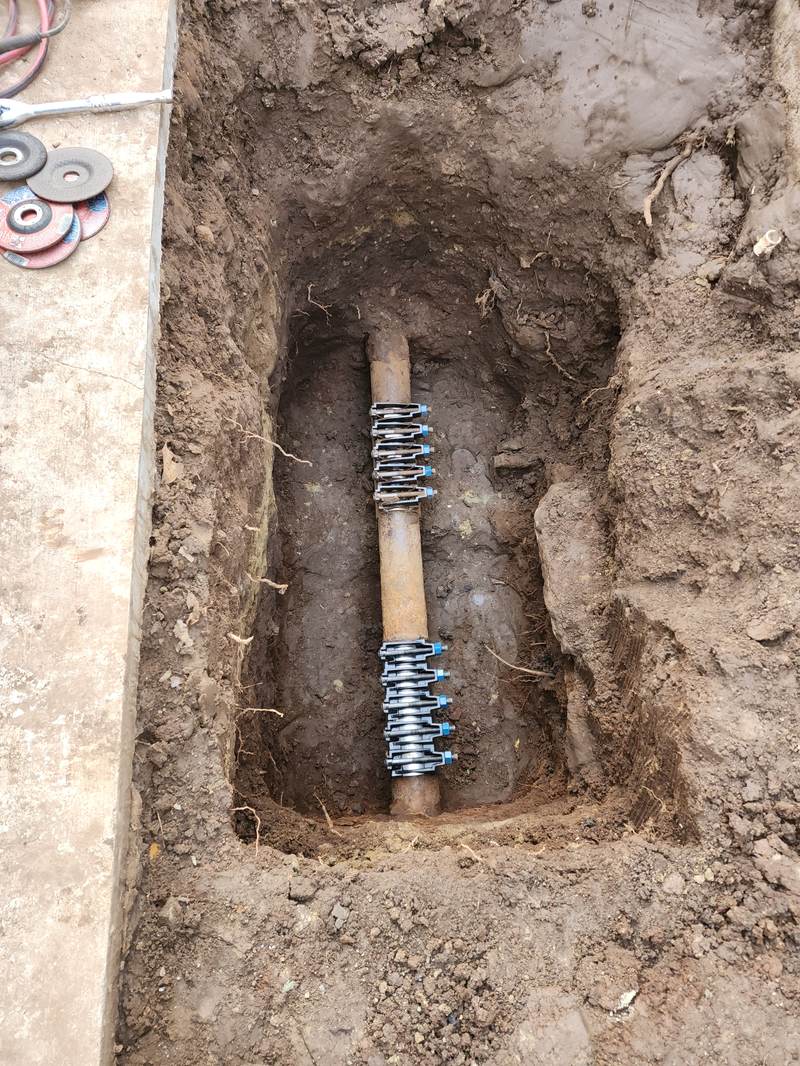
We got a call late one evening from an HOA community in an unincorporated area near Stanton. A police car chasing a suspect had hit a 3-inch fire-plug riser at the property and broken it below ground. A 3-inch supply line is sized for an HOA community, not a single home, and this community ran on a private well-water system rather than a city connection. Well water is more common in unincorporated Orange County than most homeowners realize. The Stanton area, parts of Huntington Beach, and the Cowan Heights area all have properties on well water.
We called in a helper and a second plumber for the dig. The repair had to be made the same night because the community had no other water source for the weekend, and the parts for a 3-inch underground line are not on every truck. We called in favors at a supplier we have worked with for years and got the right couplings and pipe sections to the job. The water was back on for the residents before midnight.
Near Huntington Beach: a well-water tank failure
A homeowner near Huntington Beach called us after his well-water storage tank “blew.” When we arrived, we found an approximately one-inch split along the side of a 5,000-gallon water tank and major leaks on the 3-inch underground galvanized water line that fed the tank. Someone had accidentally overridden the pressure sensor on the pump system, which let the pump run past its cut-off point and over-pressurized everything downstream.
William brought out the portable welder we keep for situations like this and made a temporary weld on the tank to stop the immediate water loss. We put large-diameter repair clamps on the 3-inch lines to seal the leaks. The customer had a working water system again the same day, with a planned follow-up to do permanent repairs on the lines and to replace the pressure sensor.
An Orange County home: water out of the garage that was not a leak
A homeowner called in a panic. Water was pouring out of her garage. We arrived, and she was right. There was water pouring out of the garage door at a steady rate.
In William's voice
Since we weren't afraid of the water, we walked through the water in our little boots. She had a back door from the back of the garage into the backyard. When we opened it, we found about three inches of water in her backyard. She had a pool. And she had a manual pool filler, and she had turned it on the day before to top off the pool, then forgot about it and went to bed.
We could not see the water moving in the pool because the filler inlet was 10 or 12 inches below the rising water line. The whole thing was just dumping water into the pool, the pool was overflowing, and the overflow ran through the backyard, through the garage, and out into the street.
The diagnostic on a call like this is the part that takes the time. Once you know the source is the pool filler, the fix is to shut the valve off. The point of the story is that the symptom and the source were nowhere near each other, and the right answer is to follow the water back to where it starts.
Irvine: a kitchen sink that smelled, and the source under the dishwasher
A homeowner in Irvine called about a smell in her kitchen sink area. Nick, our regional supervisor, was on the job. He ran water, ran the disposal, checked the trap, checked the air gap, checked under the sink, and could not find the source.
Nick decided to pull the dishwasher out from under the counter. Behind the dishwasher, he found that a mouse had chewed an electrical wire, gotten electrocuted, and died in the cavity. The mouse had been there long enough to start to smell, and the smell had migrated through the cabinet into the sink area where the homeowner first noticed it. The dishwasher needed a wire replacement to safely come back into service, and the source of the smell was finally found. Without Nick’s willingness to keep looking after the obvious checks turned up nothing, the homeowner would have spent weeks chasing the wrong problem.
Free second opinion on quotes of $2,500 or more
If you have gotten a quote for a job of $2,500 or more and would like a second opinion, we do them for free. The customer needs to have a written estimate from the other company. Call or ask for details.
In William's voice, on a job in Tustin around 2020
We had a customer in Tustin who got a quote for $15,000 to repipe his house. He was told all his pipes were ruined and the only fix was a full repipe. He called us for a second opinion. This was before we had formalized the free-second-opinion offer, but the work was exactly the same kind of work.
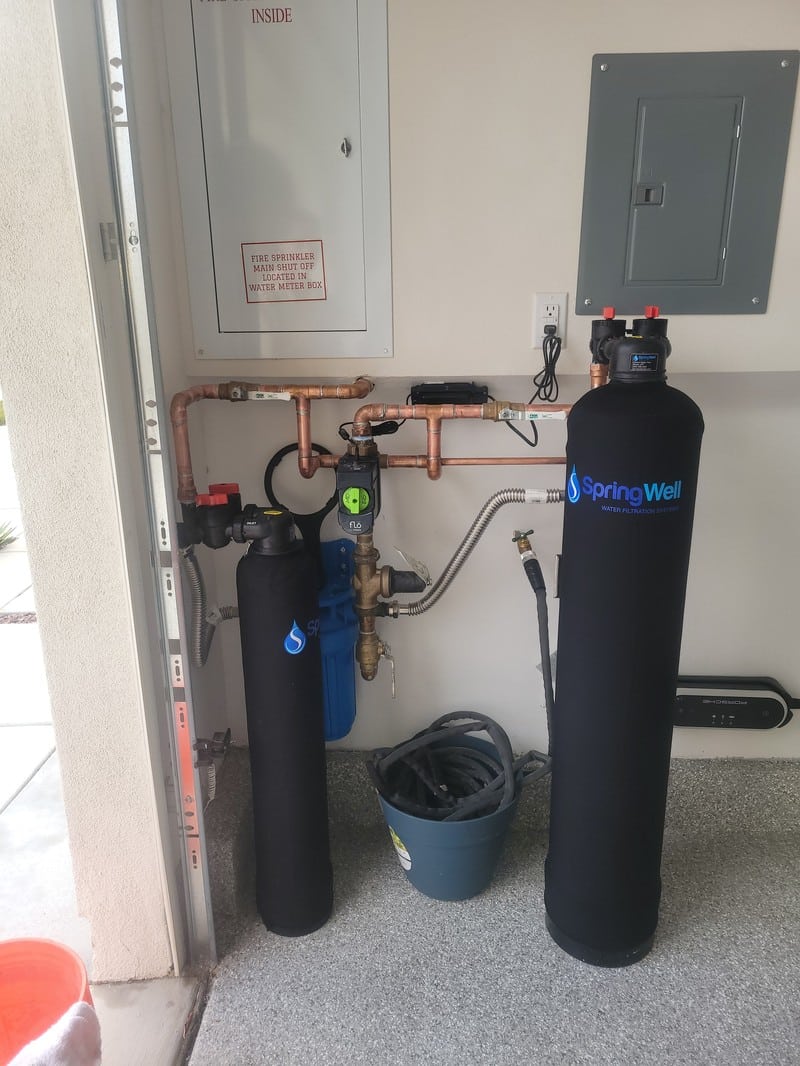
What we found was that his water softener resin bed had cracked. The split in the resin bed had dumped a tank's worth of resin beads into his water lines. Resin beads are small yellow-orange pellets, smaller than a BB. They had clogged aerators, cartridges, and angle stops throughout the house. The pipes were not ruined. The plumbing system was full of beads.
We spent a little over three hours on the job. We bypassed the failed water softener, pulled aerators, ran tubs to flush the system (tubs flush a system faster than anything else because of the larger drain), pulled cartridges, and replaced a few angle stops where beads had collected. The customer's total cost was three hours of our time and a new water softener. Compared to a $15,000 repipe that he did not need, the second opinion saved him well over $10,000.
The customer’s right to a second opinion is in the brand voice for a reason. Plumbing quotes vary, and the cost of getting a major repair wrong is high. A second look from a different shop, at no cost, is one of the most useful phone calls a homeowner can make.
How much does a plumber cost to come out for a small repair?
Repair pricing depends on the specific work, the access required, and the parts needed. For small repairs we can see and price on site during normal business hours, the estimate is free. The repair price is quoted in writing before the work begins, and the price you accept is the price you pay.
When should I call a plumber instead of fixing it myself?
A homeowner with basic tools can handle small reversible repairs like a flapper swap, an aerator clean, a visible compression-fitting tighten, or a P-trap pull. Call a plumber for anything that involves gas, electrical work inside a panel, water heater installation, sewer or slab work, or anything that requires a permit. When in doubt, call us with the question first.
Why does my faucet drip even after I tightened the handle?
Most modern faucets drip because the internal cartridge has worn out. Tightening the handle does not change the worn surfaces inside the cartridge that control water flow. The fix is a cartridge replacement, which most homeowners can do with the right puller, or which we can do as a quick repair call.
What does a pressure regulator do and how do I know mine is bad?
A pressure regulator reduces the high-pressure water coming in from the city main down to a safe range for fixtures inside the home. Signs of a failed regulator include hammering or banging noises when an appliance shuts off, faucets that suddenly run harder than they used to, and supply-line leaks that show up out of nowhere. A pressure-gauge check at a hose bib confirms the diagnosis.
Do I need a permit for a small plumbing repair?
Stopping a leak in an existing pipe or replacing a small part like an angle stop or a flapper does not require a permit in most California jurisdictions. Replacing a concealed pipe, modifying the system, or any major work does require a permit. Each city in Orange County handles the permit process slightly differently, so confirm with your local building department before starting major work.
Is a home warranty company a good way to handle plumbing repairs?
Home warranty plans cap the immediate out-of-pocket cost on covered repairs, which appeals to many homeowners. The trade-off is that warranty companies pay plumbers on a low-payment, high-volume basis, which makes it hard to keep experienced technicians in the network. Coverage caps also mean a homeowner can pay a significant amount over the deductible on a larger job. A second opinion is often worth getting before accepting a warranty quote.
What does it mean when my toilet wobbles on the floor?
A toilet that moves when you sit on it has lost its seal at the wax ring or has loose bolts at the floor. Water can seep out of the seal during every flush, and on a wood subfloor that seepage rots the floor below the toilet over time. A toilet wobble is one of the repairs you should not put off, because the cost of a small reset is much lower than the cost of a reset plus subfloor replacement.
How do I check for leaks under my sinks before they become a problem?
Every month or two, take a flashlight, move what is stored under the sink out of the way, and look at every connection. Check the supply lines at the faucet, the angle stops under the sink, the basket strainer at the drain, the P-trap connection, the dishwasher line, the air gap, and the area under the disposal if you have one. A small drip caught early costs a fraction of what a drip that has rotted a cabinet base will cost to repair.
If I am working on a DIY plumbing project and I get stuck, can I call you?
Yes. We are happy to help you talk through the next step on a project you are working on. The offer is for the project you have in front of you right now, and we keep these calls focused so we can be there for everyone who needs them. Call (714) 964-3519.
Disclaimer
Plumbing codes vary by jurisdiction and are updated periodically. The code references in this article reflect California Plumbing Code and California Building Code language current as of the publication date above. Local building departments may apply additional requirements or amendments. Confirm current code requirements for your specific city or county with the local building department before relying on this article for permitted work.
If you need a plumbing repair in Orange County
What to do. Before you call a plumber, walk through these:
- Identify the main water shut-off valve for the home so you can stop water flow if a leak gets worse.
- Take photos of the problem and any standing water, and send them when you call. A picture saves time on the diagnostic.
- Note when the problem started, any sounds or smells, and anything you have already tried.
- If another plumber has already given you a written quote of $2,500 or more, gather the estimate before calling for a free second opinion.
If you would like us to come out and take a look. We are available 24 hours a day, every day of the year. Estimates are free during normal business hours, Monday through Saturday, for work we can see and price on site. If finding the problem requires a tool to come off the truck, the diagnostic work is quoted in writing before we begin. The repair is then quoted in writing before any repair work starts. After hours and on Sundays, the visit is at overtime rates and a credit card deposit covering the minimum charge is required before we dispatch the technician.
We give a two-hour window and call when the truck is on the way. If the repair turns out to be something simple, we will tell you that. If it turns out to be a larger job, we will walk you through the options and the cost on each one, in writing, before any repair work begins.
Have a question?
If you are trying to understand a plumbing problem at your home, weighing your options, or working through a DIY project, you are welcome to call. The number is (714) 964-3519.
During business hours you will reach me or one of my guys. After hours, our AI assistant can answer common questions or take down your information, and I will follow up the next business day. In the event of an emergency, our AI assistant can connect you directly to a plumber at your request.
There is no obligation to schedule service. We like talking to people in our community, and sometimes a phone call answers what an article cannot.
William Horsky
Owner, Professional Plumbing, Inc.

About the author
William Horsky owns Professional Plumbing, Inc. He founded the company in Orange County in 1985 and has served the area continuously since then. The company has been licensed by the California Contractors State License Board since 1987 (CSLB license number 517514, classification C-36, current and active) and incorporated as Professional Plumbing, Inc. in 2001. The company operates from offices in Fountain Valley, Garden Grove, Huntington Beach, Costa Mesa, and Newport Beach, and serves homeowners and businesses across Orange County.
Serving Orange County since 1985.