

Tankless Water Heater Flushing Huntington Beach
Call 24/7: (657) 272-7713
Professional Plumbing Inc. — 9631 Sailfish Dr, Huntington Beach, CA 92646
Licensed & Insured — CSLB #517514
If your tankless water heater in Huntington Beach is taking longer to heat, running hot–cold, or showing scale-related error codes, it’s probably due for a professional flush. A proper tankless water heater flushing service clears mineral buildup from the heat exchanger and keeps flow, temperature, and efficiency closer to how the unit worked when it was new. We handle the hoses, pump, and descaling solution so you don’t have to guess.
Every visit follows our Professional Home Care Standard — shoe covers on, work areas protected, and a quick walkthrough with you before we call the job done.
This page is strictly about tankless water heater flushing and descaling in Huntington Beach, not new installations or larger repair work.

When to Flush a Tankless Water Heater
In Huntington Beach, hard water and coastal air are tough on tankless systems. Most homes should plan for regular flushing to keep scale under control. Common signs it’s time:
- Longer wait for hot water at showers or sinks
- Hot–cold swings during showers
- Reduced flow or weak hot water on multiple fixtures
- New or repeat error codes related to flow, flame, or overheating
- The unit has not been flushed in 12–18 months (or ever)
If you’re not sure when it was last serviced, we treat it like it’s due and start from there.
What a Professional Tankless Flush Includes
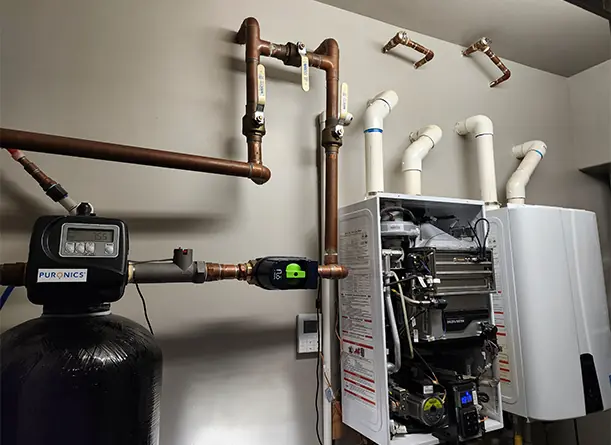
A tankless flush is more than just running something through the lines. For a typical gas tankless water heater flushing service, we:
- Shut off gas, water, and power to the unit safely
- Close the isolation valves to separate the heater from the home’s piping
- Connect service hoses to the hot and cold service ports
- Set up a small pump with a descaling solution suitable for tankless heat exchangers
- Circulate the solution through the heat exchanger for the proper amount of time
- Rinse the system with clean water to remove loosened scale and solution
- Open valves back up and purge air from the hot side
- Restart the unit and verify stable operation under normal flow
We contain our work area, protect nearby surfaces, and clean up before we leave so the only thing you notice is more stable hot water.
What We Check While We Flush
Since we already have the tankless water heater opened up for flushing, we also check key items that affect how it runs day-to-day:
- Inlet water filter screen for debris or buildup
- Isolation valves and service ports for leaks or wear
- Visible parts of the heat exchanger housing and connections
- Condensate line and trap on condensing models (for blockages or improper routing)
- Vent connections in the accessible area for obvious issues
- Basic startup and flame behavior after flushing
If we spot something that looks like a separate repair—such as a worn gasket, damaged vent, or failing component—we tell you plainly, show you what we see, and give options. You decide what to do next.
Need a Local Plumber In Huntington Beach?

Professional Plumbing provides free inspections for current homeowners during business hours. A small fee applies for homes in escrow or for sale; this fee can be credited toward repair costs if we’re hired.
Huntington Beach Water & Layout Conditions
Tankless water heaters in Huntington Beach see hard water and coastal air, especially in garages and tight side yards off streets like Brookhurst, Magnolia, Yorktown, and Pacific Coast Highway. Homes near the Huntington Beach Pier, Main Street, Talbert, and Atlanta often have long hot-water runs, so scale buildup can make temperature swings and slow hot water show up sooner if flushing is ignored.
FAQs – Tankless Water Heater Flushing (Huntington Beach)
Most tankless water heaters in Huntington Beach should be flushed about once a year because of hard water. In lighter-use homes you might stretch it a bit, but skipping flushing for years lets scale build up in the heat exchanger and small internal passages. That buildup can slow hot water, trigger error codes, and make the unit work harder than it should.
If a tankless heater is never flushed, mineral scale slowly coats the inside of the heat exchanger and other small paths inside the unit. Over time, that buildup can lead to hot–cold swings, reduced flow, efficiency loss, and more frequent error codes, especially in hard-water areas.
Most tankless water heater flushing visits in Huntington Beach take about 60–90 minutes for a straightforward setup. That time covers shutting the unit down, hooking up hoses and the pump, circulating descaling solution through the heat exchanger, rinsing, and restarting the heater. If other issues are found, they can be discussed separately.
Some homeowners do their own flush using a pump, hoses, and solution, but it is easy to miss steps or overlook things like isolation valves, filter screens, or condensate routing. A professional flush includes safe shutdown, correct valve use, the right solution and timing, and checks while the unit is open. For many people, having a licensed plumber handle it is simpler and safer.
Flushing solves mineral buildup issues, but it does not fix every problem. If there is a failing sensor, gas supply issue, venting problem, or worn component, those may still need repair. A flush often helps flow and temperature stability and may reduce some error codes, but a plumber should explain if a separate repair is needed.
Yes. Professional Plumbing Inc. flushes and descales major tankless brands commonly installed in Huntington Beach and nearby neighborhoods. The general steps are similar from brand to brand, but model-specific guidance on solution, timing, and restart is followed to help protect the unit and keep performance reliable.