
Bathroom Faucet Installation Huntington Beach
Bathroom Faucet Installation Huntington Beach is for when your faucet leaks, looks worn out, or you just want it installed clean and right. A faucet is small, however a bad install can drip into the vanity cabinet and quietly damage the wood and drywall.
Quick Answer: We remove the old faucet, verify the angle stops (shutoff valves) hold, replace worn supply lines when needed, install the new faucet with the correct seal, then test hot/cold flow and every connection for leaks.
Bathroom faucet install problems include base leaks, loose handles, low flow, corrosion, dripping shutoff valves, and water pooling under the sink.
This page is about Bathroom Faucet Installation in Huntington Beach with clear explanations, clean work, and multiple options—no pressure.
When you should replace a bathroom faucet
Sometimes a faucet repair makes sense. Other times, replacing the faucet is the smarter move—especially when the valve cartridge, spout, or handle assemblies are worn out and the leaks keep coming back.
You usually want a new faucet when:
- A leak keeps returning at the base or handles
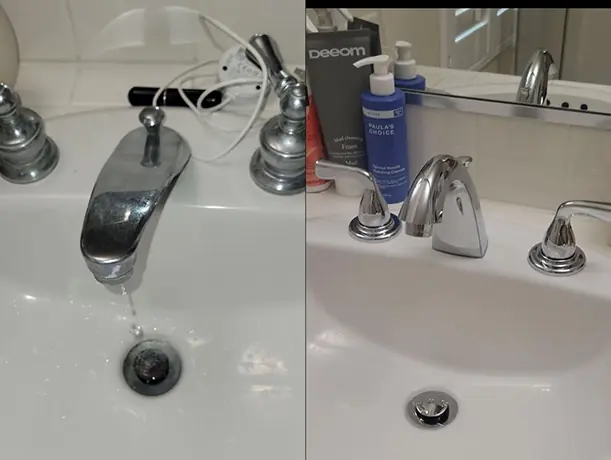
- The finish is pitted, corroded, or peeling and won’t clean up
- Handles grind, stick, or don’t shut off clean
- The spout is corroded and leaves stains in the sink
- You’re remodeling the vanity and want a matching finish
- You have low flow even after cleaning the aerator screen
In Huntington Beach, salty air and moisture can speed up corrosion, so older bathroom faucets and supply connections can fail sooner than people expect.
What’s included in bathroom faucet installation
A proper bathroom faucet install is more than “swap it and go.” It’s the whole connection system under the sink.
- What we check first: angle stops (shutoff valves), braided stainless supply lines, compression fittings, mounting hardware, and the sink deck or countertop surface.
- Then we install and test: correct seal (gasket, O-ring, or plumber’s putty as required), clean connections, correct hot/cold orientation, solid mounting, stable water pressure, and a dry cabinet after running water.
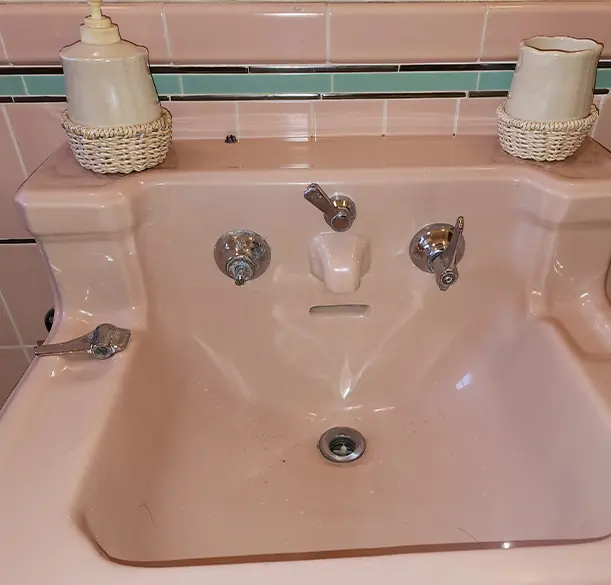
Faucet types we install include single-hole faucets, centerset faucets, and widespread faucets.
If shutoff valves are stuck, leaking, or won’t fully stop water, we’ll explain your options. Sometimes the faucet isn’t the real problem—old valves are.
How our bathroom faucet installation works
- Step 1: Confirm the setup We check the faucet type (single-hole, centerset, or widespread), sink deck, angle stops (shutoff valves), supply lines, and access inside the vanity.
- Step 2: Install it clean and level We remove the old faucet, clean the mounting surface, install the new faucet with the correct gasket or putty, and secure it so it won’t loosen.
- Step 3: Leak-test everything We reconnect supply lines, verify hot/cold orientation, run water, and check the shutoff valves, compression fittings, and faucet body until the cabinet stays dry.
- What you get at the end smooth handles, solid mounting, correct flow, and a dry cabinet.
- Your Home First is part of the install. Countertops stay protected, the vanity cabinet stays clean, and we leave the bathroom looking normal again.
- Micro-local note we install bathroom faucets all over Huntington Beach—from Beach Blvd to Goldenwest, and the neighborhoods near the pier, including homes out by Bolsa Chica.
What to do before we arrive
A little prep makes this fast:
- Clear out the cabinet under the sink (cleaners, bins, hair tools, and storage)
- Make sure we can reach the shutoff valves and the P-trap area
- If you already bought the faucet, set the box on the counter
- If you’re unsure the faucet fits your sink, keep the packaging and we’ll confirm the hole pattern (single-hole, centerset, or widespread)
If the cabinet floor is already wet, warped, or smells musty, tell us. That can change the best option, because we may need to address a slow leak first.
Need a Local Plumber In Huntington Beach?

Professional Plumbing provides free inspections for current homeowners during business hours. A small fee applies for homes in escrow or for sale; this fee can be credited toward repair costs if we’re hired.
DIY mistakes that cause leaks later
DIY is fine. DIY that causes a leak later is the problem.
Common mistakes we see:
- Over-tightening plastic mounting nuts until something cracks
- Using sealant where the manufacturer wants a dry gasket (or skipping putty when it’s required)
- Reusing old braided stainless supply lines that are already stiff or kinked
- Twisting supply lines under tension so they fail early at the crimp or connector
- Not centering the faucet or escutcheon plate, so it loosens over time
- Skipping leak testing and only noticing the drip after the vanity cabinet swells
A faucet install should end with a dry cabinet. That’s the win.
Related installation and repair services in Huntington Beach
- Bathroom Sink Installation
- Kitchen Faucet Installation
- Shower Valve Installation
- Toilet Installation
- Replace a Main Water Shut Off
- Plumbing Leak Detection
Need Bathroom Faucet Installation in Huntington Beach?
If your faucet leaks, looks worn out, or you just want it done clean and right the first time, we can help.
Call (657) 272-7713 or use Online Booking for Bathroom Faucet Installation in Huntington Beach.
Bathroom Faucet Installation FAQs
Most bathroom faucet installations are fairly quick once we have access to the angle stops and the vanity cabinet is cleared out. If the old faucet is heavily corroded, the mounting hardware is seized, or the shutoff valves won’t hold, it can take longer because we fix the real issue instead of forcing the swap.
Not always, but it’s common. If the shutoff valves (angle stops) are stuck, leaking, or don’t fully stop water, they should be replaced. A perfect faucet install still fails if the valves underneath are seeping or unstable, so we check them and explain your options.
Yes. We can install customer-supplied faucets as long as they match the sink setup: single-hole, centerset, or widespread. If there’s a mismatch, we’ll tell you before anything gets forced, and we’ll explain the cleanest way to make it fit and seal correctly.
Yes. We install widespread, centerset, and single-hole bathroom faucets. We verify the sink hole spacing, confirm deck thickness, and then install the faucet so it sits flat, seals clean, and stays tight.
Base leaks usually come from a poor seal, a loose mounting, or water traveling from above and pooling under the faucet. Sometimes the leak isn’t the faucet at all—it can be a supply line connection, a shutoff valve, or a slightly loose compression fitting. We test it step-by-step so the real source gets fixed.
Often, yes—especially if the existing braided stainless supply lines are old, kinked, or not the right length. New supply lines are cheap insurance compared to cabinet damage. If your lines are in great shape, we’ll tell you and let you choose the option you prefer.
Call (657) 272-7713 or use Online Booking. If you have active leaking under the sink right now, mention that first so it can be treated as urgent.