

Trenchless Sewer Line Garden Grove
Trenchless sewer line work is for people who want the sewer fixed with less surface disruption than a full open trench.
It can be a great option in Garden Grove, but only when the pipe is eligible. The smart move is always the same: camera the line, locate the problem, then choose the least disruptive method that still gives a long-lasting result.
Professional Plumbing Inc. handles trenchless sewer line work in Garden Grove with a clear process: we confirm what’s happening, explain options in plain words, protect the property, and keep the work controlled from start to finish. Your Home First means clean setup, careful access, and a walkthrough at the end so you understand what was done.
Quick answer: Trenchless sewer line work can reduce digging, but it still requires a camera inspection and the pipe must be eligible. Collapsed, badly offset, or fully crushed lines often need open trench replacement.
If you only read one thing: trenchless is about the right method for the pipe you actually have, not the method you wish you had. A camera inspection plus locating is what turns this from guessing into a real plan.
What “trenchless sewer line” means
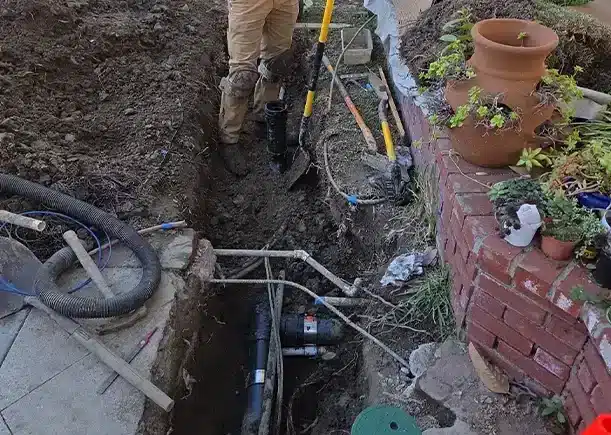
Trenchless sewer line work repairs or replaces a sewer line with less excavation than traditional open trench digging. It does not mean “no digging.” It usually means smaller access points, fewer disturbed areas, and less surface restoration.
Common terms you may hear:
- Sewer lateral
- Cleanout
- Sewer camera inspection (CCTV)
- Sewer locating
- Pipe bursting
- CIPP lining (cured-in-place pipe lining)
- Host pipe (the existing pipe being repaired)
- Pull head and bursting head
- Resin liner, calibration tube, curing
- Transitions and couplings
Signs you might be eligible
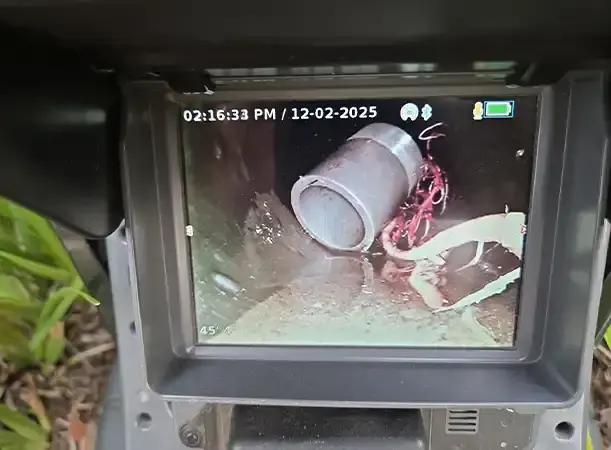
Most eligible lines look like this on camera: the pipe is still mostly round, the path is continuous, and the issues are cracks, joint gaps, or root entry points that can be prepped and corrected. If the camera shows that kind of structure, trenchless becomes a real option.
These situations often point toward trenchless being possible:
- The camera shows cracks, minor offsets, or root entry points, but the pipe is still mostly round
- You have a long run under landscaping or hardscape you’d rather not disturb
- Backups return, but the line is not fully collapsed
- The line can be accessed through a cleanout or reachable entry point
- The pipe path can be located clearly so we’re not guessing
Eligibility always comes down to what the camera shows, not just the symptoms.
When trenchless is not the right move
Trenchless is not a magic fix. It’s a method that has to match the failure.
Trenchless is often a poor fit when:
- The line is collapsed or crushed
- The pipe is badly separated or severely offset
- The line has a major belly/low spot that holds water and waste
- The line is too deformed to prep or pull through
- The pipe is fully blocked with water and waste and can’t be inspected properly yet
One honest heads-up: if the sewer is fully packed with water and waste, the camera can’t always show every detail past the blockage. In that case we clear what’s needed first, then re-camera so the trenchless decision is based on what we can actually see.
Trenchless methods we use
Pipe bursting
Pipe bursting replaces the sewer line by breaking the old pipe outward while pulling a new pipe through the same path. This is usually trenchless replacement.
What it’s best for:
- Lines that need full replacement but have a usable path
- Older pipe materials that are failing along the run
- Reducing surface disruption compared to a long open trench
Key entities involved:
- Bursting head
- Pulling rod or cable
- New pipe (often HDPE in many trenchless systems, or other approved materials depending on plan)
- Launch pit and receiving pit
- Transition fittings and couplings
- Grade verification where possible
CIPP lining (cured-in-place pipe lining)
CIPP lining creates a new pipe “inside” the old pipe using a resin-saturated liner that cures in place. This is usually trenchless rehab, not a full replacement.
What it’s best for:
- Pipes that are structurally intact enough to line
- Cracks, small openings, and root entry points after proper prep
- Improving flow by creating a smoother interior surface
Key entities involved:
- Liner and resin system
- Inversion or pull-in method
- Calibration tube
- Curing (air, steam, or other curing approach depending on system)
- Final camera verification
How we confirm eligibility
We don’t recommend trenchless until we confirm what’s happening and where.
Step-by-step:
- Sewer camera inspection (CCTV) to see the inside condition
- Locate the line path and the failure point so we’re not guessing
- Confirm access (cleanout, entry points, and workable setup space)
- Identify the failure type (roots, cracks, offsets, belly, collapse)
- Match the method to the failure and explain options clearly
If trenchless is eligible, we’ll tell you why. If it’s not, we’ll tell you why without spinning it.
What to expect on job day
- Arrival and protection setup so the work area stays controlled
- Confirm access points and staging areas
- Final verification of the plan based on the inspection and locate
- Trenchless setup and execution (pipe bursting or lining)
- Flow verification and a final camera pass when appropriate
- Cleanup and walkthrough so you know what was done and what to watch for
Your Home First means we keep things clean and organized, not chaotic and messy.
Need a Local Plumber In Huntington Beach?

Professional Plumbing provides free inspections for current homeowners during business hours. A small fee applies for homes in escrow or for sale; this fee can be credited toward repair costs if we’re hired.
What can change the scope
- No usable cleanout access
- Tight side yard access or gate restrictions
- Line runs under thick hardscape where access pits must be placed carefully
- Depth of the line and soil conditions
- A section that can’t be inspected until the line is cleared
- Multiple failure points instead of one main problem area
- A belly/grade issue that trenchless can’t correct
Access note: side-yard gates, parked cars, and driveway coverage can affect where equipment can stage and where access pits can go. If you can clear a simple path and point out any known cleanouts, it helps the job go smoother.
Service area inside Garden Grove
We serve Garden Grove throughout the city, including areas near Garden Grove Park, Historic Main Street, and Steelcraft Garden Grove.
Related drainage services
- Sewer camera inspection
- Sewer line locating
- Sewer line repair
- Sewer line replacement
- Cleanout installation
- Root intrusion clearing and maintenance planning
Trenchless Sewer Line FAQs
No. Trenchless usually means less digging, not zero digging. Most trenchless jobs still need access points and room to stage equipment. The benefit is you often avoid a long open trench across the full run. How minimal the digging is depends on access, depth, and what the camera shows. We confirm the plan first, then explain what needs to be opened up and why.
Eligibility comes from the camera inspection and the condition of the pipe. Trenchless can work well when the pipe is still mostly round and issues are cracks or root entry points, or when replacement can follow a usable path. If the line is collapsed, badly separated, severely offset, or has a major belly, trenchless often isn’t the right move. A camera inspection paired with locating makes the decision based on proof.
Pipe bursting is trenchless replacement. It breaks the old pipe outward while pulling a new pipe through the same path. CIPP lining is trenchless rehab that creates a new liner inside the existing pipe using resin that cures in place. Bursting fits lines that need replacement but have a usable path. Lining fits pipes intact enough to be lined after proper prep. We choose the method that matches the failure.
Usually no. A belly is a grade problem that holds water and waste. Lining can smooth the interior but typically can’t correct slope. Pipe bursting follows the existing path, so a belly may still remain. If grade is the main issue, open trench replacement or targeted correction is often the right way to fix it long-term. The camera and locate help confirm whether grade is the problem.
Many trenchless jobs can be completed in a day, but it depends on access, depth, prep needs, and the condition of the line. If the sewer is blocked and needs clearing before it can be inspected, that adds steps. Lining depends on prep and curing, while pipe bursting depends on access pits and pulling setup. Once we confirm eligibility, we give a clear timeline for your layout.
If you can share where the backup shows up (toilet, shower, tub, cleanout, or multiple fixtures), whether it’s happened once or repeatedly, and whether anything was already done (snaked, jetted, or camera’d), it helps. If you know whether you have an exterior cleanout, that matters too. Access is a big part of trenchless, so gate width, side yard clearance, and driveway coverage are helpful details. We’ll still verify everything on-site, but those details help avoid guessing.