

Toilet Flange Repair Garden Grove
Toilet Flange Repair Garden Grove is for when the toilet feels loose, rocks, leaks at the base, or starts smelling nasty even after you clean. A bad flange can let water sneak under the floor every time someone flushes, and that’s when a “small wobble” becomes a bigger repair.
Quick Answer: A toilet flange is the ring that anchors your toilet to the floor and connects it to the drain. If it’s cracked, too low, rusted, or pulling loose, the toilet can leak and rock. Flange repair usually means pulling the toilet, fixing or rebuilding the flange area, then resetting the toilet so it’s solid again.
Flange failure signs include rocking, base leaks after flushing, loose bolts, odor, and soft flooring.
This page is about Toilet Flange Repair and how Professional Plumbing Inc. handles it in Garden Grove with clean work, clear explanations, and options—no pressure.
What a toilet flange is (and why it fails)
The toilet flange is the connection point between your toilet and your drain line. It also holds the toilet down with bolts so the toilet stays tight and doesn’t shift.
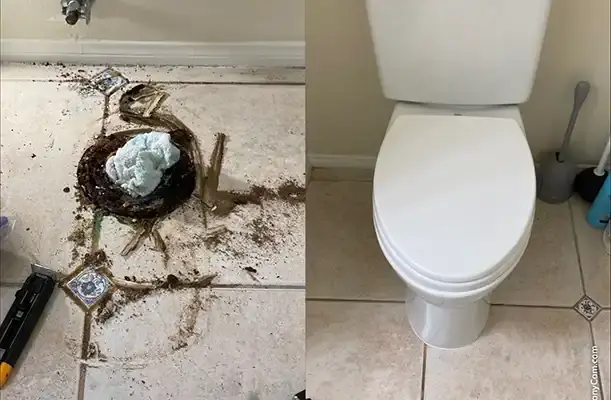
Materials we commonly see under toilets: ABS plastic, PVC plastic, cast iron, and older mixed-material transitions.
Flanges fail for a few common reasons:
- The flange cracks (plastic flanges do this)
- The metal flange rusts out (older cast/metal flanges do this)
- The toilet was set on an uneven floor and slowly worked loose
- The flange sits too low or too high after flooring changes
- The subfloor around the flange got wet and weakened
- The bolts stripped out, snapped, or never grabbed right to begin with
In Garden Grove, we see this a lot in busy bathrooms where a loose toilet got ignored for too long—especially in older homes where floors have settled over time.
Signs you need toilet flange repair
A flange problem has a “pattern.” If you’ve got more than one of these, it’s time:
- Toilet rocks when you sit down or shift your weight
- Water shows up at the base after flushing
- Caulk keeps cracking or peeling around the toilet base
- Musty smell that comes and goes near the toilet
- Floor feels soft or bouncy around the toilet
- Bolts keep loosening even after you tighten them
- You see staining on the ceiling below (if it’s an upstairs bath)
Small leaks at the base don’t stay small. The water usually goes under the flooring first, so you don’t always see the real damage right away.
How toilet flange repair works
A real flange repair is not “tighten it and hope.” The toilet usually needs to come up so we can fix what’s actually wrong.
Here’s the normal flow:
First, we confirm where the leak is coming from (base leak vs. supply leak vs. tank leak).
Then we pull the toilet carefully and inspect the flange, bolts, and floor.
Next we explain the options in plain language (basic fix vs. rebuild vs. reset with floor support).
Then we repair or rebuild the flange connection so it’s solid and sealed.
After that, we reset the toilet, level it, secure it, and test it repeatedly.
Finally we confirm the toilet is stable, the seal is right, and the flush is clean.

Your Home First means we protect the bathroom floor, keep the mess controlled, and leave the area clean when we’re done.
Micro-local note: we do a lot of these around Garden Grove Blvd, Brookhurst, and the neighborhoods near the park areas where older bathrooms get heavy daily use.
What to do before we arrive
You don’t need to do much. These small steps help:
- Clear items around the toilet (mats, trash can, storage baskets)
- Try not to use that toilet if it’s actively leaking at the base
- If the floor is wet, lay down towels so the water doesn’t spread
- If you have a second bathroom, use that one until the flange is repaired
If the toilet is rocking hard, avoid “one more flush.” That’s usually when the seal gives up and water gets forced under the floor.
Need a Local Plumber In Huntington Beach?

Professional Plumbing provides free inspections for current homeowners during business hours. A small fee applies for homes in escrow or for sale; this fee can be credited toward repair costs if we’re hired.
DIY mistakes we see all the time
We’re not against DIY. We’re against DIY that makes the repair bigger.
Common mistakes we see:
- Over-tightening the closet bolts and cracking the base or flange
- Stacking multiple wax rings to “make it work” instead of fixing flange height
- Caulking the base to hide a leak (it traps water under the toilet)
- Ignoring soft subfloor and resetting the toilet on a weak floor
- Using the wrong bolts or anchors that never truly grab
- Tightening a rocking toilet without leveling it (it will loosen again)
If the toilet rocks, something underneath is not right. Fixing the flange correctly is what makes the reset hold.
Related repair services in Garden Grove
- Toilet Repair
- Toilet Installation
- Leak Detection
- Replace a Main Water Shut Off
- Water Pressure Regulator
- Drain Clearing Service
Need Toilet Flange Repair in Garden Grove?
If your toilet rocks, leaks at the base, or smells bad even after cleaning, let’s fix it the right way before it damages the floor.
Call (657) 272-7712 or use Online Booking to schedule Toilet Flange Repair in Garden Grove.
Micro-local note (extra line)
We commonly handle toilet flange repairs in Garden Grove near Main Street, Euclid, and the neighborhoods around the Strawberry Festival grounds.
FAQs – Toilet Flange Repair Garden Grove
A toilet flange is the ring that connects the toilet to the drain pipe and anchors the toilet to the floor. If the flange is cracked, rusted, too low, or loose, the toilet can rock and leak at the base. A solid flange is what makes the toilet stable and watertight.
A flange leak usually shows up at the base after flushing, and the toilet often rocks or feels loose. A supply leak usually shows up near the shutoff valve, supply line, or tank connection and can drip even when you don’t flush. If you’re not sure, don’t guess—leaks can travel and hide.
Most of the time, yes. Since it’s a repair that can cause water damage, we try hard to get it handled the same day, and we usually succeed. However, if the floor under the toilet is badly damaged, the job can get bigger and may take longer. Either way, we stop the leak, stabilize the setup, and explain the fastest next step.
Not always, but it’s a big clue. A rocking toilet can come from loose bolts, an uneven floor, a failing flange, or soft subfloor. The right fix depends on what’s actually moving—so the toilet usually needs to come up to confirm the cause.
It depends. A clean caulk line can help with hygiene and looks, but you don’t want caulk hiding an active leak. The priority is a correct seal and a stable toilet first. After that, we can explain the best way to finish the base based on your floor type.
Most of the time, you don’t need a new toilet. If the porcelain is cracked, the base is damaged, or the toilet is very old and already giving problems, replacement can make sense. However, if the toilet itself is fine, a proper flange repair and reset is usually the right fix.
Call (657) 272-7712 or use Online Booking If water is leaking at the base right now, say that first so it’s treated as urgent.