

Leaky Pipe Repairs Garden Grove
Leaky Pipe Repairs Garden Grove is for the drip you can’t ignore, the stain that keeps growing, or the “why is this cabinet damp again?” problem. A pipe leak can start small, but it rarely stays small—because water always finds the easiest path into wood, drywall, and flooring.
Quick Answer: A leaky pipe repair means we find the leak source, isolate the line, and fix it the right way—usually by repairing a fitting, replacing a short section of pipe, or rebuilding the connection that failed.
Leaky pipe signs include dripping, damp cabinets, water stains, musty smells, bubbling paint, and sudden higher water bills.
This page is about Leaky Pipe Repairs and how Professional Plumbing Inc. helps Garden Grove homeowners with clean work, clear explanations, and multiple repair options—no pressure.
What causes pipe leaks in Garden Grove homes
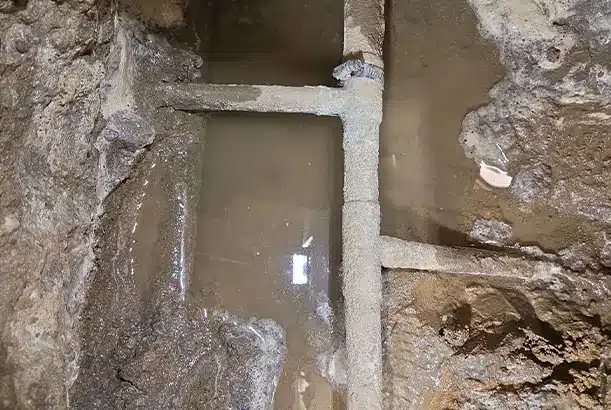
Most leaks come from one of these:
- A worn-out fitting or connection that finally gives up
- Corrosion or pinhole leaks (especially on older lines)
- High water pressure stressing joints over time
- Loose angle stops or supply lines under sinks and toilets
- Old shutoff valves that seep or won’t seal fully
- Past repairs that were “temporary” and never got upgraded
A leak can also show up after flooring or cabinet work—because a pipe got bumped, twisted, or left under tension.
Common places we find leaky pipes
Leaks love hidden spots. The most common ones:
- Under kitchen and bathroom sinks
- Behind toilets (shutoff valve, supply line, or wall stub-out)
- Inside walls (you see stains, you don’t see the leak yet)
- In ceilings under an upstairs bathroom
- At water heater connections
- In the garage where the main line branches to the house
- Outdoor lines feeding hose bibs or irrigation tie-ins
Materials we commonly see in Garden Grove: copper, PEX, CPVC, galvanized steel, and mixed-material transitions from older remodels.
How leaky pipe repairs work
A good leak repair isn’t guesswork. It’s controlled and tested.
Here’s the normal flow:
- First, we identify the leak type (active drip, pinhole, joint failure, or pressure-related seep).
- Then we isolate water so the leak stops immediately and nothing else gets damaged.
- Next we inspect the pipe material, the fitting style, and access points (open wall, cabinet, crawlspace, etc.).
- Then we explain options in plain language—what’s the “get it stopped” fix and what’s the “make it last” fix.
- After that, we complete the repair, pressure-test, and verify everything stays dry.
- Finally we clean up and walk you through what failed and how to prevent repeats.
Your Home First matters a lot on leak calls. Floors get protected, the work area stays controlled, and we leave it clean.
What to do before we arrive
These simple steps help a lot:
- If it’s actively leaking, shut off the nearest valve (or the main water if needed)
- Move anything stored under sinks or near the wet area
- Put a towel or small bucket under the drip if you can safely reach it
- If water is near electrical outlets, keep clear and don’t touch wet drywall
If you don’t know where your main shutoff is, tell us that right away. We’ll help you find it fast when we arrive.
Need a Local Plumber In Huntington Beach?

Professional Plumbing provides free inspections for current homeowners during business hours. A small fee applies for homes in escrow or for sale; this fee can be credited toward repair costs if we’re hired.
DIY mistakes that make leaks worse
We’re not against DIY. We’re against DIY that makes the repair bigger.
Common mistakes we see:
- Over-tightening a fitting until it cracks
- Using tape or putty on a pressurized leak instead of isolating the line
- Replacing a supply line but leaving a failing shutoff valve behind
- Cutting into drywall without confirming the pipe path
- “Fixing” one bad joint while ignoring high pressure that caused it
- Mixing materials without the right transition fittings
If the leak is in a wall or ceiling, it’s usually smarter to stop the water and get it diagnosed first.
Related repair services in Garden Grove
- Plumbing Leak Detection
- Pipe Repair
- Replace a Main Water Shut Off
- Water Pressure Regulator
- Toilet Repair
- Water Heater Repair
Need Leaky Pipe Repairs in Garden Grove?
If you’ve got dripping, damp cabinets, stains, or a pipe leak you can’t pinpoint, let’s stop the damage and fix it right.
Call (657) 272-7712 or use Online Booking to schedule Leaky Pipe Repairs in Garden Grove. (Professional Plumbing)
We commonly handle leak repairs in Garden Grove near Garden Grove Blvd, Euclid, and the neighborhoods around Historic Main Street.
FAQs – Leaky Pipe Repairs Garden Grove
Anything where water is escaping where it shouldn’t—drips under a sink, a seeping valve, a wet cabinet base, a ceiling stain, or a pipe that only leaks when a fixture is used. Even a slow leak matters because it can damage wood, drywall, and flooring over time.
Most of the time, yes. We push hard to get leaks handled the same day, and we usually succeed—especially for under-sink leaks, valves, supply lines, and accessible pipe sections. However, if the leak is buried in a wall, ceiling, or slab and access needs to be created, the job can take longer. Either way, we stop the damage first and explain the fastest next step.
If the water shows up only when the faucet runs, it can be a drain or fixture issue. If the cabinet stays wet even when nothing is running, or you see moisture around shutoff valves and supply lines, it’s often a pressurized leak. If you’re unsure, avoid guessing—leaks can travel and show up far from the source.
If it’s actively dripping or spreading, yes—shut off the nearest valve if you can do it safely. If you can’t stop it there, shut off the main water. Stopping flow is the fastest way to prevent damage.
Repeat leaks often come from one root cause: high water pressure, a failing shutoff valve that wasn’t replaced, corrosion on older piping, or a line that’s under stress or vibration. Fixing the cause is what stops the repeat problem.
If the leak is visible and accessible, repair is usually straightforward. If the leak is hidden (wall, ceiling, slab, or intermittent), leak detection can be the faster path because it reduces guessing and prevents unnecessary damage.