

Sewer Line Replacement Garden Grove
If you searched “sewer line replacement near me” in Garden Grove, you probably want one thing: a clear answer on whether your line needs to be replaced, and what happens next. Sewer line replacement is for pipes that are collapsed, separated, badly shifted, or made from a material that keeps failing. If it’s just buildup or a one-time blockage, replacement usually isn’t needed.
Professional Plumbing Inc. replaces sewer lines in Garden Grove with a simple approach: verify the failure, explain options in plain words, protect the property, then replace only what truly needs replacing. Your Home First means we keep the setup clean, the work controlled, and the explanation clear—before, during, and after the job.
Quick answer: You typically need sewer line replacement when a camera shows a collapse, separation, major offset, or a failing pipe material that keeps causing backups.
Tap to Jump
- Sewer line replacement: what it actually means
- Common symptoms that often point to a failing sewer line
- When replacement is the right call
- Common causes of sewer line failure in Garden Grove
- How we confirm the problem
- Replacement options
- What to expect on job day
- What can change the scope
- Service area inside Garden Grove
- Related drainage services
- FAQs
Sewer line replacement: what it actually means
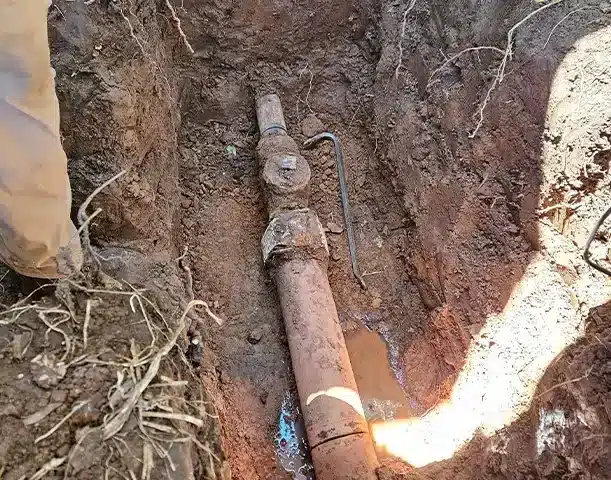
A sewer line replacement is removing and replacing a damaged section (or the full run) of the line that carries wastewater from the home to the connection point. You may also hear:
- Sewer lateral (the private line serving the property)
- Building sewer (the line leaving the structure toward the connection point)
- Cleanout (access for inspection and service)
- Transition fittings (where old pipe material changes to new)
- Bedding and backfill (how the new pipe is supported in the trench)
Replacement is not drain cleaning, snaking, or jetting. Replacement is what you do when the pipe is broken, collapsed, separated, offset, crushed, or beyond reliable repair.
Common symptoms that often point to a failing sewer line
These are the “this might be bigger than a clog” signs homeowners notice most:
- Multiple drains acting up at the same time (toilet + shower + sink)
- Gurgling sounds after flushing or running water
- Slow drainage that keeps coming back after clearing
- Sewage odor outside near the line path
- Backups that return within weeks or months
Symptoms don’t prove replacement by themselves—the camera does—but they’re usually why people search “near me” in the first place.
When replacement is the right call
You typically need sewer line replacement when the camera shows a condition that can’t be made reliable with cleaning or a small patch. The biggest triggers are collapse, separation, major offsets, a belly/low spot that won’t drain properly, or a pipe material that keeps deforming.
Common replacement triggers:
- Backups keep returning even after a proper clearing
- The camera shows a collapse, crushed area, or major deformation
- There’s separation or offset joints causing repeat hang-ups
- Root intrusion returns fast because the pipe has openings and failed joints
- The line has a failing material like Orangeburg, or deteriorated clay or cast iron
- A belly/low spot or grade issue keeps holding water and waste
Replacement is a bigger step, so we don’t push it. We recommend it only when the line condition supports it.
Common causes of sewer line failure in Garden Grove
Most sewer failures come down to a few real-world causes:
- Tree root intrusion through joints or cracks
- Aging clay sewer pipe with shifting joints
- Cast iron corrosion and internal scaling that narrows the pipe
- Orangeburg pipe failure (soft, deforms, collapses over time)
- Soil settlement that creates offset joints or a belly
- Improper slope or a low spot that becomes a repeat clog zone
- Heavy loads over the line (driveways, hardscape, additions)
- Grease and debris that sticks worse when the pipe is rough or damaged
Local reality in Garden Grove we often see sewer issues tied to older properties, longer runs to the street, and landscaping where roots keep finding the joints. Near Garden Grove Park, around Historic Main Street, and close to Steelcraft Garden Grove, layouts vary a lot by property—so we don’t guess. We verify.
How we confirm the problem
We don’t talk replacement until we confirm what’s wrong and where it is.
- Sewer camera inspection (CCTV) to see the inside condition
- Locate the failure point so we’re not digging blind
- Check cleanout access (or discuss adding a cleanout if none exists)
- Identify the failure type: collapse, roots, offset, separation, corrosion, belly
- Explain options clearly, including when a repair or targeted fix is enough
One honest heads-up: if the sewer is fully packed with water and waste, the camera can’t always show every detail past the blockage. In that case we clear what’s needed first, then re-camera so the replacement decision is based on what we can actually see.
Replacement options
Open trench replacement
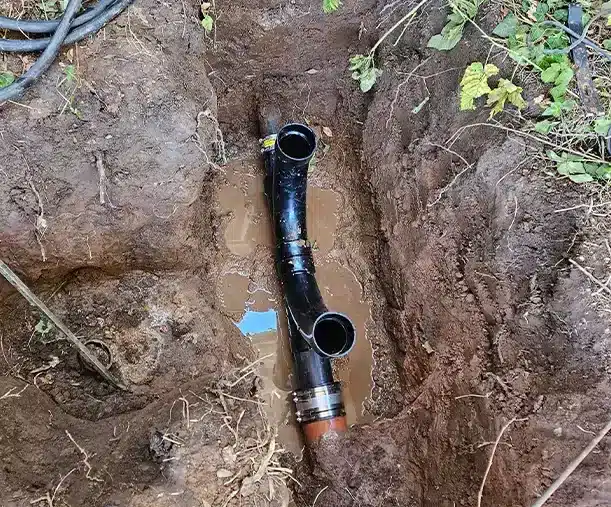
This method excavates to the pipe, removes the failed section, installs new pipe, then backfills and restores.
Key entities and steps you’ll hear us mention:
- Utility locating (811) and site marking
- Excavation plan and safe digging practices
- Shoring when depth/conditions require it
- New pipe install (commonly ABS or PVC, sometimes SDR-35 depending on the run)
- Correct slope/grade so flow stays consistent
- Proper bedding, compaction, and backfill
- Planning surface restoration around soil, planters, and hardscape
Open trench is often the best option when the line is collapsed, has multiple breaks, or needs grade correction.
Trenchless replacement (when eligible)
Trenchless can reduce digging, but it depends on the pipe condition and the failure type.
Common trenchless entities:
- Pipe bursting (break old pipe outward while pulling new pipe through)
- CIPP lining (cured-in-place pipe lining; more rehab than replacement in some cases)
- Spot repair (targeted repair when the rest of the line is truly stable)
If a line is severely collapsed, badly offset, or can’t be properly prepped, trenchless may not be the right call. We’ll explain why in plain terms.
Simple comparison:
Open trench = best for collapsed pipe, grade fixes, and multiple breaks.
Trenchless = best when the line can be prepped, alignment is workable, and access supports it.
What to expect on job day
- Arrival + protection setup so the work area stays controlled
- Confirm access (cleanout, entry points, and work path)
- Excavation or trenchless setup based on the plan
- Install the new line with correct fittings and clean transitions
- Flow verification (and camera verification when appropriate)
- Cleanup (we don’t leave a job looking trashed)
- Walkthrough so you know what was replaced, where, and what to watch for
We also don’t do pressure selling. If we find something unexpected, we show you what we found and give options.
Need a Local Plumber In Garden Grove?

Professional Plumbing provides free plumbing inspections for current homeowners during business hours. A small fee applies for homes in escrow or for sale, which can be credited toward repair costs if we're hired.
What can change the scope
- No usable cleanout access
- Line runs under driveways, patios, or thick hardscape
- Depth of the line and soil conditions
- Multiple failure points instead of one isolated break
- A section that can’t be fully inspected until the line is cleared
- Transitions between older pipe materials and newer segments
- Tight access (side yards, gates, fences) that limits equipment positioning
None of this is meant to scare anyone. It’s simply why we verify first and avoid guessing.
Service area inside Garden Grove
We serve Garden Grove neighborhoods and streets throughout the city, including areas near Garden Grove Park, Historic Main Street, and Steelcraft Garden Grove. If you’re in Garden Grove and searching “sewer line replacement near me”, you’re in the right place.
Related drainage services
- Sewer camera inspection
- Sewer line locating
- Sewer line repair (sectional)
- Cleanout installation
- Root intrusion clearing and maintenance planning
What happens after we replace the sewer line
After the new section is installed, we verify flow and confirm the work is doing what it’s supposed to do. When the situation allows, we also run a final camera pass so you have a clear “before and after” view of the repair area.
For homeowners, the biggest do-and-don’t is simple: don’t treat the sewer like a trash chute. Wipes, grease, and heavy paper load up fast—especially if the home has older pipe sections still in place.
Sewer Line Replacement FAQs
A repair can work when the camera shows one bad section and the rest of the pipe looks stable and properly sloped. Replacement is usually the better call when the camera shows a collapse, multiple separations, repeated offsets, or a failing pipe material that keeps deforming. If you’ve had backups more than once in a short period, that’s another sign the pipe itself is the issue. We’ll show you the footage, point out the failure, and explain your options in plain language so you can choose the path that makes sense.
Yes. Many Garden Grove jobs are sectional replacements, meaning we replace only the failed zone if the pipe on both sides is still in good condition. The key is confirming there isn’t a second failure nearby, a belly that holds waste, or widespread deterioration that will cause another backup soon. If the rest of the line is solid on camera, partial replacement can be the cleanest solution with less disruption, and it still gives you a reliable outcome.
No. Trenchless is great when the line is eligible, but it’s not automatic. Pipe bursting can work when the pipe path is usable and alignment is workable. CIPP lining can help when the pipe is intact enough to be lined and there isn’t a major collapse. If the pipe is crushed, badly offset, or severely deformed, open trench replacement is often the safer long-term fix because you can reset grade and replace the truly failed area. We match the method to the failure, not the trend.
Sometimes, but not always. It depends on where the failed section is located and what’s above it. If the break is in dirt, planter space, or a side yard, digging can be limited. If the location shows the failure under hardscape, we’ll discuss trenchless eligibility or targeted excavation so the replacement is done correctly. Before work starts, we explain the plan, the access path, and what surfaces are involved so you’re not surprised later.
Repeat backups usually come from a pipe condition that keeps catching waste: roots through joints, offset joints, separated joints, or a belly (low spot) that holds water and solids. Older materials like clay, cast iron, and Orangeburg can make this worse as joints shift, walls corrode, or the pipe deforms over time. If clearing helps but the problem returns, the pipe usually has a structural defect that cleaning can’t solve—which is exactly what a camera inspection is meant to confirm.
If you can share where the backup shows up (toilet, shower, tub, cleanout, or multiple fixtures), whether it’s happened once or repeatedly, and whether anything was already done (snaked, jetted, or camera’d), it helps a lot. If you know whether you have an exterior cleanout, that matters too because it can reduce time and disruption during inspection. We’ll still verify everything on-site, but those details help us start in the right direction and avoid guessing.
Most sewer line replacement jobs take anywhere from part of a day to a couple of days, depending on access, depth, and what’s above the pipe. A simple sectional replacement in open soil can move faster, while work under hardscape or deep runs usually takes longer. Another variable is inspection: if the line has to be cleared and re-camera’d to see the full failure, that can add steps. Once we confirm the plan and the location, we’ll give you a clear timeline for your specific layout.