
Continuous Gas Hot Water System: Ultimate Comfort 2026
Never Run Out of Hot Water Again: Continuous Gas Hot Water Systems for Fountain Valley Homes
A continuous gas hot water system delivers instant hot water whenever you need it—no tank, no waiting, and no running out. Here’s what you need to know:
- How it works: Cold water flows through the unit, a gas burner fires up, and a heat exchanger heats the water instantly
- Key benefits: Endless hot water, lower energy bills, space-saving design, and 15–20+ year lifespan
- Best for: Families in Fountain Valley who want reliable hot water and lower SoCalGas bills
- Installation: Requires professional setup, proper gas line sizing, and venting (if installed indoors)
- Maintenance: Annual servicing and descaling—especially important in Fountain Valley’s hard water areas
Tired of cold showers in your Fountain Valley home or waiting for the water to heat up after a long day at the Fountain Valley Sports Park? If your morning routine includes two kids fighting over who gets the last drops of hot water, or if you’ve ever stood shivering under a lukewarm stream after someone ran the dishwasher, you’re not alone. Traditional tank water heaters can’t keep up with busy Fountain Valley households—and they waste energy heating water you’re not even using.
A continuous gas hot water system solves these problems by heating water on demand, only when you turn on the tap. No storage tank means no standby heat loss, no wasted space in your garage, and no more rationing showers. Modern tankless units are compact, efficient, and built to last decades—making them a smart investment for homes throughout Fountain Valley, from the Green Valley neighborhood to the newer builds in Westmont.
I’m William Horsky, and over my 42+ years as a master plumber serving Fountain Valley, I’ve installed and serviced hundreds of continuous gas hot water systems across our community. From older homes near Mile Square Park to newer construction in the New Chase neighborhood, I’ve seen how these systems transform daily comfort while cutting energy costs—and I’m here to walk you through everything you need to know.
How a Continuous Gas Hot Water System Works
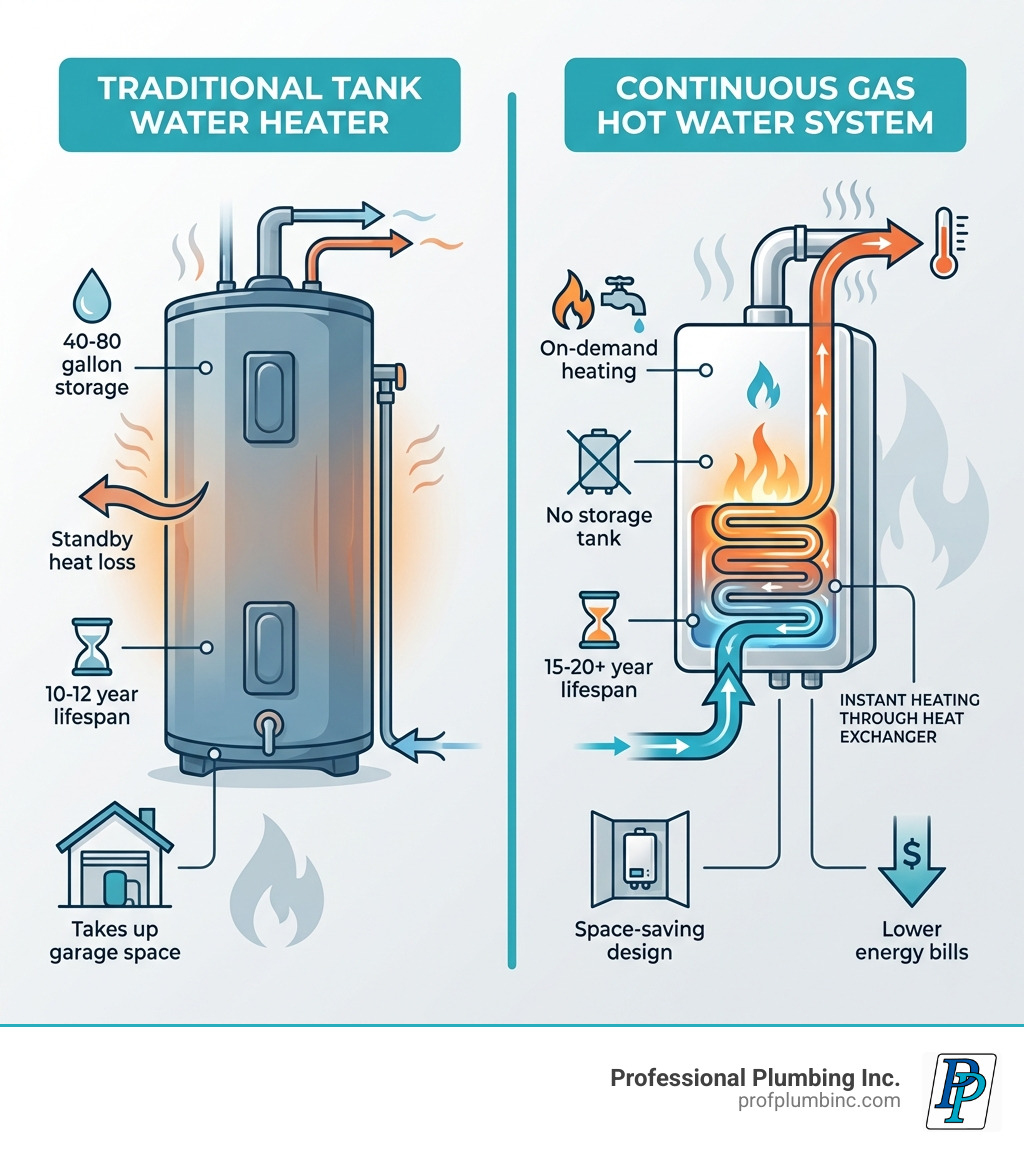
Traditional tank water heaters operate by continuously heating and storing a large volume of water, much like a giant thermos. This means you’re constantly paying to keep water hot, even when you’re not using it. A continuous gas hot water system, often called a tankless or instantaneous water heater, works completely differently. It’s an ingenious piece of plumbing technology that only fires up when you need hot water.
Imagine this: you turn on the hot water tap in your Fountain Valley home. Cold water immediately begins to flow into the tankless unit. A sophisticated flow sensor detects this movement, signaling the system to spring into action. Instead of drawing from a pre-heated tank, a high-efficiency gas burner ignites, and the incoming cold water passes through a specially designed heat exchanger. This heat exchanger rapidly transfers heat from the burner to the water, delivering hot water directly to your faucet. The system precisely controls the flame and water flow to ensure the water reaches your desired temperature almost instantly. When you turn off the tap, the system shuts down, saving energy.

This “on-demand” heating means there’s no bulky storage tank taking up valuable space in your garage or utility closet in Fountain Valley. The process is seamless, efficient, and ensures you never run out of hot water, no matter how many showers your family takes after a day at Mile Square Park.
The Brains of the System: The Electronic Control Unit (ECU)
At the heart of every modern continuous gas hot water system is the Electronic Control Unit (ECU). Think of it as the intelligent brain that orchestrates the entire operation. This sophisticated component is responsible for regulating the gas flow to the burner, modulating its output to precisely match your hot water demand, and constantly monitoring the water temperature.
The ECU ensures optimal performance and, crucially, maintains stringent safety standards. It incorporates features like flame sensors, which detect if the burner has successfully ignited, and overheat protection systems, such as Rheem’s Flamesafe technology, which automatically shut down the unit if temperatures exceed safe limits. It also includes automatic gas shut-off mechanisms in case of any irregularities. This precise control means the water is heated to your exact preference, preventing scalding and eliminating the need to dilute excessively hot water with cold, further saving energy. For more detailed insights into ensuring the safety of your gas appliances, you can learn more about gas line and natural gas safety in Orange County.
Key Components: Burner and Heat Exchanger
Beyond the ECU, two other critical components make a continuous gas hot water system work its magic: the burner and the heat exchanger. The advanced gas burner technology is designed for rapid and efficient heating. Unlike the pilot lights of old, modern burners ignite quickly and can modulate their flame intensity to deliver just the right amount of heat.
The heat exchanger is where the magic truly happens. It’s typically a durable, often serpentine-shaped, coil or series of channels made from materials like copper or stainless steel. Its intricate design maximizes the surface area exposed to the burner’s flame, ensuring that incoming cold water quickly absorbs heat as it flows through. This efficient heat transfer is key to the system’s “instant” hot water delivery. We know Fountain Valley water is notoriously hard, leading to mineral buildup. That’s why we emphasize high-quality units with heat exchangers built to withstand these conditions and provide long-lasting performance. Many of these units are also constructed from recyclable metals, reflecting a commitment to sustainability.
The Pros and Cons of Going Tankless in Fountain Valley
Making the switch to a continuous gas hot water system is a significant decision for any homeowner in Fountain Valley. While the benefits are compelling, it’s important to weigh them against potential considerations. Let’s explore why homeowners are increasingly choosing tankless and what factors you should keep in mind.
Why Homeowners Love Continuous Flow Systems
We’ve seen countless families across Fountain Valley fall in love with their new tankless systems, and for good reason:
- Endless Hot Water: This is arguably the biggest selling point. With a continuous flow system, you literally never run out of hot water. Imagine back-to-back showers after a long day at the Fountain Valley Sports Park, running the dishwasher, and doing a load of laundry simultaneously—all with perfectly hot water. No more rationing, no more cold surprises!
- Energy Efficiency and Lower SoCalGas Bills: Since these systems only heat water on demand, they eliminate the standby heat loss associated with traditional tanks. This means they consume energy only when hot water is needed. Many models, like Rheem Gas Continuous Flow Water Heaters, boast impressive thermal efficiencies (e.g., 84%) and high energy ratings (e.g., 6-star), translating directly into lower utility bills for our Fountain Valley clients. The cost of operating a continuous flow hot water heater directly correlates to your usage, unlike storage systems where you’re paying to heat water even if you’re not using it.
- Space-Saving Design: Traditional water heaters are bulky, often occupying valuable floor space in garages or utility closets. Tankless units are compact and typically wall-mounted, freeing up square footage—perfect for homes in Fountain Valley looking to maximize storage.
- Longer Lifespan Than Traditional Tanks: While typical tank water heaters last around 10-12 years, many continuous flow systems are designed to last 15-20 years or even more. This makes them a better long-term investment for your Fountain Valley home.
- Precise Temperature Control for Safety and Comfort: With an ECU, you can often set the exact temperature you desire, preventing scalding risks (especially important for families with young children in Fountain Valley) and ensuring maximum comfort.
- Boosts Home Value in Sought-After OC Neighborhoods: Modern, energy-efficient appliances are a significant draw for potential homebuyers. Installing a continuous gas hot water system can increase the appeal and value of your home in the competitive Fountain Valley real estate market.
What to Consider Before You Switch
While the advantages are clear, it’s also important to be aware of the considerations:
- Higher Upfront Cost: Continuous flow systems generally have a higher initial purchase price compared to traditional tank models. However, the long-term energy savings and longer lifespan often offset this investment over time.
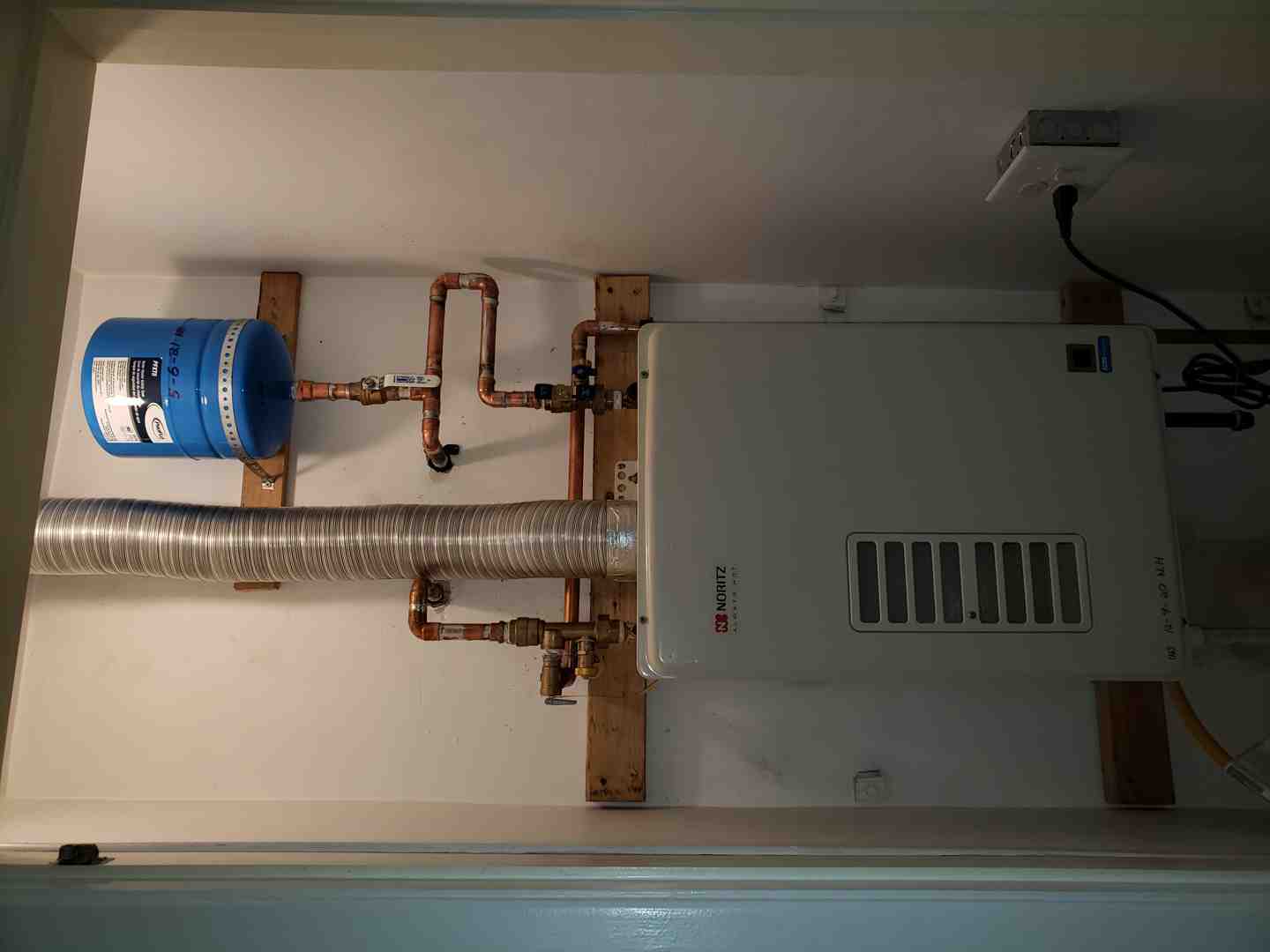
- Installation May Require Gas Line Upgrades: To provide the necessary gas flow for instantaneous heating, some older homes, especially those in established areas like near Mile Square Park in Fountain Valley, might require upgrades to their gas lines. This can add to the overall installation cost. We specialize in natural gas installation and can assess your Fountain Valley home’s needs.
- Needs Electricity for Controls—No Hot Water During Power Outages: Most modern continuous gas hot water systems rely on electricity to power their ECU, igniter, and other controls. This means that unlike some older, purely mechanical tank heaters, they typically won’t operate during a power outage.
- Minimum Flow Rate Required to Activate Heating: These systems need a certain minimum flow rate to “turn on.” A slow, trickling tap might not be enough to trigger the heating process.
- Occasional Temperature Fluctuations at Very Low Flow: In rare instances, at very low flow rates, some users might experience slight temperature fluctuations as the system works to maintain precise heating. However, modern units are designed to minimize this.
Choosing the Right Continuous Gas Hot Water System for Your Fountain Valley Home
Selecting the perfect continuous gas hot water system for your Fountain Valley home isn’t just about picking the first one you see. It’s about understanding your household’s unique hot water needs and ensuring the system you choose is perfectly matched. Our team at Professional Plumbing Inc. is here to guide you through this process, whether you’re in the Green Valley neighborhood, near the hospital, or anywhere else in Fountain Valley.
Sizing Your System: Litres Per Minute (LPM) or Gallons Per Minute (GPM)
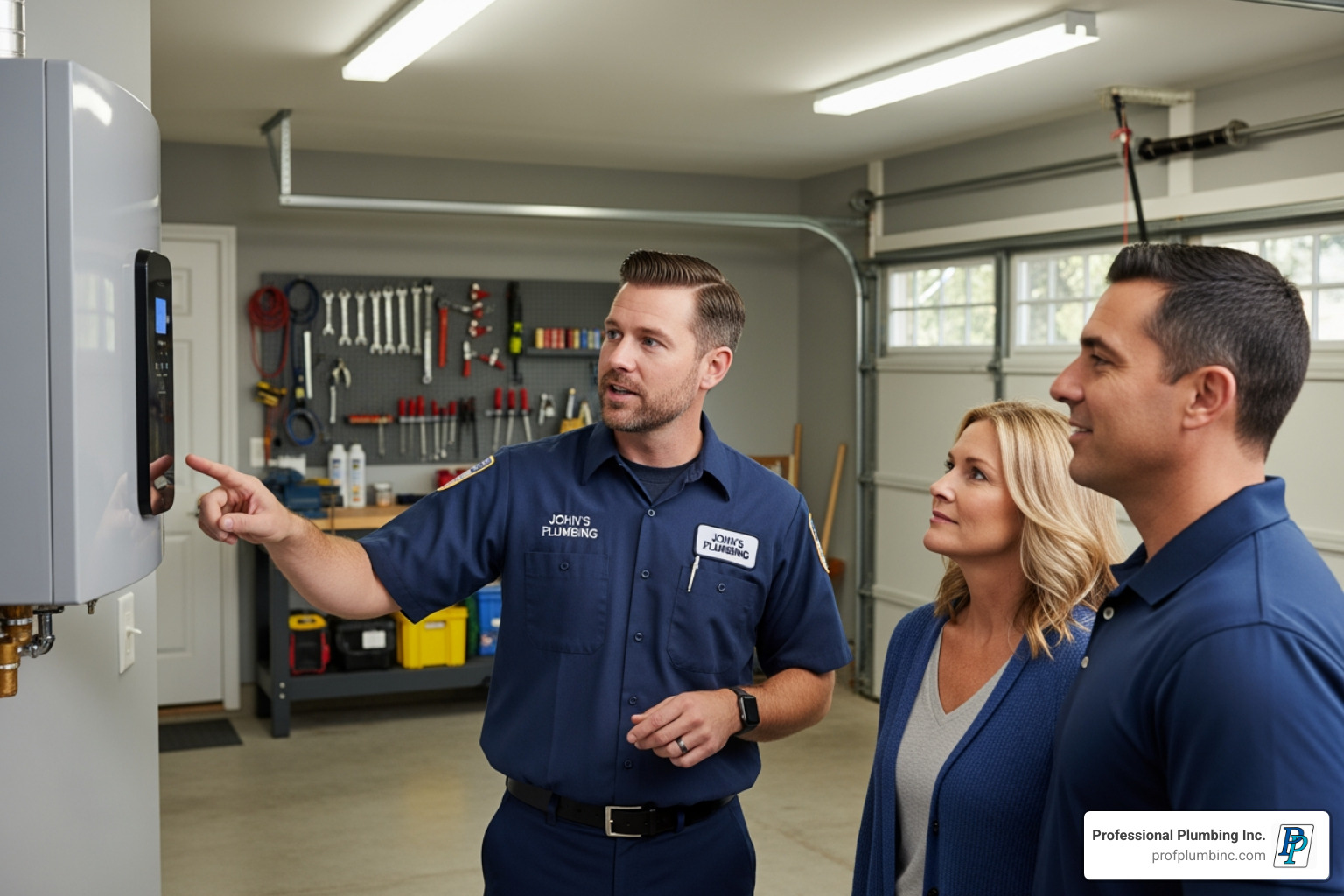
When it comes to sizing, we don’t just count the number of people or bathrooms. While those are starting points, the real key is to calculate your peak demand—the maximum amount of hot water you’ll need at any given moment. Think about your family’s busiest morning routine in Fountain Valley: could two people be showering while the dishwasher is running and someone is washing their hands in the kitchen? This simultaneous usage dictates the required flow rate, measured in Litres Per Minute (LPM) or Gallons Per Minute (GPM).
Here’s a general idea of typical flow rates for common fixtures:
- Standard Shower Head: 2.5 GPM (approx. 9.5 LPM)
- Water-Saving Shower Head (WELS 3-star rated): 1.5-2.0 GPM (approx. 5.7-7.6 LPM)
- Kitchen Faucet: 1.5-2.0 GPM (approx. 5.7-7.6 LPM)
- Bathroom Faucet: 0.5-1.5 GPM (approx. 1.9-5.7 LPM)
- Dishwasher: 1.0-2.0 GPM (approx. 3.8-7.6 LPM, during fill cycles)
- Washing Machine: 1.5-3.0 GPM (approx. 5.7-11.4 LPM, during fill cycles)
For example, if two people are showering simultaneously with WELS 3-star rated shower heads (using about 7 L/min each), you’d need a unit that can comfortably deliver at least 14 L/min. If a dishwasher is also running, your peak demand could rise. Buying a system that’s too large means you’re paying more upfront for capacity you don’t use, and an oversized system can sometimes even lead to less efficient operation. We’ll help you assess your specific needs for your Fountain Valley home.
Understanding the Costs: Purchase and Installation
The cost of a continuous gas hot water system involves two main components: the unit itself and the professional installation. For most Fountain Valley homeowners, you can expect the total investment for a quality unit and professional installation to fall between $2,000 and $4,000.
The unit price can vary based on brand, capacity (GPM), energy efficiency, and features. Tankless water heater installation costs are influenced by several factors:
- Gas Line Modifications: If your existing gas line isn’t sufficient, an upgrade will be necessary. This is a common requirement in some of Fountain Valley’s older homes, particularly those built before modern gas line standards.
- Venting for Indoor Units: Indoor installations require specialized venting to safely expel exhaust gases, which adds to the complexity and cost.
- Local Code Requirements: Local Fountain Valley and Orange County regulations dictate specific installation practices, including necessary permits and safety measures.
- Relocation: Moving the water heater to a new location will involve more extensive plumbing and gas line work.
While the initial cost may be higher than a traditional tank, remember the long-term savings on energy bills and the extended lifespan. Don’t forget to check for available incentives; you can often find local rebates for your new water heater through federal or local programs.
Types of Continuous Gas Hot Water Systems
Not all continuous flow systems are created equal. Understanding the different types will help you make an informed choice for your Fountain Valley property:
- Condensing vs. Non-condensing: This refers to how efficiently the system captures heat.
- Non-condensing units are highly efficient, often achieving 6-star energy ratings. They heat water directly through a primary heat exchanger.
- Condensing units take efficiency a step further. They incorporate a secondary heat exchanger that captures heat from the exhaust gases, which would otherwise be wasted. This pre-heats the incoming cold water, resulting in even higher energy efficiency (up to 0.98 UEF for some models) and even greater savings on your SoCalGas bill. While they have a higher upfront cost, their superior efficiency can be a wise investment, especially in homes with high hot water demand.
- Natural Gas vs. LPG/Propane: The fuel source is a fundamental choice.
- Natural Gas is typically the most common and cost-effective option for homes connected to the municipal gas grid in Fountain Valley. Gas rates are generally more stable than electricity rates and do not fluctuate throughout the day.
- LPG (Liquefied Petroleum Gas) or Propane is an excellent alternative for properties not on the main gas grid, though this is less common in Fountain Valley. While LPG systems are usually 2 to 3 times more expensive to run than natural gas systems, they still offer the benefits of continuous hot water and quick heating. Most continuous-flow hot water systems powered by LPG can almost instantly reach the desired water temperature.
For information specific to your gas supply, our team can assist with more info about natural gas installation in Garden Grove and other services for your Fountain Valley home.
Installation, Maintenance, and Lifespan
Once you’ve chosen your ideal continuous gas hot water system, proper installation and ongoing maintenance are paramount. These steps ensure your system operates safely, efficiently, and provides endless hot water for decades to come.
At Professional Plumbing Inc., we emphasize that proper installation is key for both safety and optimal performance. This is especially true in earthquake-prone Southern California, and Fountain Valley is no exception. Adherence to local codes and expert craftsmanship are non-negotiable. With regular maintenance, a continuous flow system can easily last 15–20 years or even longer, significantly outperforming traditional tank heaters. Factors influencing this longevity include the quality of your water (hard water in Fountain Valley can lead to mineral buildup), your maintenance schedule, and local conditions.
Typical Installation Requirements
Installing a continuous gas hot water system is not a DIY job. It requires specialized knowledge and adherence to strict safety codes. Here are some typical requirements we consider:
- Outdoor vs. Indoor Placement: Fountain Valley’s mild climate often allows for outdoor installation, which saves indoor space and simplifies venting. However, indoor models are also available and are suitable for garages or utility closets, provided they have proper ventilation.
- Gas Supply and Water Pressure Needs: The system needs an adequate gas supply line to fuel the powerful burner. It also requires a minimum water pressure (often around 1 bar or 100 kPa) and sufficient flow to activate and operate efficiently. We’ll assess your home’s existing infrastructure to ensure compatibility.
- Venting for Indoor Models: If installed indoors, a dedicated vent system is crucial to safely expel combustion byproducts to the outside. This is a critical safety consideration.
- Importance of an Earthquake Gas Shut Off Valve: In California, especially in a seismic zone like Fountain Valley, an automatic earthquake gas shut off valve is often required or highly recommended. This valve automatically cuts off your gas supply in the event of an earthquake, preventing potential gas leaks and fires. Our experienced plumbers ensure all installations meet or exceed California code.
Essential Maintenance for Your Continuous Gas Hot Water System
To ensure your tankless system continues to provide optimal performance and lasts for its full lifespan, regular maintenance is crucial. We recommend:
- Annual Professional Servicing: Just like your car, your water heater benefits from a yearly check-up. Our skilled technicians will inspect all components, verify gas pressure, check for leaks, and ensure everything is running smoothly and safely.
- Descaling and Flushing: This is perhaps the most vital maintenance step, especially in hard water areas like Fountain Valley. Minerals in hard water can build up inside the heat exchanger, reducing efficiency and eventually damaging the unit. A professional flush removes these mineral deposits. You can learn more about this process and why it’s so important on our page dedicated to tankless water heater flushing.
- Cleaning Intake Filters: Some units have air intake filters that can collect dust and debris, impacting combustion efficiency. Regular cleaning or replacement helps the unit breathe freely.
For more comprehensive information on keeping your system in top shape, visit our guide on tankless water heater maintenance.
Frequently Asked Questions about Continuous Flow Systems
We often get a lot of great questions from homeowners in Fountain Valley about these innovative systems. Here are some of the most common:
How long does a tankless gas water heater take to provide hot water?
One of the biggest advantages of a continuous gas hot water system is that it heats water almost instantly as it flows through the unit. Unlike a tank heater that needs 30-40 minutes to heat a full tank, a tankless unit provides hot water on demand. However, the time it takes for that hot water to reach your tap depends on the distance the water has to travel from the heater to the faucet or shower. For a home in Fountain Valley with longer pipe runs, there will still be a short waiting period for the cold water in the pipes to be purged before the hot water arrives. Installing the unit closer to frequently used fixtures can minimize this wait.
Can I lose hot water during a power outage?
Yes, generally, you can. Modern continuous gas hot water systems rely on electricity to power their Electronic Control Unit (ECU), ignition system, and other safety features. While they run on gas for heating, the electronic components need electricity to operate. So, if your Fountain Valley home experiences a power outage, your tankless system typically won’t be able to produce hot water. If outages are common in your area, perhaps near the Fountain Valley Sports Park, you might want to ask us about backup power options for your system.
Is a continuous gas hot water system safe?
Absolutely. Safety is a top priority for manufacturers and for our team at Professional Plumbing Inc. Modern continuous gas hot water systems are equipped with numerous advanced safety features. These include:
- Overheat Sensors: Automatically shut down the unit if water temperature exceeds safe limits.
- Flame Failure Devices: Detect if the burner flame goes out and shut off the gas supply.
- Pressure Relief Valves: Prevent excessive pressure buildup within the system.
- Exhaust Venting Sensors: Monitor proper exhaust gas expulsion.
However, the most crucial safety measure is professional installation and regular maintenance. Our certified plumbers ensure that your unit is installed according to all local Fountain Valley and Orange County codes and manufacturer specifications, including proper gas line connections and venting. For peace of mind and to ensure ongoing safety, always rely on experienced professionals for any gas line installation or service.
Ready for Endless Hot Water and Lower Bills?
A continuous gas hot water system is more than just an appliance; it’s a smart investment in your Fountain Valley home’s comfort, efficiency, and long-term value. From the luxury of endless hot showers to significant savings on your utility bills, the benefits are clear. Choosing the right system, ensuring expert installation, and committing to regular maintenance are all crucial steps to maximizing these advantages.
At Professional Plumbing Inc., we pride ourselves on our deep understanding of Fountain Valley homes—from the established neighborhoods like Green Valley and Old Farm to the newer developments throughout our city. We offer honest, upfront pricing, skilled plumbers, and guaranteed workmanship to ensure a fast, clean, and hassle-free experience.
Don’t let another cold shower ruin your morning. Contact us today to explore your water heater service options and find how a continuous gas hot water system can bring endless comfort to your home.