
1 2 Natural Gas Line: Ultimate Safe Guide 2026
1/2-Inch Natural Gas Lines for Huntington Beach Patios: A Local Plumber’s Guide
If you live in Huntington Beach, chances are your patio life depends on a small but critical piece of plumbing: the 1/2-inch natural gas line that feeds your grill, fire pit, or patio heater.
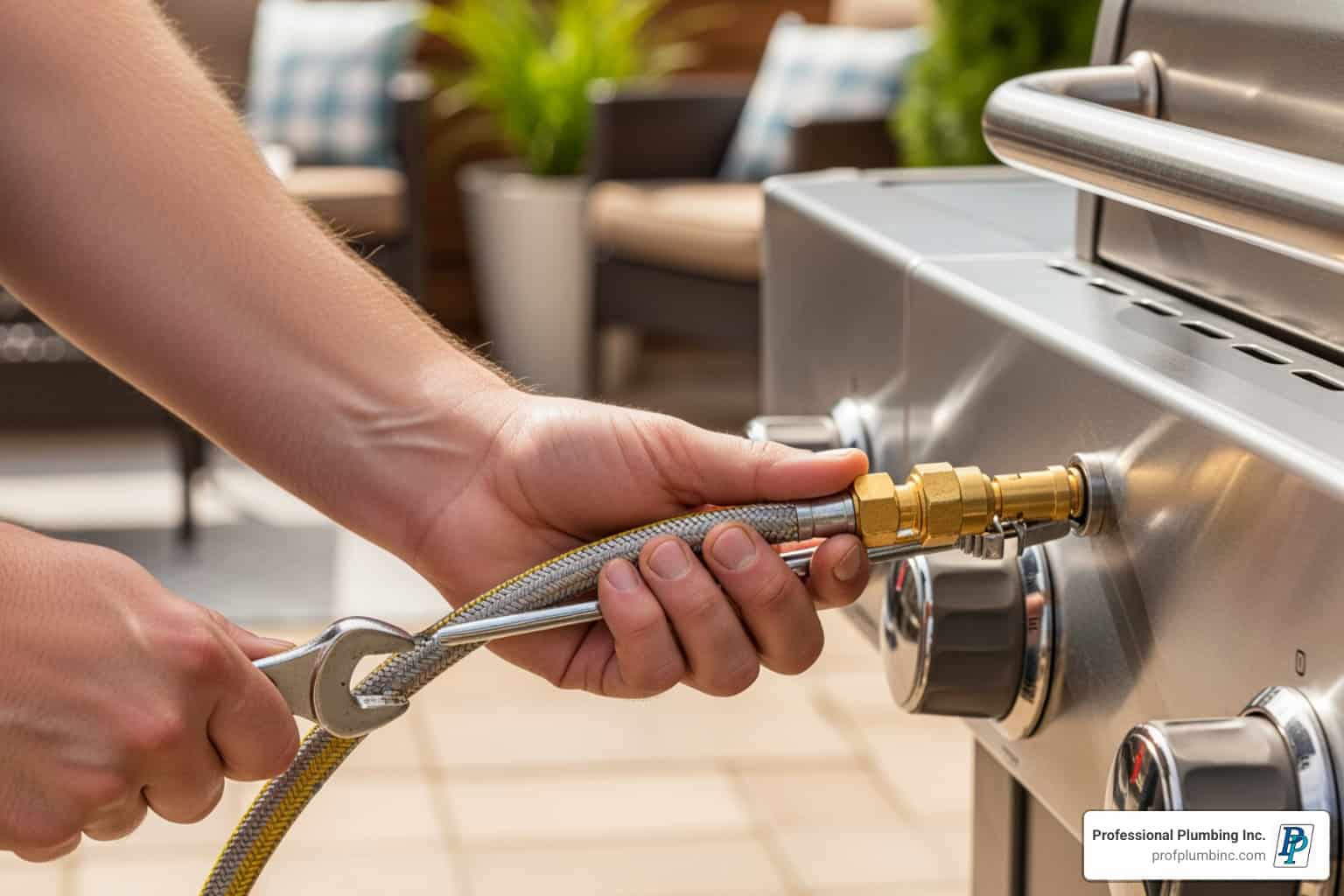
In plain terms, a 1 2 natural gas line is the flexible hose that safely delivers fuel from your home’s gas outlet to your outdoor appliance. When it’s sized and installed correctly, you get strong, steady flames and worry-free use. When it’s wrong, you can end up with weak burners, nuisance shutoffs, or real safety hazards.
Quick Answer: What is a 1/2-Inch Natural Gas Line?
- Size Reference: The “1/2-inch” refers to the inner diameter (ID) of the hose—outer diameter is typically about 3/4 inch (OD)
- Best For: Most residential outdoor appliances—BBQ grills, patio heaters, fire pits, pizza ovens, and smokers
- BTU Capacity: Properly matched to typical patio appliance loads so you don’t get “starved” burners
- Pressure Rating: Designed for low-pressure residential natural gas (what SoCalGas delivers to your meter)
- Common Lengths: 12 ft, 20 ft, 24 ft, and longer options to suit different patios and yard layouts
Most 1/2-inch natural gas hoses use 1/2-inch male or female flare fittings, and many include quick-connect/disconnect ends for easier, safer hookups. Quality hoses are CSA-certified and built to handle our coastal weather—from the salty air along PCH to the sunny backyards near Huntington Beach High School.
Whether you’re in a Downtown Huntington Beach townhouse upgrading your BBQ line, building an outdoor kitchen in SeaCliff, or finishing a fire pit project in the Edwards Hill equestrian community, the right gas line size directly affects safety and performance.
I’m William Horsky. Over 42+ years as a licensed plumber in Huntington Beach and across Orange County, I’ve installed and repaired hundreds of natural gas lines in local neighborhoods, including:
- SeaCliff and The Bluffs
- Huntington Harbour and Trinidad Island
- Downtown near the pier and Main Street
- The tract homes around Goldenwest and Edinger
- Communities near Edison High School and Huntington Beach High School
That local, hands-on experience is why I place so much emphasis on choosing and installing the right 1 2 natural gas line the first time.
Understanding the Basics of a 1/2-Inch Gas Line
When we talk about a 1 2 natural gas line here in Huntington Beach, we’re almost always referring to the flexible hose that connects your outdoor appliance to a fixed gas outlet—often a stub-out or quick-connect box on your patio wall.
The “1/2-inch” designation is the inner diameter (ID) of that hose. That’s the measurement that determines how much gas can flow through it and how many BTUs it can reliably support. In neighborhoods from Huntington Harbour to the inland tracts near Bella Terra, most outdoor appliances are on the same low-pressure gas systems, so getting this size right is critical.
Residential natural gas in our area is low pressure. The gas comes from the main in the street (managed by SoCalGas), travels through the service line to your meter, then through your home’s house line to feed appliances. Your flexible hose is the last link in that chain.
If the hose is too small, you’ll see:
- Weak grill flames, especially with multiple burners on
- Fire pits that don’t get hot enough
- Patio heaters that struggle on cooler evenings near the coast
If it’s oversized, you may simply be wasting money and wrestling with a heavier, less manageable hose than you need.
For most backyards in Huntington Beach, a 1 2 natural gas line hits the sweet spot.
Why 1/2-Inch is the Go-To Size Locally
The 1/2-inch ID has become the standard for outdoor appliances across Huntington Beach because it handles common BTU loads without drama.
Typical BTU ranges we see on local jobs:
- BBQ grills: ~40,000–80,000 BTU (think built-ins in SeaCliff or Edwards Hill outdoor kitchens)
- Patio heaters: ~30,000–50,000 BTU (common on decks in Huntington Harbour)
- Outdoor fire pits: ~50,000–90,000 BTU (popular in Downtown and Goldenwest area remodels)
A properly selected 1 2 natural gas line can usually handle these demands on a typical low-pressure residential system, assuming the hard piping feeding it is sized correctly as well.
Compared to a 3/8-inch hose, a 1/2-inch hose offers:
- Higher gas flow for multi-burner grills
- Better performance at the end of longer runs, especially when the line comes a long way from the meter
- Less risk of “fuel starvation,” where flames drop off when everything’s on high
We see 3/8-inch hoses mostly on very small, low-BTU appliances. For the outdoor kitchens going in around Huntington Harbour and the newer developments in the city, 1/2-inch is usually the right call.
Common Patio Uses in Our Area
Around Huntington Beach, a 1 2 natural gas line is the workhorse behind many upgraded backyards:
- BBQ Grills: Built-in or freestanding units tied into natural gas so you’re not refilling propane tanks every weekend in Huntington Beach.
- Patio Heaters: Standing or wall-mounted heaters that let you enjoy evenings by the Huntington Beach Pier or in your backyard even when the marine layer rolls in.
- Outdoor Fire Pits: Fire bowls, linear fire features, and custom pits we see a lot in SeaCliff, The Bluffs, and newer remodels throughout Huntington Beach.
- Pizza Ovens: Gas-fired ovens in outdoor kitchens where consistent heat and strong gas supply really matter.
- Smokers: Natural gas smokers that need a steady, reliable low flame over long cook times.
Used correctly, that simple 1 2 natural gas line is what transforms your patio from “occasionally usable” to a fully functional, low-maintenance outdoor living space.
How to Choose the Right 1/2-Inch Natural Gas Hose
Picking a 1 2 natural gas line off the shelf isn’t just about grabbing the right diameter. In our coastal and inland Huntington Beach neighborhoods, you want a hose that’s safe, durable, and well-matched to your exact setup.
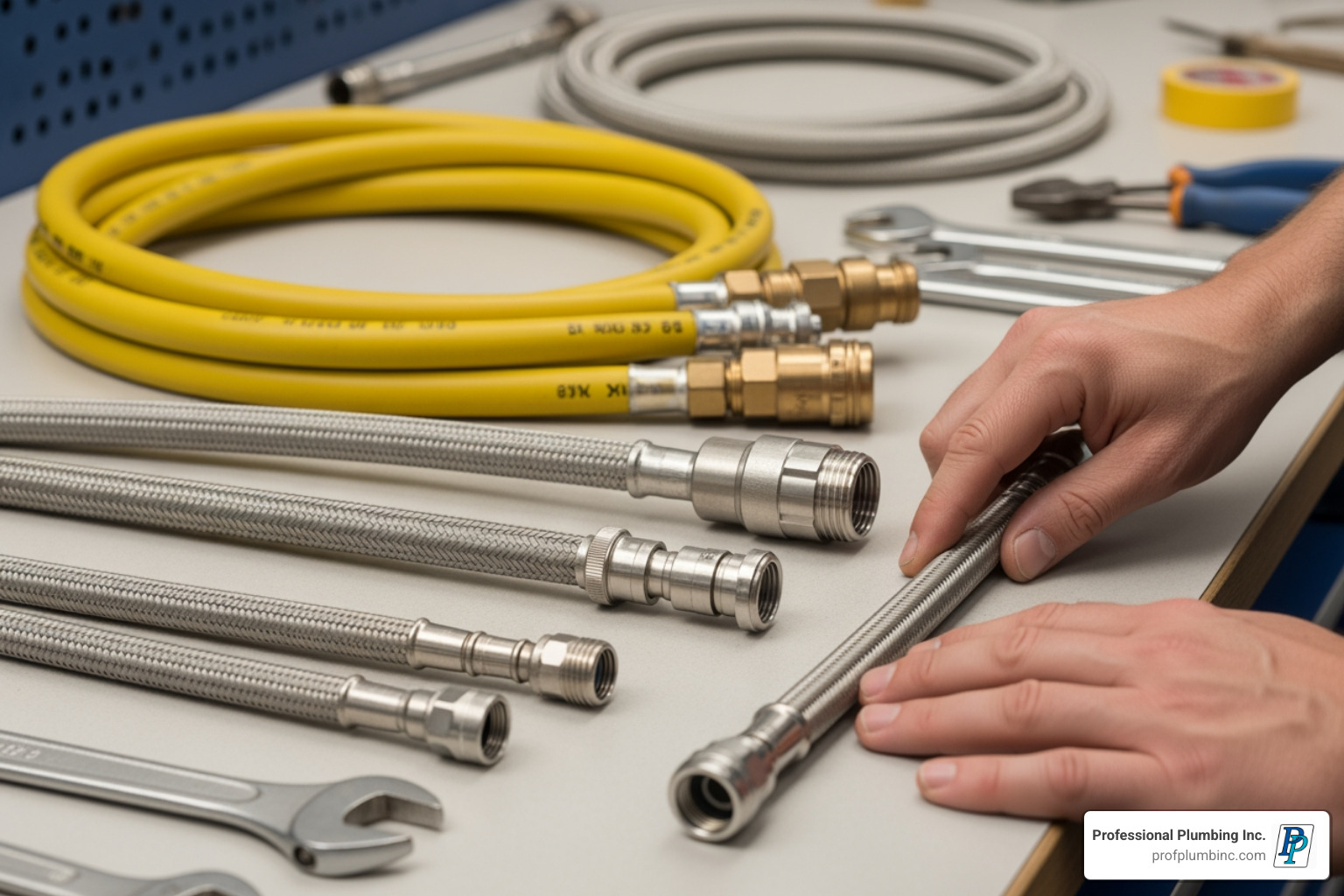
When I’m helping homeowners in Huntington Beach choose a hose, we always look at three big factors: durability, flexibility, and weather resistance.
- Durability: Near the coast—think Sunset Beach or Downtown Huntington Beach—salt air and sun are tough on materials. A good hose resists kinking, abrasions, and UV damage.
- Flexibility: If your grill moves around a stamped concrete patio in the Goldenwest area or a deck in Huntington Harbour, you need a hose that bends easily without stressing the fittings.
- Weather Resistance: From warm afternoons in the inland parts of the city to cool, damp mornings by the harbor, the hose needs to handle temperature swings and occasional moisture.
Key Features and Specs to Look At
Here’s what we walk through on real jobs:
- Length Options:
- Common lengths: 12 ft, 20 ft, 24 ft
- Longer options (40–70 ft) exist, but we use them carefully to avoid pressure drop
- You want enough length so the hose isn’t pulled tight if you roll a grill away from the wall—something I see a lot in backyards near Edison High School or the tract homes off Beach Boulevard.
- Hose Material:
- Best option for most homes: rubber core with braided stainless steel reinforcement
- The stainless braid adds protection against punctures, kinking, and day-to-day abuse—especially important where hoses might cross pavers or concrete.
- Connection Types: Make sure your hose matches both the appliance and the gas outlet:
- Flare Fittings (most common):
- 1/2″ male flare and 1/2″ female flare ends
- Provide a strong metal-to-metal seal—typical on outdoor kitchens in SeaCliff and other custom homes throughout Huntington Beach
- Quick-Connect/Disconnect Fittings:
- Very popular on patios where grills or heaters are moved for storage or cleaning
- Usually built with an automatic shut-off so gas stops flowing when disconnected
- Great for tight side yards or townhomes in Downtown Huntington Beach where equipment gets moved often
- Flare Fittings (most common):
- Price Range:
- Quality 1/2-inch ID hoses typically run from about $45 to over $90
- Longer lengths and heavy-duty braided stainless often sit at the higher end
- With gas work, paying for quality and safety certification is always worth it.
Understanding Fittings for a 1 2 Natural Gas Line
Fittings are where most DIY problems show up. On service calls across Huntington Beach, leaks are usually at connections—not in the hose itself.
Here’s what matters:
- Flare Fittings:
- Create a metal-to-metal seal—no thread sealant needed on the actual flare connection
- Common setup: 1/2″ male flare at the gas outlet and 1/2″ female flare at the appliance (or vice versa)
- Ideal when we’re tying into outdoor kitchen islands built along the back walls of homes near Central Park or in the SeaCliff community
- Quick-Connect/Disconnect Fittings:
- Great for movable equipment: freestanding grills and portable heaters
- The female coupler on the house side usually has an internal shut-off valve
- When the male plug is removed, the valve closes—perfect for busy patios in Downtown Huntington Beach or near the pier where gear gets moved a lot
- Automatic Shut-Off Valve:
- Frequently built into quick-connects
- Adds a layer of safety if someone accidentally disconnects the hose or forgets to turn a valve off
What Makes a Quality, Safe Hose?
With gas, safety isn’t optional. A good 1 2 natural gas line should check all these boxes:
- CSA Certification (Non-Negotiable):
- Any hose you buy MUST be CSA certified
- The CSA mark tells you it has been tested to meet recognized gas safety standards
- You can read more about their standards at CSA Group
- Warranty & Brand Reputation:
- Reputable manufacturers stand behind their hoses
- On real jobs—from homes in Huntington Harbour to the neighborhoods near Bolsa Chica State Beach—I’ve seen cheap, off-brand hoses fail early, while better brands last years in the same conditions.
- Material Quality:
- Rubber core + braided stainless steel is my usual recommendation for exposed outdoor use
- Resists damage from chairs, yard tools, and everyday traffic around the grill or fire pit
- Local Code Compliance:
- While the flexible hose is just the last link, the permanent gas line feeding it must meet local codes
- Huntington Beach enforces plumbing and mechanical codes based on the California Plumbing Code
- If you’re adding or extending hard pipe to create a new patio outlet, that’s work for a licensed plumber who can size the line, pull required permits, and pressure test the system
Safety First: Installing and Using Your 1 2 Natural Gas Line
Working with natural gas around your home in Huntington Beach demands real respect. Connecting a flexible hose may look simple, but a small mistake can lead to leaks, fire, or explosion.
If you’re just snapping a quick-connect hose on and off an existing, code-compliant outlet, that’s usually reasonable for a homeowner. Any work on the rigid gas piping, valves, or new line runs should be handled by a licensed professional familiar with Orange County permitting and inspection requirements.
Best Practices for Safer Installation
Here’s how we handle it on real jobs from Harbour View to the neighborhoods near Main Street:
- Shut Off the Gas First:
- Locate the shut-off valve at the outdoor outlet or, if needed, at the gas meter
- Turn it OFF before you put a wrench on anything
- Use Gas-Rated Sealant Where Appropriate:
- For threaded pipe connections (not on the flare surfaces themselves), use:
- Yellow gas-rated PTFE tape, or
- A gas-approved pipe dope (like Slic-Tite or Hercules products)
- Never use standard white plumber’s tape on gas piping
- For threaded pipe connections (not on the flare surfaces themselves), use:
- Use the Right Tools:
- Two adjustable wrenches or flare nut wrenches make cleaner, safer connections
- Tighten firmly but don’t over-torque—you can crack fittings or distort flares
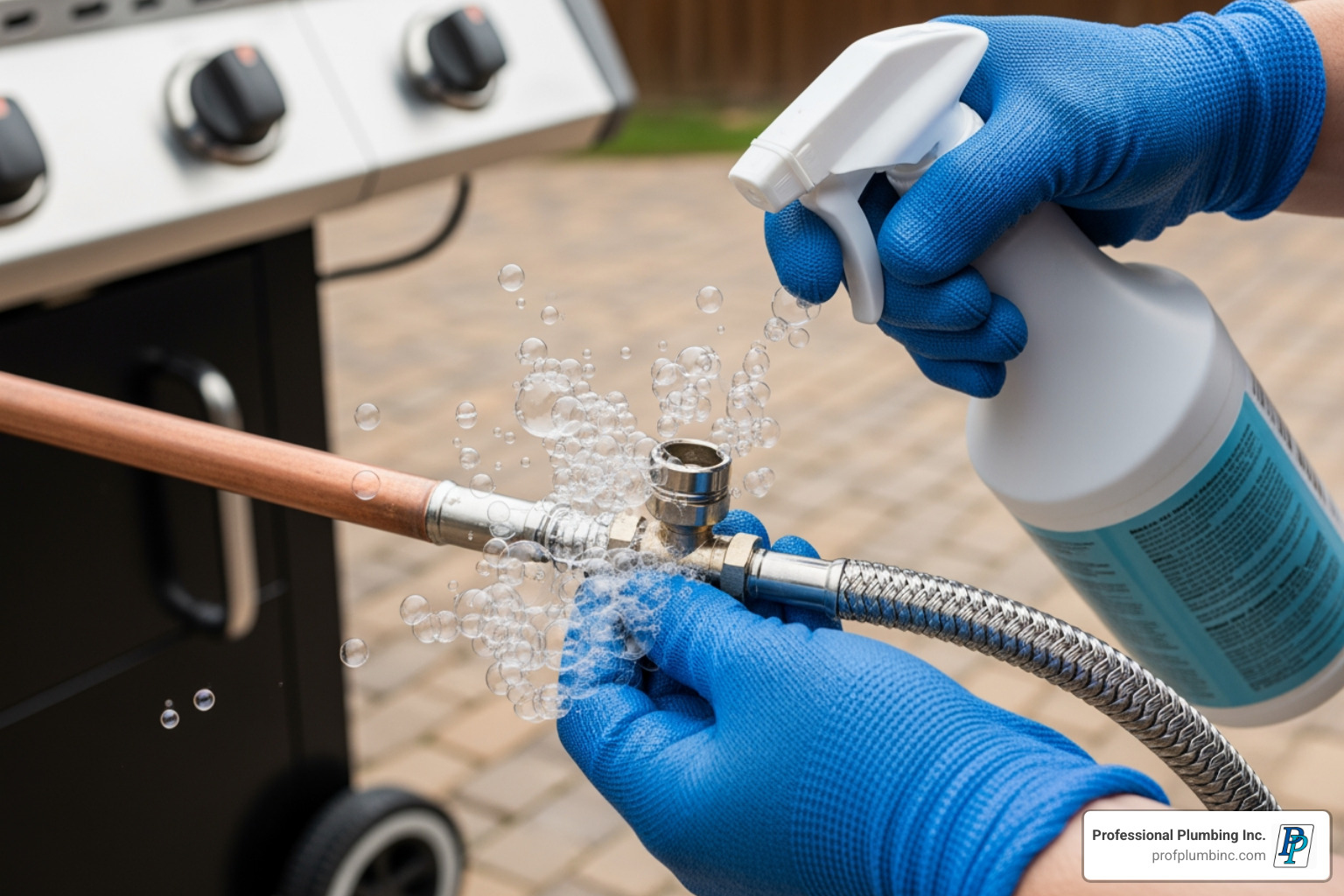
- Leak Test Every New Connection:
- Mix dish soap and water in a spray bottle or cup
- After you slowly turn the gas back on, apply the solution generously to every new joint
- Watch closely:
- Bubbling = leak
- No bubbles = connection is holding
- If you see bubbles you can’t easily resolve, shut the gas off and call a pro
- Never Use Flames to Check for Leaks:
- No lighters, no matches, no torches—ever. This is how explosions happen.
How to Properly Connect Flare Fittings on a 1 2 Natural Gas Line
On service calls throughout Huntington Beach, most leak issues at the hose come from cross-threaded or over-tightened flare fittings. Here’s the method we use in the field:
- Inspect Fittings:
- Check both male and female flare ends
- The flared surfaces should be smooth, clean, and free of nicks
- Align Carefully:
- Bring the hose straight into the fitting—no bending or side pressure
- Hand-Tighten First:
- Spin the flare nut on by hand
- You should get several easy turns—if it binds early, back it off and re-align
- Use Two Wrenches:
- One wrench on the fixed fitting (on the valve or hard pipe)
- Second wrench on the flare nut of the hose
- Tighten Gradually:
- Turn about 1/4 to 1/2 turn past snug
- You’re aiming for a firm metal-to-metal seal, not brute force
- Avoid Over-Tightening:
- Over-tightening can distort the flare and actually cause leaks
- Leak Test:
- Once tightened, do a full soap-and-water test before using the appliance
Routine Maintenance and Inspection
Even a perfectly installed 1 2 natural gas line needs occasional attention—especially in our mix of salty coastal air and sunny patios.
- Inspect the Hose Regularly:
- Look along the full length for:
- Cracks
- Cuts or abrasions
- Bulges or flat spots
- If you see any damage, replace the hose immediately
- Look along the full length for:
- Protect From Heat & Physical Damage:
- Keep hoses away from hot metal (like under certain fire pit pans) and sharp edges on masonry or metal frames
- Don’t pinch hoses under grill wheels or deck furniture—a common issue we see on small patios in Downtown Huntington Beach.
- Keep Fittings Clean:
- Dirt and sand—especially near the beach in Huntington Beach—can foul quick-connects
- Clean them gently if they become hard to connect and use a small amount of silicone-based lubricant if recommended by the manufacturer (never petroleum-based)
- Know When to Replace:
- Even with no visible damage, materials age from UV and temperature swings
- As a rule of thumb, plan to replace outdoor natural gas hoses every 5–7 years, or sooner if there are any concerns
If you ever smell gas that doesn’t clear quickly, hear hissing you can’t explain, or feel unsure about what you’re seeing, shut the gas off at the valve or meter and call a licensed plumber familiar with local codes in your city.
Frequently Asked Questions about 1/2-Inch Gas Lines
We hear a lot of questions about natural gas lines, especially the popular 1/2-inch size. Here are some of the most common inquiries we receive from homeowners across Orange County:
Can I use a natural gas hose for my propane grill?
No, you absolutely cannot use a natural gas hose for a propane grill, or vice-versa, without a proper conversion kit installed by a qualified professional. This is a critical safety issue.
Natural gas and propane operate at different pressures and require different orifices (the small holes that control gas flow) in appliances. Natural gas is a low-pressure fuel delivered directly from your utility line, while propane is stored under high pressure in a tank and then regulated down to a lower, but still different, pressure for the appliance. Connecting a natural gas hose to a propane appliance (or the other way around) can lead to a safety hazard, including fire, explosion, or inefficient and dangerous combustion. If you want to convert an appliance from one fuel type to another, it requires a specific conversion kit and should always be done by a licensed gas technician.
How long can a 1/2-inch natural gas hose be?
The maximum safe length for a 1 2 natural gas line depends on several factors, including the BTU rating of your appliance and the potential pressure drop over distance. While hoses are available in lengths up to 70 feet, for typical patio appliances like grills and fire pits, common lengths like 12 feet, 20 feet, and 24 feet are generally safe and effective.
The longer the hose, the more potential there is for a pressure drop, which can reduce the gas flow to your appliance. If the hose is too long for the appliance’s BTU demand, you might experience reduced heat output or inconsistent performance. Always check the manufacturer’s specifications for your appliance and hose, and if you need an unusually long run, it’s best to consult with a licensed plumber to ensure adequate gas supply and pressure.
Do I need a professional plumber to connect my gas hose?
This is a great question with a nuanced answer that often depends on the specific task.
- Connecting a quick-disconnect hose to an existing, properly installed gas outlet: If you already have a natural gas quick-connect outlet installed on your patio, connecting a new hose to your appliance is often a task a homeowner can handle. The quick-connect fittings are designed for ease of use and typically have built-in safety features.
- Installing the gas supply valve or hard piping: Any work involving the permanent gas piping system of your home, including installing a new outdoor gas outlet, extending a gas line, or replacing rigid gas pipes, requires a licensed and qualified professional. This is not a DIY job. Gas lines are complex, and improper installation can lead to dangerous leaks, fires, or explosions. Licensed plumbers are trained in gas pipe sizing, materials, pressure testing, and local building codes, ensuring the installation is safe and compliant with Orange County regulations.
Prioritizing safety is key. If you are ever in doubt about performing gas line work, or if the task involves modifying your home’s permanent gas plumbing, please call a professional.
Conclusion: Safe, Reliable 1/2-Inch Gas Lines for Your Huntington Beach Patio
A properly selected and installed 1 2 natural gas line is one of the simplest ways to make your outdoor space in Huntington Beach more usable and enjoyable.
We’ve covered:
- What a 1/2-inch natural gas line is and why it’s the standard choice for most outdoor appliances
- How correct sizing affects BTU output and flame strength
- What to look for when choosing a safe, durable, CSA-certified hose
- How to connect and test fittings the way we do on real jobs throughout Huntington Beach
- Why regular inspection and timely replacement protect both your home and your family
Natural gas gives you the convenience of no more propane refills and fast, reliable heat for grills, fire pits, and heaters—from backyards near Central Park to balconies overlooking Huntington Harbour. But that convenience always has to be paired with serious respect for safety.
If you’re:
- Unsure whether your existing gas piping is sized correctly
- Planning a new outdoor kitchen, fire feature, or patio heater circuit
- Dealing with low flame, frequent shutdowns, or suspected leaks
…it’s time to bring in a licensed local plumber who understands both gas line sizing and the local codes and inspection practices in your specific city.
For homeowners in Huntington Beach, we regularly:
- Inspect existing gas systems for safety and compliance
- Size and install new outdoor gas lines and shut-off valves
- Provide and connect the right 1 2 natural gas line for your specific appliances
Done right, your natural gas system becomes a quiet, reliable backbone of your outdoor living space—letting you focus on grilling, gathering, and enjoying the Orange County weather, not worrying about what’s happening behind the burner.