Continuous Water Heater: 2026’s Smartest Pick
Endless Hot Water in Huntington Beach: Why Your Neighbors Are Switching to a Continuous Water Heater
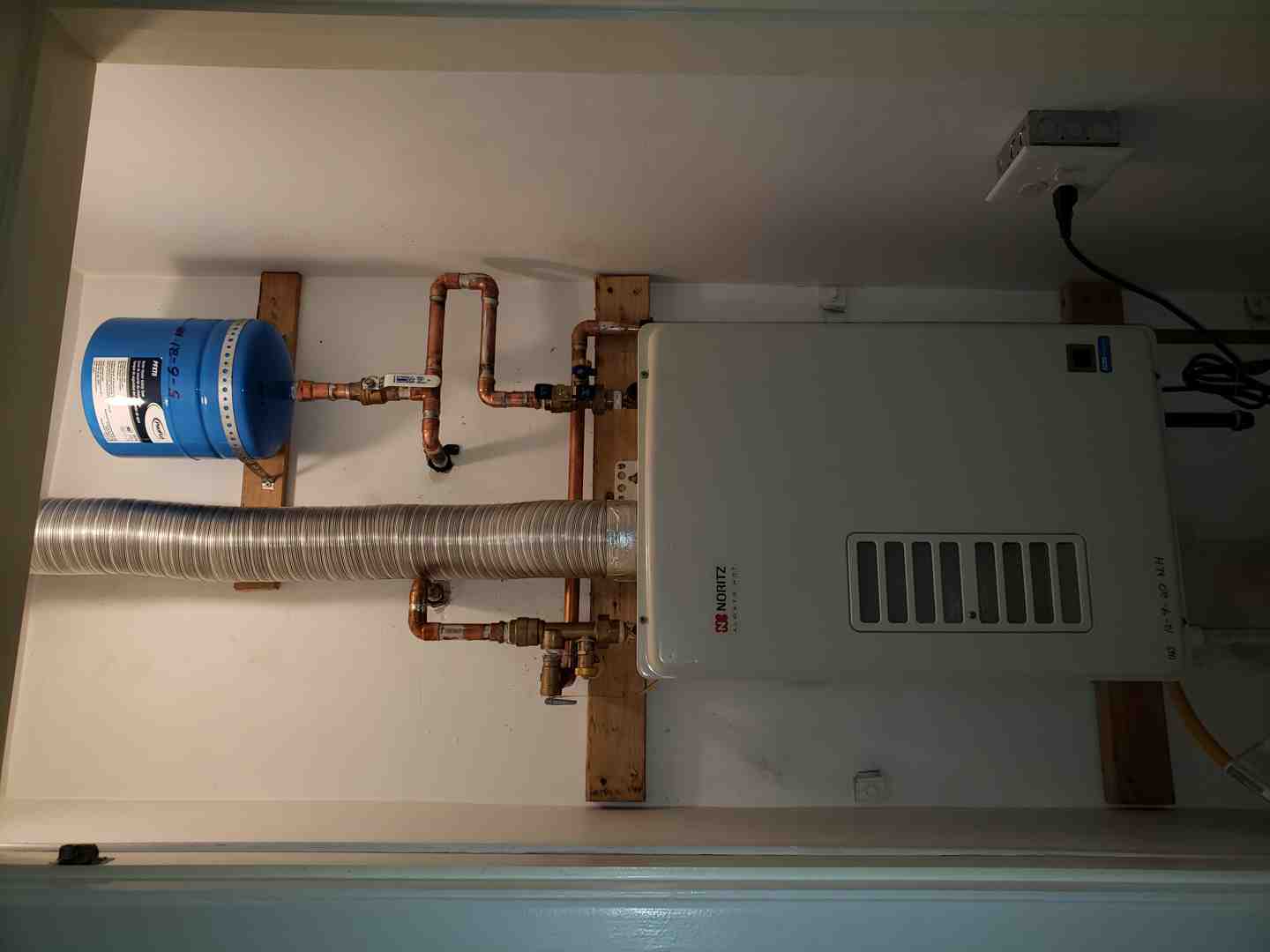
A continuous water heater is a tankless system that heats water on demand, eliminating the need for a storage tank and providing an endless supply of hot water whenever you need it. Here’s what makes them different:
- Instant heating – Water is heated only when you turn on a tap
- No storage tank – Compact units mount on walls, saving valuable space
- Energy efficient – Only uses energy when hot water is needed, not 24/7
- Longer lifespan – Typically lasts 20+ years vs. 10-12 years for tank models
- Cost savings – Up to 34% more efficient than traditional water heaters
You’ve probably experienced it: jumping in the shower in your Huntington Beach home, only to have the hot water run out halfway through. Or waiting 30-40 minutes for your tank to reheat after your teenagers have drained it. These frustrations are exactly why more Huntington Beach homeowners are switching to continuous water heaters.
The technology isn’t brand new – these systems have been popular in space-conscious countries like Japan and Germany since the 1990s – but they’re now becoming the go-to choice for American homes. With rising energy costs and California’s push toward efficient appliances, the timing has never been better to understand what these systems can do for you.
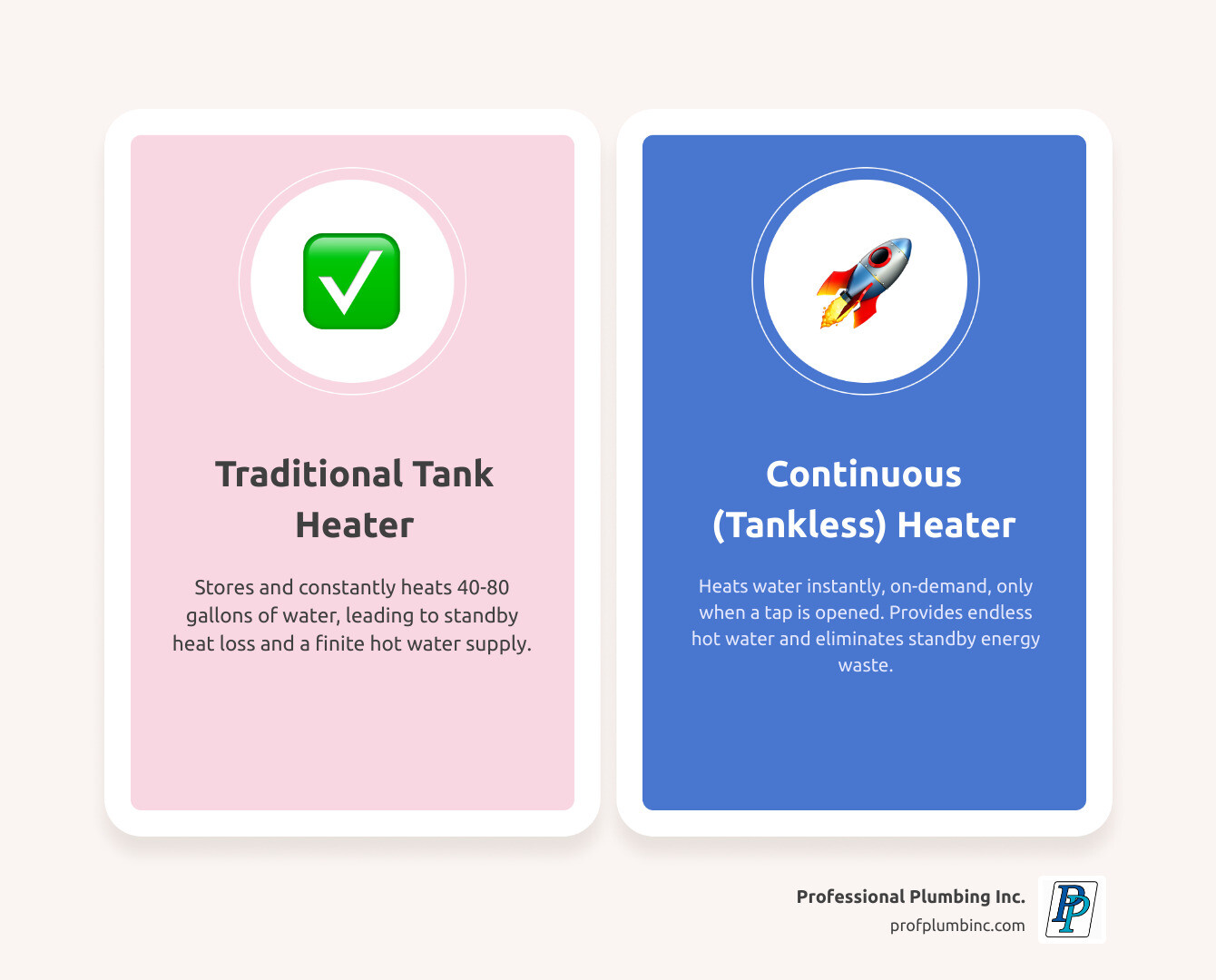
Unlike traditional tank heaters that constantly burn energy keeping 40-80 gallons hot around the clock, continuous water heaters activate only when you open a tap. A sensor detects the flow, the burner or heating element fires up, and hot water flows through a heat exchanger directly to your faucet or shower. When you’re done, the system shuts off completely. No standby energy loss. No running out mid-shower.
I’m William Horsky, and over my 42+ years in the plumbing trade across Huntington Beach, from Sunset Beach to the Bolsa Chica wetlands, I’ve installed hundreds of continuous water heaters for families tired of cold showers and high utility bills. Professional Plumbing Inc. has been helping Huntington Beach homeowners understand and upgrade to these efficient systems since long before they became mainstream.
The Pros and Cons for Huntington Beach Homeowners
Deciding on a new water heater is a big investment. Continuous water heaters offer huge benefits, but it’s important to understand the full picture for your Huntington Beach home.
The Upside: Why Go Tankless?
The appeal of a continuous water heater is undeniable, offering advantages that make them a smart choice for many homeowners from the Huntington Harbour to the Seacliff community.
- Endless Hot Water: Never run out of hot water again, even with multiple showers and appliances running. For a busy family in Huntington Beach, this is a game-changer.
- Energy Efficiency & Lower Bills: These units only heat water on demand, eliminating the “standby energy losses” of tank heaters. An ENERGY STAR certified model can cut water heating costs by up to 34%, leading to significant long-term savings on your utility bills. This also reduces your carbon footprint.
- Space-Saving Design: Living in a compact home near Main Street or a condo overlooking the pier? Tankless units are small, wall-mounted, and free up valuable floor space previously occupied by a bulky tank.
- Longer Lifespan: A well-maintained continuous water heater can last 20 years or more, nearly double the 10-12 year lifespan of a typical tank model. This means less frequent replacement and better long-term value.
- Reduced Risk of Water Damage: With no large tank of water to burst, the risk of catastrophic water damage is virtually eliminated, offering greater peace of mind.
- Increased Home Value: Upgrading to a modern, energy-efficient appliance like a continuous water heater can make your home more attractive to potential buyers and increase its market value.
The Downside: What to Consider Before You Buy
While the benefits are compelling, it’s important to understand the potential drawbacks before making the switch.
- Higher Initial Cost: The upfront cost for the unit and tankless water heater installation is typically higher than a traditional tank heater.
- Installation Complexity: Retrofitting a home for a continuous water heater can be complex, often requiring upgrades to gas lines, electrical wiring, and specific venting. This is why professional installation is essential.
- Startup Delay: There’s a brief delay of a few seconds from when you turn on the tap to when hot water arrives, as the unit needs to ignite and heat the water.
- Flow Rate Limitations: A unit’s capacity is measured in gallons per minute (GPM). If too many fixtures are used at once in a large home in the Edwards Hill neighborhood, it might struggle to maintain temperature and flow.
- Intermittent Use Issues: Some units may not activate at very low flow rates (a trickle), or they might cycle on and off, causing temperature fluctuations.
- Power Outage Vulnerability: Even gas models require electricity for their electronic controls, so they won’t work during a power outage.
- Potential for Light Flickering: High-demand electric models can sometimes cause LED lights in your home to flicker when they activate.
Cost Breakdown: Tank vs. Tankless
Understanding the financial implications is critical. Here’s a breakdown for your home in Huntington Beach:
- Upfront & Installation Costs: The biggest financial difference is the initial investment. A continuous water heater unit costs more, and the tankless water heater installation is more complex, potentially requiring gas, electrical, and venting upgrades. Expect to pay between $2,000 and $4,000 for a professional installation.
- Operational Costs & Savings: This is where tankless units excel. By heating water only when needed, they eliminate standby energy loss. An ENERGY STAR model can save a Huntington Beach family around $550 annually on their Southern California Edison bills and over $5,600 over the unit’s lifespan. The higher initial cost is typically recouped through these long-term savings.
- Rebates and Incentives: To promote energy efficiency, rebates and tax credits are often available. Homeowners in Huntington Beach can find rebates from local utilities like SoCalGas for ENERGY STAR models and may qualify for the Federal Energy Efficient Home Improvement Tax Credit of up to $2,000. We can help you find local rebates with ENERGY STAR.
- Long-Term Value: With a lifespan of 20+ years, lower operating costs, and increased home value, a continuous water heater is a sound long-term investment for many homeowners.
How a Continuous Water Heater Works
The technology behind these units is smart and efficient. When you turn on a hot water tap, a sequence of events provides hot water on demand, all managed by a sophisticated control system.

The On-Demand Heating Process
Here’s how a continuous water heater delivers endless hot water without a tank.
- Water Flow Sensor: The moment you open a hot water faucet in your Huntington Beach home, a sensor detects the water movement and activates the system.
- Electronic Control Unit (ECU): The ECU, or the unit’s brain, receives the signal and begins managing the heating process based on your temperature setting.
- Ignition: The ECU ignites the powerful gas burner or activates the electric heating elements. This happens almost instantly, unlike a storage tank water heater that takes time to heat a full tank.
- Heat Exchanger: Cold water passes through a heat exchanger (a series of coils), where it is rapidly heated. Advanced condensing models use a secondary heat exchanger to capture exhaust heat, boosting efficiency.
- Temperature Modulation: A thermostat monitors the output temperature, and the ECU adjusts the flame or power to maintain a consistent temperature, preventing scalding.
- Delivery: Hot water flows to your faucet. When you turn the tap off, the sensor signals the ECU to shut the system down, saving energy. No standby loss, no wasted energy.
Smart Features and Modern Controls
Today’s continuous water heaters integrate smart technology for the modern Huntington Beach home.
- Digital Temperature Controllers: Set your desired water temperature precisely. Controllers can often be placed in kitchens or bathrooms for easy access.
- Wi-Fi Connectivity and Apps: Advanced models offer Wi-Fi control, allowing you to adjust temperatures and monitor usage from your smartphone, whether you’re in Huntington Beach or away on vacation.
- Recirculation Pumps: To eliminate the “startup delay,” many units feature integrated recirculation pumps. These systems, like those in the Noritz NRCR PRO series, circulate hot water through your pipes for nearly instant delivery, saving water and time. More on recirculation technology explains how these systems work.
- Voice Control & Scheduling: Some models integrate with smart home assistants for voice control. Apps also allow you to schedule recirculation for peak usage times, further saving energy.
Choosing Your Perfect Match: Sizing and Types
Not all continuous water heaters are the same. Selecting the right type and size is crucial for meeting your household’s needs, whether you’re in a compact downtown bungalow or a larger home in Huntington Harbour.
Types of Continuous Water Heaters
The market offers several types, each with its own fuel source and best-use case.
- Gas-Fired Models: The most powerful and popular choice for whole-house applications. They use natural gas or propane (LPG) to deliver high flow rates, making them ideal for new construction and major remodels.
- Electric Models: Electric water heater installation is simpler as it doesn’t require venting, but these units need significant electrical capacity (a dedicated 240-volt circuit). Their lower flow rates make them better for smaller homes or point-of-use applications.
- Hybrid Water Heaters: These units combine tank and tankless technology. Hybrid water heaters use a small storage tank to pre-warm water, increasing efficiency by reducing the work the heater has to do. They offer a balance of efficiency and consistent flow.
- Condensing vs. Non-Condensing Units: This applies to gas models. Condensing units are more efficient (UEF ratings >0.90) because they use a second heat exchanger to capture heat from exhaust gases, pre-heating the incoming cold water.
- Point-of-Use (POU) Heaters: These are small, compact units installed under a sink or near a specific fixture. They provide instant hot water exactly where needed, reducing water waste and energy loss from long pipe runs.
Here’s a quick comparison:
| Feature | Gas Continuous Water Heaters | Electric Continuous Water Heaters |
|---|---|---|
| Initial Cost | Moderate to high (unit + complex installation) | Moderate (unit + electrical upgrades) |
| Installation | Requires gas line, venting, electrical; more complex | Requires dedicated high-amp electrical circuit; less complex |
| Performance | High flow rates (3-10+ GPM); ideal for whole-house | Lower flow rates (1-4 GPM); best for POU or small homes |
| Running Cost | Generally lower, especially with stable gas rates | Higher, depending on electricity rates and usage |
| Energy Source | Natural Gas or Propane (LPG) | Electricity |
| Ventilation | Required (direct vent, power vent) | Not required |
| Efficiency | Very high (UEF up to 0.98 for condensing models) | High, but can be less efficient than gas for high demand |
| Power Outage | May not operate due to electronics | May not operate |
How to Size Your Continuous Water Heater
Sizing is based on flow rate (Gallons Per Minute or GPM) and temperature rise, not tank capacity.
- Flow Rate (GPM): Determine your peak hot water demand. Add up the GPM of fixtures you might use at the same time (e.g., a shower at 2.5 GPM and a dishwasher at 1.5 GPM requires a 4.0 GPM unit).
- Temperature Rise: This is the difference between the incoming cold water temperature and your desired hot water output. In Huntington Beach, our groundwater temperature can drop during the winter months, so accounting for a higher temperature rise is crucial for year-round performance.
- Simultaneous Use Calculation: The key is to realistically estimate which fixtures will run at the same time. A family in Huntington Beach might run a shower and the dishwasher simultaneously.
- Showerhead Efficiency: Water-saving showerheads use significantly less water (under 2.4 GPM) than older models, which can allow you to install a smaller, less expensive unit.
- Professional Assessment: Sizing can be tricky. We recommend consulting with a Professional Plumbing Inc. expert to accurately assess your needs and ensure you get the right size unit for your home, avoiding unnecessary costs. You can find more detailed sizing guidance from our partners at Elgas.
Installation & Long-Term Care in Huntington Beach
Proper installation and regular maintenance are key to the longevity and performance of your continuous water heater, especially given Southern California’s hard water.
Installation Requirements
Installing a continuous water heater is not a DIY project. It involves specialized work that must comply with local Huntington Beach building codes.
- Venting for Gas Models: Gas units produce exhaust that must be safely vented outside using specific materials (like PVC or stainless steel) and configurations to prevent hazardous fumes from entering your home.
- Upgraded Gas Lines: Tankless heaters use a high volume of gas, which may require upgrading your existing gas line to a larger diameter to meet the demand.
- Electrical Needs: All units require electricity. Electric models need substantial power, often a dedicated 240-volt circuit, which might require an upgrade to your home’s electrical panel.
- Plumbing Modifications: Installation involves connecting to your water lines, which may require rerouting pipes and adding new valves.
- Location: The location needs careful planning due to venting, gas, and electrical needs. Outdoor installation is common in Huntington Beach thanks to our mild coastal climate, but indoor units require proper ventilation and access for maintenance.
- Professional Expertise: Due to these complexities, installation must be done by a licensed plumber. Our Professional Plumbing Inc. team has decades of experience with tankless water heater installation across Huntington Beach, ensuring safety and compliance.
Maintenance for a Long Lifespan
While durable, continuous water heaters require regular care to reach their 20+ year lifespan, especially with Huntington Beach’s hard water.
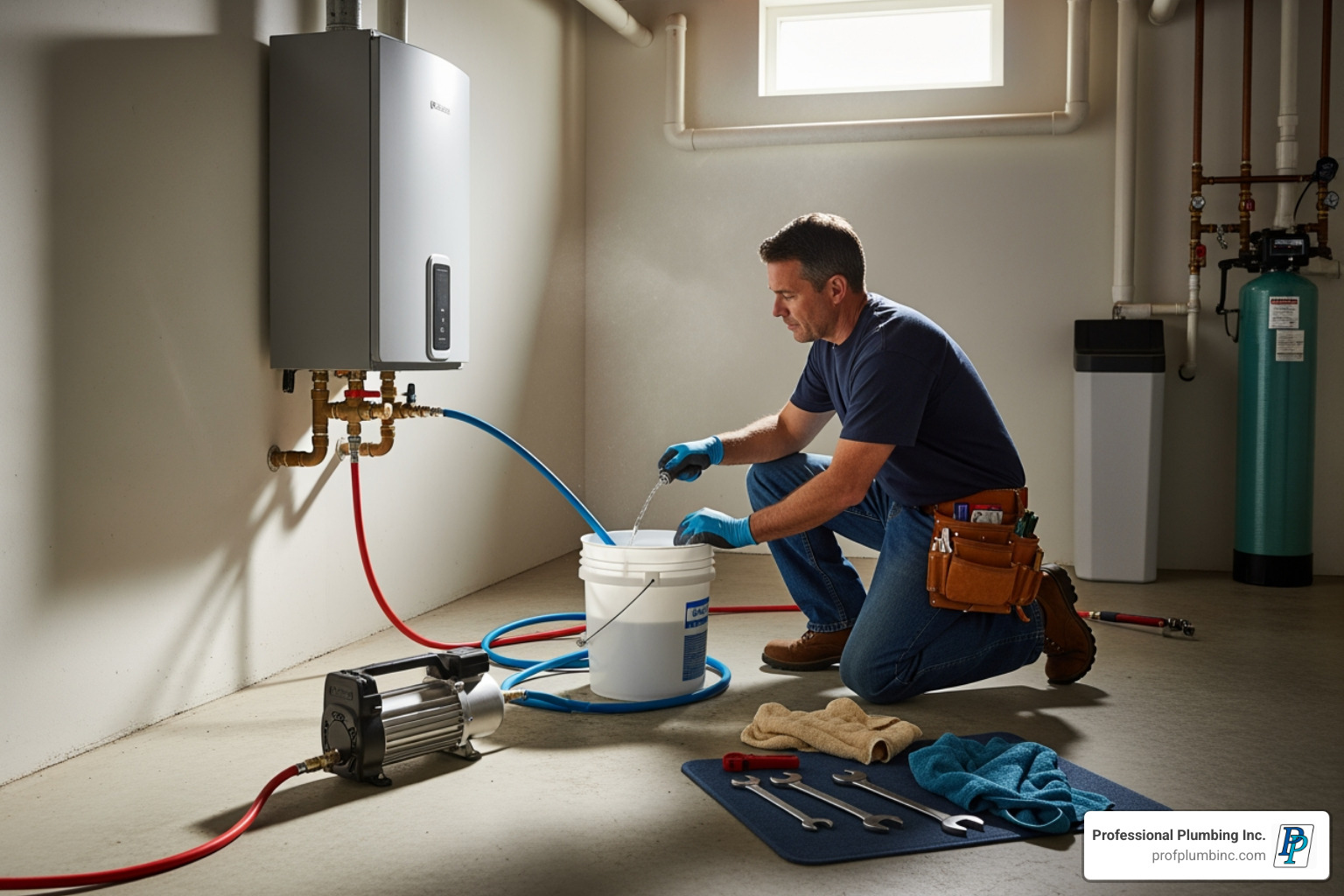
- Dealing with Hard Water: Huntington Beach’s hard water, sourced from the Colorado River and local groundwater managed by the Orange County Water District, causes mineral (scale) buildup inside the heat exchanger. This buildup reduces efficiency, restricts flow, and can cause premature failure.
- Annual Descaling/Flushing: This is the most critical maintenance task. We recommend an annual professional service to circulate a descaling solution through the unit, dissolving mineral deposits. This maintains efficiency and prevents costly repairs. You can easily schedule your tankless water heater maintenance with us.
- Filter Cleaning: Check and clean the unit’s air and water inlet filters periodically to ensure proper combustion and prevent sediment from entering the system.
- Warranty Requirements: Most manufacturer warranties (often 10-15 years on the heat exchanger) require proof of regular maintenance, like descaling, to remain valid.
Safety and Reliability
Continuous water heaters are designed with multiple safety features for reliable operation.
- Temperature Controls: Units have factory-set maximum temperatures and automatic shut-offs to prevent scalding.
- Pressure Relief Valves: A TPR valve automatically releases excess pressure or temperature, preventing dangerous conditions.
- Automatic Shut-Offs: Advanced safety systems detect flame loss or combustion issues and automatically shut down the unit to prevent gas leaks.
- Power Outage Note: Because they rely on electronics, both gas and electric models will not operate during a power outage.
- Professional Repairs: If you have issues, always call a pro. DIY repairs on these complex systems can be dangerous. For any water heater repairs, our certified technicians are ready to help.
Frequently Asked Questions about Continuous Water Heaters
How long does a continuous water heater last compared to a tank?
A well-maintained continuous water heater can last 20 years or more, which is often double the 10-12 year lifespan of a traditional tank heater. Regular tankless water heater flushing is key to achieving this longevity, especially with our local water quality in Huntington Beach.
Can I install a continuous water heater myself?
Installation is complex, involving high-voltage electricity, gas lines, and specific venting codes. It is strongly recommended to have a qualified and licensed plumber handle the tankless water heater installation to ensure safety, compliance with Huntington Beach city codes, and proper permitting. Attempting a DIY installation can void warranties, create safety hazards, and potentially lead to costly repairs down the line.
Will a continuous water heater save me money?
Yes, in the long run. While the initial cost is higher, ENERGY STAR® certified tankless models can be up to 34% more efficient, saving a typical Huntington Beach family hundreds of dollars per year on their utility bills. The savings quickly offset the higher upfront investment, especially when considering the longer lifespan and potential rebates.
Ready for an Endless Supply of Hot Water?
Switching to a continuous water heater is a smart, energy-efficient upgrade for any home in Huntington Beach. You get endless hot water, save space, and lower your monthly bills. While the initial investment is a key consideration, the long-term benefits and reliability make it a worthwhile improvement. If you’re experiencing hot water woes or considering an upgrade, the experts at Professional Plumbing Inc. can help you choose and install the perfect system for your Huntington Beach home.
Explore our water heater services to learn more or schedule a consultation today.