

Water Heater Repairs: Ultimate 2026 Guide
Fountain Valley Water Heater Repairs: A Local Plumber’s Guide
An unexpectedly cold shower is a classic Fountain Valley problem, especially with our hard water from the Orange County Groundwater Basin working against our appliances. A failing water heater can disrupt your entire day, whether you live near Mile Square Park or closer to the 405. The challenge is knowing what’s a simple fix versus what requires professional water heater repairs.
Here’s a quick overview:
Common Water Heater Problems:
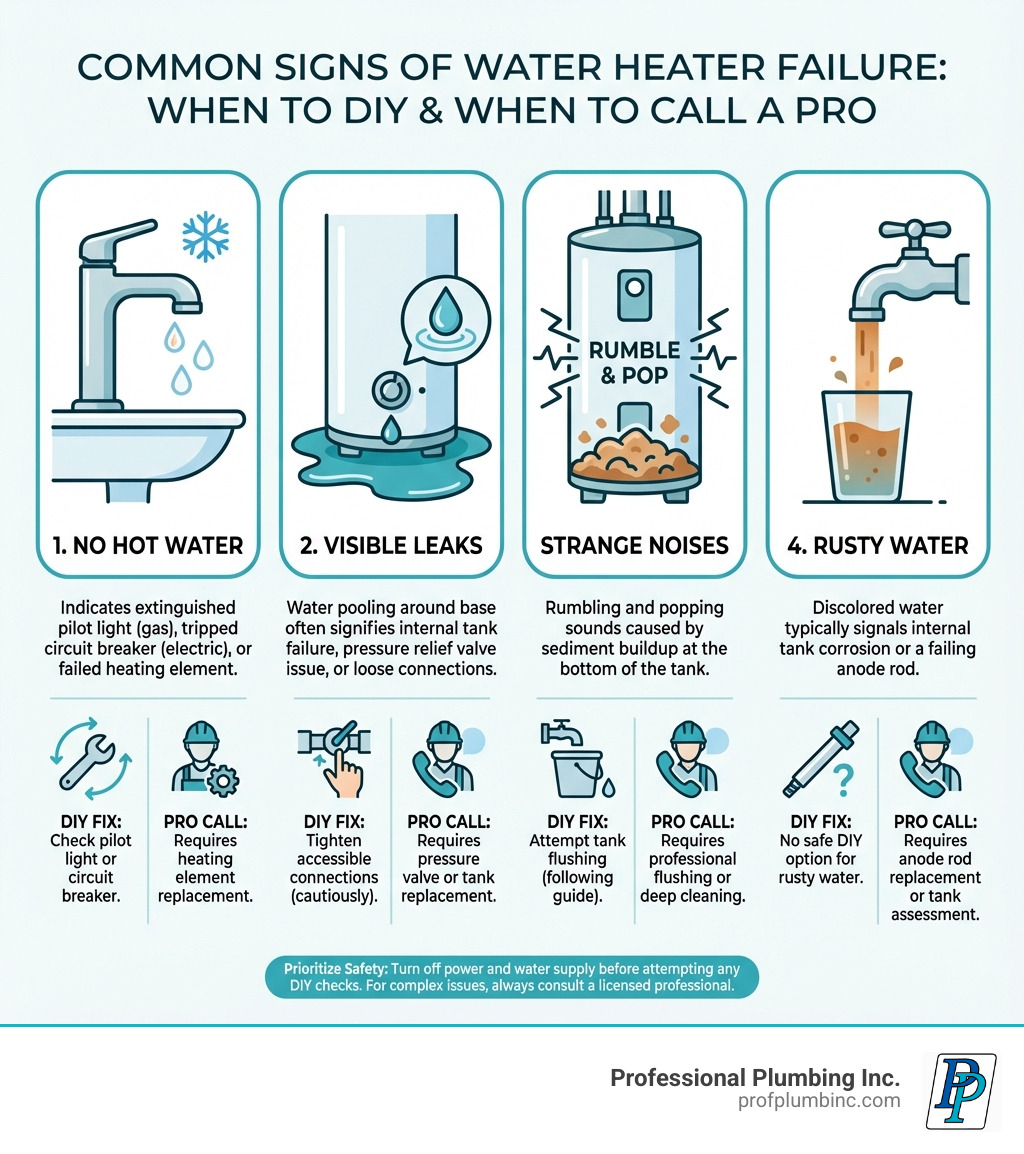
- No hot water – Check pilot light (gas) or circuit breaker (electric)
- Leaking water – Inspect pressure relief valve, drain valve, and tank connections
- Strange noises – Usually caused by sediment buildup from hard water
- Rusty water – Sign of internal corrosion or failing anode rod
- Inconsistent temperature – Faulty thermostat or heating element
When to DIY vs. Call a Professional:
- DIY: Relighting pilot light, resetting circuit breaker, adjusting thermostat
- Call a Pro: Gas leaks, electrical issues, major leaks, heating element replacement, anode rod service, tank corrosion
Fountain Valley’s hard water accelerates sediment buildup and corrosion, shortening a tank’s lifespan to just 8-12 years. This guide will help you diagnose the signs of trouble. I’m William Horsky, and with 42+ years as a licensed plumber serving Fountain Valley and surrounding areas, I’ve seen it all. My expertise is rooted in solving the unique hard water challenges our community faces. Let’s get your hot water running again.
Common Water Heater Problems in Fountain Valley Homes
In Fountain Valley, from the Green Valley neighborhood to homes near Courreges Elementary, our hard water accelerates water heater problems like sediment buildup and corrosion. Beyond no hot water, there are several telltale signs your unit is struggling.

Seeing rusty water or getting a lukewarm shower are clear distress signals for any Fountain Valley homeowner. Inconsistent temperatures, leaks, strange noises, or low water pressure all point to underlying issues that need attention.
Telltale Signs Your Water Heater Needs Repair
Recognizing early warnings can save you from a complete breakdown. Here are the signs we see most often in Fountain Valley:
- Visible Corrosion: Check the tank, pipes, and valves for rust or green discoloration. External tank corrosion is a serious red flag.
- Water Pooling: Puddles around the base always signal a leak, which could be minor (a fitting) or major (a tank rupture).
- Rumbling or Popping Sounds: Sounds like a boiling kettle or tumbling rocks indicate sediment buildup from hard water minerals being reheated.
- Hissing Noises: This may indicate a small leak evaporating on a hot surface or excessive pressure buildup.
- Whining Sounds: A high-pitched whine can point to a struggling heating element or restricted water flow.
- Discolored Water: Reddish or brownish hot water is a strong sign of rust inside the tank, often from a failed anode rod.
- Metallic Smell: A metallic odor in your hot water, especially with discoloration, points to internal corrosion.
- For more detailed troubleshooting, you can check out this guide on How to Fix Your Water Heater.
Why Is My Water Heater Leaking?
A leaking water heater is an alarming problem that can cause significant property damage in homes across Fountain Valley.
Common leak points include:
- Pressure Relief Valve (T&P Valve): This safety valve releases excess pressure. If it drips constantly, the valve may be faulty or your home’s water pressure could be too high.
- Drain Valve: Located at the bottom for flushing, this valve can leak if worn out or if sediment prevents a tight seal.
- Inlet/Outlet Connections: The pipes where water enters and exits can loosen or corrode over time, causing drips.
- Tank Corrosion: The most serious leak. If the tank itself is corroding from the inside, it’s usually irreparable and requires replacement, a common issue due to Fountain Valley’s water quality.
- Tank Rupture Danger: A malfunctioning T&P valve or a corroded tank can lead to a dangerous pressure buildup and a potential tank rupture, causing major flooding.
If you notice a leak, act fast. For expert assessment, learn more about our Storage Tank Water Heater Repair services.
What’s That Noise? Decoding Water Heater Sounds
Strange noises from your water heater are worth investigating, especially in Fountain Valley where hard water is a constant issue.
- Sediment Buildup: The primary cause of noise in Fountain Valley is hard water minerals (scale) settling at the bottom of the tank. When heated, this layer traps water, causing it to boil.
- Popping and Rumbling: These are the classic sounds of water boiling under the sediment layer. Rumbling indicates a heavier buildup.
- Sizzling: This often points to a small leak dripping onto the hot burner or heating element.
- Boiling Sound: Excessive sediment can cause the water to literally boil, reducing efficiency and potentially damaging the tank. Regular flushing is the best way to prevent scale buildup.
Don’t ignore these sounds. For comprehensive solutions, explore our Water Heater Service options.
DIY Troubleshooting: Simple Fixes You Can Try First
Some water heater issues are simple enough to tackle yourself, but always prioritize safety first.
Safety Precautions
Before attempting any DIY water heater repairs, follow these steps:
- Turn Off Power (Electric): Switch off the water heater’s circuit breaker at your electrical panel.
- Turn Off Gas (Gas): Turn the shut-off valve on the gas line leading to the heater to the “OFF” position.
- Verify Power is Off: On electric units, use a non-contact voltage tester to confirm no power is reaching the components before you begin.
- Wear Protective Gear: Use protective gloves and goggles to prevent burns or injury.
No Hot Water? Start Here.
If you have no hot water, here’s where to start troubleshooting:
- For Gas Heaters: Check the pilot light. If it’s out in your Fountain Valley home, follow the manufacturer’s instructions (usually on the tank) to relight it. A healthy flame is blue; a yellow or flickering flame signals a problem.
- For Electric Heaters:
- Reset the Circuit Breaker: In your Fountain Valley residence, find the breaker for your water heater in your electrical panel. Flip it completely off, then back on.
- Press the Reset Button: Electric heaters have a high-temperature safety switch (a red button) behind an access panel. Turn off the power, remove the panel, and press this button firmly.
If these steps don’t work, it’s time to call a pro. For help with electric units, see our Electric Water Heater Repair services.
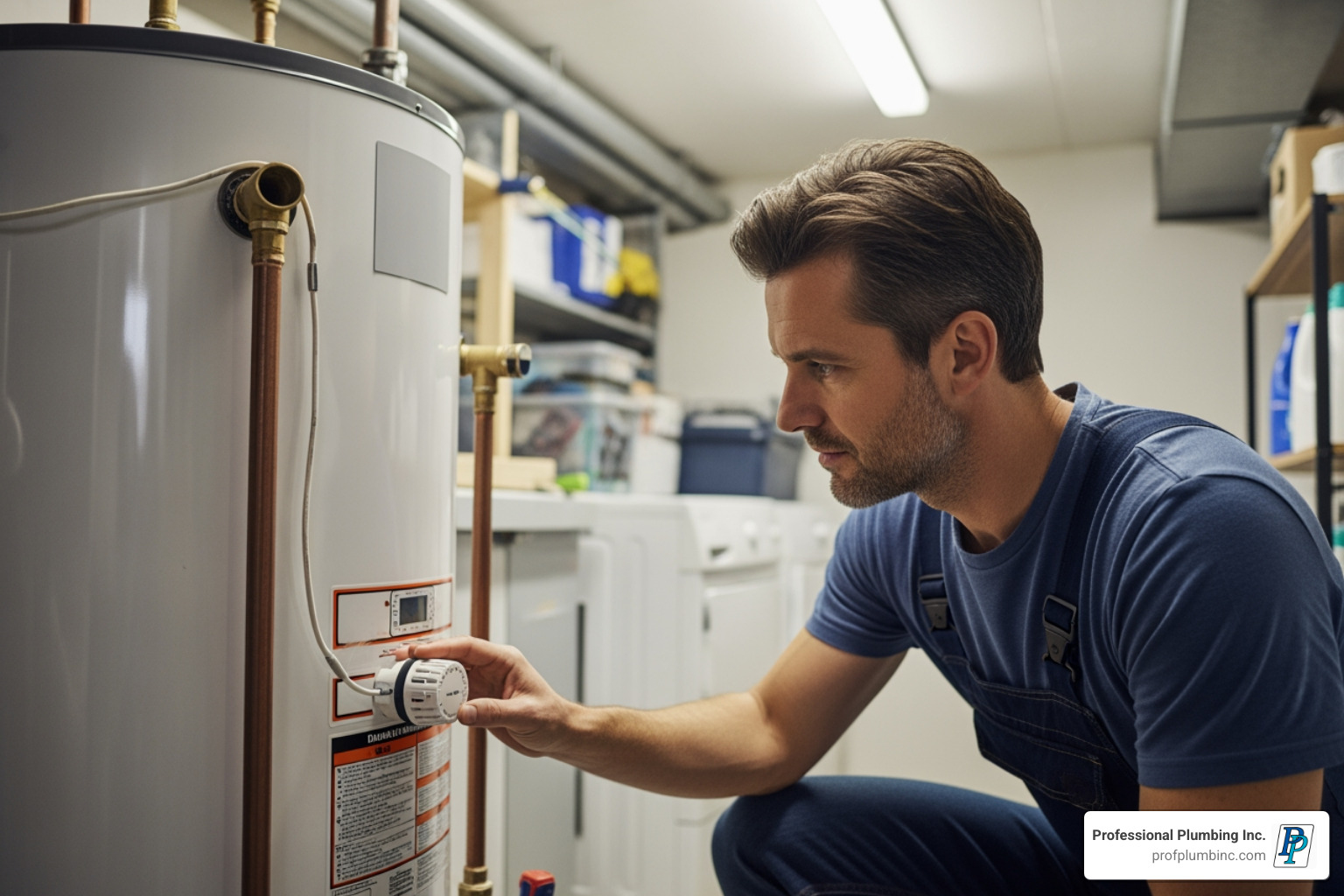
Adjusting Your Water Heater Thermostat
If your water is too hot or not hot enough, the thermostat may need adjusting.
- Location: Electric models have thermostats behind access panels on the tank. Gas models have a single dial near the bottom.
- Recommended Temperature (120°F): Set the thermostat to 120°F. This is hot enough for most needs, saves energy (3-5% for every 10° reduction), and helps prevent scalding. Temperatures above 120°F can cause serious burns in minutes.
- How to Adjust: On electric units, turn off the power before removing the access panel to adjust the dial (you may need a screwdriver).
The Ultimate Guide to Professional Water Heater Repairs
While some fixes are DIY-friendly, many water heater repairs demand the tools and expertise of a professional plumber, especially when dealing with gas or electrical components where safety risks are high.
When to Call a Pro for Water Heater Repairs
Knowing when to call a licensed plumber is crucial for your safety. Here are situations where professional help is a must:
- Failed Heating Elements: If an electric heater has no hot water after you’ve checked the breaker and reset button, the heating element likely needs professional replacement.
- Faulty Thermocouple: On a gas heater, if the pilot light won’t stay lit, the thermocouple is a common culprit that requires an expert to replace.
- Gas Valve Problems: Any issue with the gas valve is a serious safety risk and must be handled by a qualified plumber.
- Anode Rod Replacement: This task can be tricky and is best left to a pro who can inspect and replace the rod correctly.
- Major Leaks: Any leak from the tank itself or a persistent drip you can’t stop requires immediate professional attention.
- Tank Corrosion: Rusty water or visible corrosion on the tank means its integrity is compromised and replacement is likely necessary.
- For advanced issues, our Tankless Water Heater Repair services are available across Fountain Valley.
The Dangers of a Malfunctioning Water Heater
Ignoring problems or attempting repairs beyond your skill level can have severe consequences for your Fountain Valley property:
- Carbon Monoxide Leaks: A malfunctioning gas heater can produce deadly, odorless carbon monoxide if not vented properly.
- Gas Explosions: Faulty gas lines or valves create a significant risk of explosion.
- Electrical Shock: Improperly handling an electric water heater can lead to severe or fatal shocks.
- Tank Rupture: Extreme pressure buildup can cause the tank to explode, resulting in catastrophic flooding and damage.
- Water Damage and Flooding: Even a small leak can lead to thousands in water damage and structural issues.
- Mold Growth: Persistent moisture from leaks creates a perfect environment for mold, which poses health risks.
When in doubt, always call a licensed professional for your safety.
Repair or Replace? Making the Smart Choice for Your Home
As a homeowner in Fountain Valley, you’ll eventually face a big decision: repair or replace your water heater? The choice depends on the unit’s age and the repair cost.
| Factor | Repair | Replace |
|---|---|---|
| Age of Unit | Under 8-10 years old | Over 10 years old (tank) or 15+ (tankless) |
| Repair Cost | Less than 50% of new unit cost | More than 50% of new unit cost |
| Energy Eff. | Stays same | Significantly improves |
| Lifespan | Extends for a few years | New, full lifespan |
| Warranty | Often none | New warranty protection |
| Peace of Mind | Temporary | Long-term |
| Technology | Old | Modern, potentially smart features |
How to Tell Your Water Heater’s Age
Knowing your water heater’s age is critical. Most tank models last 8-12 years, while tankless units can last 20+ years.
- Find the Serial Number: Look for the manufacturer’s sticker on the side of the tank. The age is encoded in the serial number.
- Decode the Number: Each brand has a unique code. You can use an online dating chart, like the one from the International Association of Certified Home Inspectors (InterNACHI), to find the manufacturing date.
- When to Replace: If your tank heater is over 10 years old and needs a major repair, replacement is usually the best option to avoid an emergency.
Upgrading to a High-Efficiency Model
If you’re replacing your unit, consider an upgrade to a high-efficiency model for long-term savings in your Fountain Valley home.
- Tankless Water Heaters: These heat water on demand, are up to 35% more efficient, and last over 20 years. They provide endless hot water, perfect for a busy family in Fountain Valley.
- Heat Pump Water Heaters (HPWH): Also called hybrid heaters, these are ultra-efficient. An ENERGY STAR model can save a family over $330 annually on electricity bills. Plus, federal tax credits of up to $2,000 are available through 2032, making them a great investment for Fountain Valley homeowners.
- Energy Savings: Since water heating can be up to 20% of your energy bill, an efficient model offers significant savings. Learn more from ENERGY STAR and explore our Hybrid Water Heaters Installation services.
Proactive Maintenance to Avoid Future Repairs
Proactive maintenance is the best way to extend your water heater’s life, improve efficiency, and avoid surprise breakdowns in your Fountain Valley home.
Flushing Your Tank to Combat Hard Water
For Fountain Valley homeowners, flushing your tank annually is the most critical maintenance task to combat our hard water.
- Why Flush? Minerals from hard water create a sediment layer at the bottom of the tank. This forces your heater to work harder, reduces efficiency, and causes rumbling noises. Flushing removes this buildup.
- Step-by-step tank flushing instructions:
- Turn off Power/Gas: For electric, flip the circuit breaker. For gas, turn the gas valve to “OFF.”
- Turn off Cold Water Supply: Turn off the cold water inlet valve at the top of the heater.
- Open Hot Water Faucet: Open a hot water faucet in your house to relieve pressure.
- Connect Hose: Attach a garden hose to the drain valve at the bottom of the tank.
- Drain Water: Direct the hose to a floor drain or outside and open the drain valve.
- Flush: Let the tank drain completely. You’ll likely see cloudy, sediment-filled water.
- Rinse (Optional): Briefly open the cold water supply to stir up remaining sediment, then let it drain again.
- Close Drain Valve: Once the water runs clear, close the drain valve.
- Refill Tank: Turn the cold water supply back on.
- Purge Air: Wait until water flows steadily from the open hot water faucet before closing it. This means the tank is full.
- Restore Power/Gas: Turn your water heater’s power or gas supply back on.
The Importance of the Anode Rod
Think of the anode rod as your tank’s bodyguard against corrosion.
- What it is: A metal rod (magnesium, aluminum, or zinc) inside your tank that is designed to corrode so your tank doesn’t. It’s a “sacrificial” part.
- Why it matters: It protects the tank’s steel lining from rust, a crucial defense against our corrosive hard water in Fountain Valley.
- Inspection and Replacement: We recommend an annual inspection. If the rod is thin, heavily corroded, or if your water is rusty, it needs to be replaced by a professional.
For professional help, explore our Water Heater Maintenance services.
Frequently Asked Questions about Water Heater Repairs
Here are answers to some of the most common questions we get from our Fountain Valley clients:
What is the most common cause of water heater failure in Fountain Valley?
The most common cause is sediment buildup from our region’s hard water. Minerals from the Orange County Groundwater Basin settle in the tank, causing overheating, noise, reduced efficiency, and eventual failure. Annual flushing is the best way to remove these minerals and prevent damage.
How much does a typical water heater repair cost?
Costs vary widely. A simple thermocouple replacement is inexpensive, while replacing a heating element or gas valve costs more. Major leaks or internal tank corrosion usually mean a full replacement is more cost-effective than repair. Our team provides honest, upfront pricing so you always know the cost before we start.
Is it worth repairing a 10-year-old water heater?
Generally, no. Tank-style heaters last 8-12 years. If a unit over 10 years old needs a major repair (costing over 50% of a new one), replacement is the smarter financial choice. You’ll benefit from better energy efficiency, a new warranty, and improved reliability. For more on this, see Reliance Water Heaters’ guide on Repair or Replacement.
Your Trusted Partner for Water Heater Solutions
From strange noises to a major leak, understanding your water heater is key. While some issues are DIY-friendly, most water heater repairs require professional expertise for safety and reliability. If you’re facing a problem in your Fountain Valley home—whether you’re near the Fountain Valley Sports Park or in the Westmont neighborhood—the team at Professional Plumbing Inc. is ready to help. We offer honest, upfront pricing and guaranteed workmanship. With over 40 years of experience serving the Fountain Valley community, we know how to handle the challenges of our local hard water. For expert service and peace of mind, explore our water heater services today.