Tankless Water Heater Repair Newport Beach
Call 24/7: (949) 822-9548
Professional Plumbing Inc. — 120 Newport Center Dr #60, Newport Beach, CA 92660
Licensed & Insured — CSLB #517514
Tankless water heater repair in Newport Beach is usually about finding the real cause fast—scale buildup, a flow sensor issue, ignition problems, venting or air intake restrictions, gas supply problems, a clogged inlet filter, or a control/board fault. Tankless units are smart, but that also means symptoms can look confusing until someone checks the right things in the right order.
We’ll diagnose it, show you what we found, and give you repair options that make sense—no pressure.
Fast Clues (Before You Scroll)
- Cold bursts mid-shower usually points to scale buildup, gas supply under load, a flow sensor issue, or a safety shutdown.
- Error code + no hot water can be ignition, flame sensing, airflow/venting basics, or a control-related shutdown.
- Works at one faucet but not another often comes down to flow rate and restrictions (aerators, filters, scale).
- In our area, skipped maintenance can shorten performance life and cause issues sooner.
What to do right now (quick + safe)
- If there’s a gas smell, leave the area and call the gas company or 911.
- If there’s an active leak, shut off water to the unit if it’s safe to do so.
- If it’s an error code, don’t keep resetting it—write down the code and what the unit was doing.
Quick Answers
- Can a tankless water heater be repaired?
In many cases, yes. Tankless issues are often parts-based or maintenance-related, not “replace the whole unit.” - Why does my tankless go cold mid-shower?
Common causes are scale buildup, flow sensor issues, gas supply under load, or a safety shutdown. - Do you repair all brands?
Yes. We service most major tankless brands and diagnose by symptoms and test results—not guessing. Many of our techs are factory-trained.
Common brands we work on include Navien, Rinnai, Noritz, and Takagi (and most others).

Signs Your Tankless Needs Repair
Tankless units fail differently than tank heaters. These are common “something is off” signs:
- Hot water turns cold during showers
- Water temperature swings (hot/cold cycling)
- Lukewarm water even when set hotter
- Low hot-water flow at one fixture
- Unit runs but you don’t get steady heat
- Repeated error codes or nuisance shutdowns
- Unusual internal noise
- Works sometimes, then doesn’t
What Causes Tankless Problems (Most Common)
- Scale buildup in the heat exchanger: In hard water areas, scale can restrict heat transfer and flow. This is a top cause of lukewarm water, temperature swings, and reduced performance. Routine descaling helps prevent it.
- Clogged inlet water filter: Many tankless units have an inlet screen/filter. When it clogs, flow drops and the unit may not fire correctly or may act inconsistent.
- Flow sensor issues: Tankless heaters need the correct flow reading to fire and stay stable. A flow sensor problem can create “starts then stops” behavior, cold bursts, or inconsistent heating.
- Ignition or flame sensing faults: Igniters, flame rods, and related components can cause failure-to-fire symptoms and safety shutdowns. This often shows up as “no hot water” plus an error code.
- Air intake / venting restrictions: Tankless units need proper combustion air and correct venting. Restrictions or termination issues can cause shutdowns, poor performance, or repeated errors.
- Gas supply problems under load: A tankless unit can “work fine” until another gas appliance runs, then performance drops. If supply is marginal, you can see temperature swings, shutdowns, or weak output.
- Electrical or control issues: Tankless units use a control board and sensors. A loose connection, failing component, or board fault can cause erratic behavior and recurring error codes.
- Condensate drain issues (condensing models): Condensing tankless units produce condensate. If the drain is routed poorly, clogged, or not service-friendly, it can contribute to shutdowns or messy service problems.
Common Tankless Error Code Triggers (Plain English)
This is the “what it usually means” translation. The exact fix still depends on what your unit is seeing in your home.
- Ignition didn’t light (or didn’t stay lit)
- Flame sensing issue (unit doesn’t “see” a stable flame)
- Airflow/venting problem (combustion air or exhaust isn’t right)
- Overheat protection kicked in (often tied to scale or flow issues)
- Low flow / flow signal problem (unit can’t confirm the right flow)
- Fuel supply under load (gas pressure/volume drops when other appliances run)
Need a Local Plumber In Huntington Beach?

Professional Plumbing provides free inspections for current homeowners during business hours. A small fee applies for homes in escrow or for sale; this fee can be credited toward repair costs if we’re hired.
What We Check During a Tankless Repair Visit
Tankless repairs go faster when you follow a clean checklist instead of swapping parts. We typically check:
- Inlet filter condition and flow basics
- Any visible scale signs and service history (descaling)
- Ignition sequence basics and flame sensing
- Venting and air intake basics (obvious restrictions and termination concerns)
- Gas supply behavior under load (simple real-world checks)
- Temperature stability at the fixture(s) you’re complaining about
- Error code history and what triggers it
- Electrical connection basics and safe power source
- Leaks at service valves, isolation valves, and connections
- Condensate drain basics for condensing units (routing, clogs, service access)
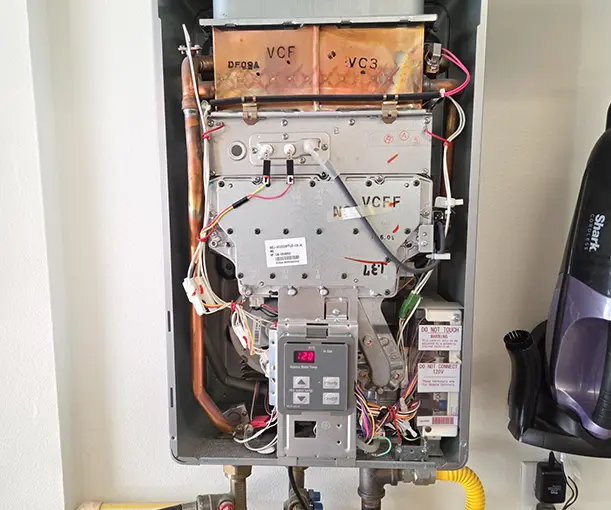
We’ll show you what we found (photo or quick video) so you’re not guessing either.
We’ll show you the readings or photos and explain the fix in plain English before any work.
Repairs We Commonly Do
Every home is different, but these are common repair paths:
- Correcting restricted flow points (filters, fixture restrictions)
- Restoring stable operation when scale is causing problems
- Sensor troubleshooting (flow, temperature, safety sensors)
- Ignition and flame-sensing repairs when the unit won’t fire
- Correcting venting/airflow problems that cause shutdowns
- Fixing leak points at service valves and connection areas
- Diagnosing control/board issues when symptoms are inconsistent
- Correcting condensate drain problems on condensing units
If the unit needs a part, we’ll explain why that part failed and what it affects—so you’re not paying for “trial and error.”
Repair vs Replace (Tankless)
A lot of tankless issues are repairable because the unit is modular and parts-based. But replacement can make sense if:
- The heat exchanger is compromised
- The unit has repeated major failures and is near end-of-life
- Repairs are stacking up and performance still isn’t stable
If it’s a clean repair, we keep it a repair. We won’t push replacement just because it’s the higher ticket.
Newport Beach Notes
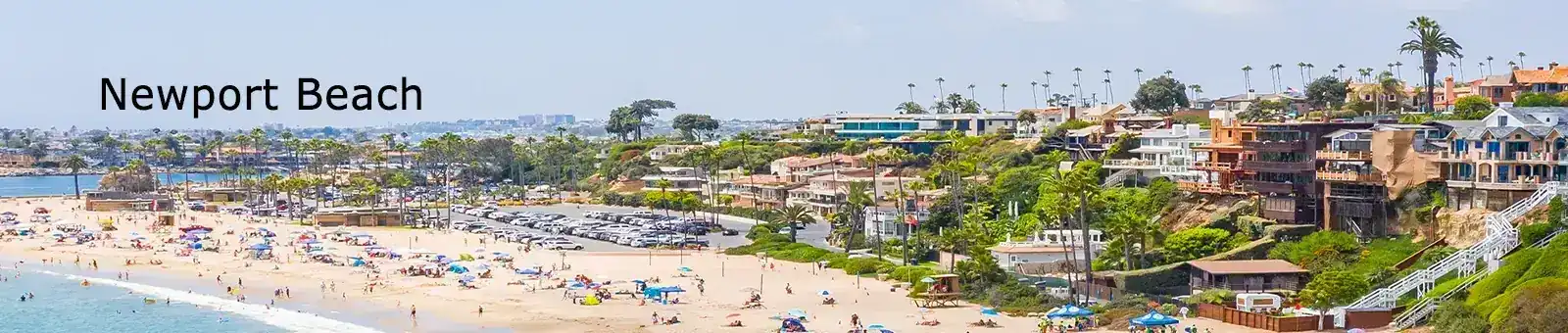
In Newport Beach, tankless problems often come from two real-world issues: scale buildup and installs that don’t leave great service access. Coastal conditions and hard water can make maintenance more important, and tight mechanical layouts can make it easy for owners to skip service until symptoms show up. Our goal is to get stable hot water back and keep the system serviceable so the same issue doesn’t repeat.
We regularly run tankless calls around Fashion Island, Balboa Island, Corona del Mar, Lido Isle, Dover Shores, Newport Heights, and Newport Coast—especially in older pockets near Newport Heights and along PCH.
Tankless Water Heater Repair FAQs
Cold bursts mid-shower are commonly caused by scale buildup, flow sensor problems, gas supply that can’t keep up under load, or a safety shutdown related to ignition or airflow/venting. A proper check looks at flow and firing behavior, not only the temperature setting.
An error code points to what the unit is protecting—ignition, flame sensing, airflow/venting, temperature sensors, or flow. The code is a clue, but the repair depends on what triggered it in your home that day.
Yes. Routine descaling and inlet filter checks help prevent temperature swings, reduced flow, and nuisance shutdowns. We also make sure the unit stays serviceable so the next maintenance visit isn’t a hassle.
Many tankless problems are repairable because they’re parts-based or maintenance-related. Replacement is usually recommended only when there’s a major failure, repeated costly issues near end-of-life, or a compromised heat exchanger.
Tankless units need a minimum flow to fire and stay stable. Low-flow fixtures, aerator restrictions, and long runs can change behavior by faucet. Scale buildup and inlet filter restrictions can also reduce flow and make temperature feel inconsistent.
Yes. A tankless unit can act normal until another gas appliance runs, then you may see temperature swings, weak output, or shutdowns. That’s why fuel supply under real household load is part of good tankless troubleshooting.