

Point-of-Use Water Heaters Newport Beach
Call 24/7: (949) 822-9548
Professional Plumbing Inc. — 120 Newport Center Dr #60, Newport Beach, CA 92660
Licensed & Insured — CSLB #517514
Point-of-use water heaters in Newport Beach are small heaters installed right near the fixture—like a far bathroom sink, a bar sink, an office break room, or a remote shower—so you get hot water faster and waste less water waiting. This is not the same thing as a whole-house tankless system. It’s a targeted fix for long pipe runs, slow hot water, and “takes forever to get warm” complaints.
If you’re tired of running the tap and waiting, a point-of-use unit can be a clean solution—when it’s sized correctly and installed safely.
Fast Clues (Before You Scroll)
- If hot water takes 30–90 seconds to arrive at one specific sink, point-of-use is worth looking at.
- If you want “instant hot everywhere,” that’s a different plan (recirculation or a whole-house approach).
- Point-of-use systems still need correct electrical, safe shutoffs, and a clean install so they don’t leak under a cabinet later.
Quick Answers
Is point-of-use the same as tankless? Not always. Some are tiny tanks, some are small tankless units.
Will it fix slow hot water at one sink? Most of the time, yes—if the issue is distance and long piping.
Do these need electricity? Yes. Most point-of-use installs are electric and must be connected correctly.
What a Point-of-Use Water Heater Is
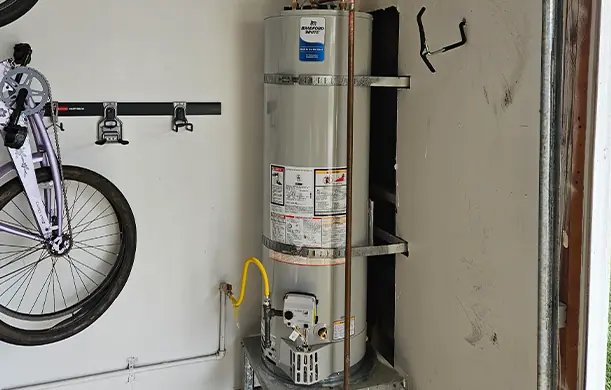
A point-of-use water heater is a small heater installed near the fixture it serves. Instead of waiting for hot water to travel across the home, the fixture gets hot water locally.
People use them for:
- a bathroom sink that’s far from the main heater
- a kitchen/bar sink in a back room or ADU
- an office or commercial hand sink
- a remote shower where “first hot water” takes too long
This is often the simplest way to reduce the “wasted water while waiting” problem without re-piping the whole house.
Where These Work Best (Newport Beach Examples)
Point-of-use units are best when one area is the problem and the rest of the home is fine.
Common “good fit” situations we see:
- a far bathroom sink that never gets hot quickly
- a guest area that’s rarely used but annoying when it is used
- a bar/coffee area where you want quick hot water for cleanup
- a hand sink in a small business where hot water arrival is slow
These are especially common in Newport Beach homes with longer runs and split layouts—older homes with additions, or properties where the main heater is tucked into a garage corner while the far fixtures are across the house.
Types: Mini Tank vs Point-of-Use Tankless
There are two main styles, and they solve slightly different problems.
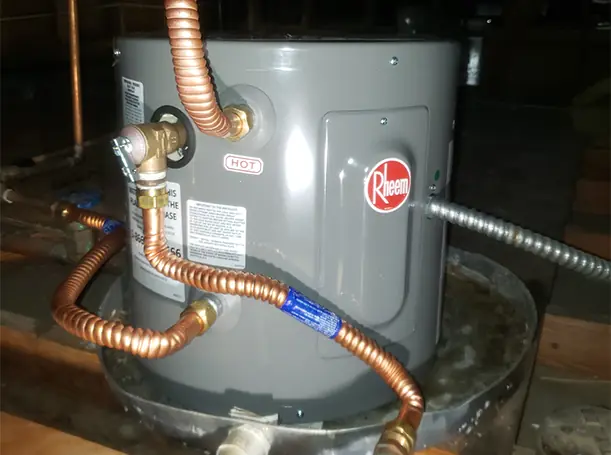
Mini tank (small storage tank)
A mini tank holds a small amount of hot water right under the sink or near the fixture.
Why people like it:
- simple and consistent for handwashing
- good for quick “on/off” use without temperature swings
- works well for sinks
What to know:
- it still needs safe shutoffs and proper mounting
- it can still scale up in hard water, just like any tank
Point-of-use tankless (small on-demand)
A point-of-use tankless heats water as it flows.
Why people like it:
- no stored hot water sitting in the unit
- can be a clean solution for steady use
What to know:
- it often needs more electrical support than a mini tank
- sizing matters more; undersized units disappoint fast
- scale control and maintenance access matter in coastal/hard-water conditions
What We Check Before Install
This is where installs go wrong when someone treats it like a “plug and play” gadget.
We check:
- the fixture’s actual problem (distance, pipe run, usage pattern)
- space and mounting: under-sink clearance, access to valves, safe drain paths
- electrical capacity and safe connection method (no sketchy power setups)
- water shut-off condition and whether dedicated shutoffs are needed
- where a leak would go if one ever happens (cabinet protection matters)
- service access so maintenance isn’t a nightmare later
If this is a small tankless unit, we also make sure it’s sized realistically for the fixture flow rate and desired temperature rise.
What’s Included in Installation
A clean point-of-use install is not just “hook it up.”
Typical installation includes:
- placement and mounting so it’s stable and serviceable
- dedicated shutoff(s) where needed for safe servicing
- clean water connections that don’t stress fittings
- leak testing and pressure checks at the connection points
- safe electrical connection appropriate to the unit
- startup test so the fixture gets steady hot water the way it should
If you want it hidden neatly, we plan the layout so it doesn’t eat up the whole cabinet and it stays accessible.
Need a Local Plumber In Huntington Beach?

Professional Plumbing provides free inspections for current homeowners during business hours. A small fee applies for homes in escrow or for sale; this fee can be credited toward repair costs if we’re hired.
Common Mistakes (So It Doesn’t Fail Early).
These are the shortcuts that cause problems later:
- Wrong sizing: the unit can’t keep up, so you get lukewarm water and disappointment
- Bad electrical setup: loose connections, wrong circuit support, or unsafe routing
- No service access: installed so tight you can’t maintain it without pulling it out
- No thought about leaks: connections tucked where a drip becomes cabinet damage
- Ignoring scale: in hard water areas, lack of maintenance planning shortens lifespan
The goal is a unit that works now and still works later—without turning into a “why is my cabinet wet” situation.
Newport Beach Notes
In Newport Beach, a lot of the “slow hot water” problem is simply long distance between the main heater and a far fixture, especially in homes with additions, split levels, or guest areas. We also see more under-sink installs in tighter cabinetry where access gets overlooked. A point-of-use setup can be a great fix—but only when it’s installed cleanly with shutoffs, safe electrical, and enough access to maintain it in the future.
Point of Use Water Heaters FAQs
No. A point-of-use unit serves one fixture or a small area nearby. Whole-house tankless systems are designed to supply multiple fixtures across the home. Point-of-use is about fixing a specific “far fixture” problem.
Usually, yes—because hot water is created near the fixture instead of traveling the full length of the house. It’s one of the simplest ways to reduce the “run it and wait” issue at a single sink or bathroom.
Mini tanks are often great for sinks and short bursts of use because they deliver steady warm/hot quickly. Point-of-use tankless units can be great too, but they’re more sensitive to sizing and electrical support. The best choice depends on your fixture, flow rate, and how you use that area.
Yes. Most point-of-use units are electric and must be connected safely and correctly. A clean electrical setup is one of the most important parts of a reliable install.
Often, yes. The trick is choosing a unit that fits the cabinet and planning the layout so shutoffs and connections stay accessible. We aim for a neat install that doesn’t turn the cabinet into a cramped mess.
They can. Any water heater can build scale over time depending on water quality. We plan the install so the unit is serviceable, and if scale is a concern we’ll talk through a simple maintenance approach that fits the unit type.