

Tank vs Tankless Water Heater in Newport Beach: Pros, Cons, Code Stuff, and the “Shortcuts” That Bite Later
If you’re in Newport Beach and deciding between a tank water heater and a tankless water heater, the choice isn’t just “which one is better.” The real question is:
Does your home support tankless the right way — gas size, venting, electrical, and (sometimes) condensate — without ugly shortcuts?
Coastal homes around Balboa Island, Corona del Mar, Newport Heights, Dover Shores, Lido Isle, and Newport Coast also have some real-world layout issues: tight garage corners, exterior alcoves, closet installs, and long runs to fixtures. All of that changes what’s smart.
When you’re ready, these pages are the next step:
- Tank Water Heater Installation (Newport Beach): /newport-beach-plumber/water-heater/tank-water-heater-installation/
- Tankless Water Heater Installation (Newport Beach): /newport-beach-plumber/water-heater/tankless-water-heater-installation/
The quick “which one fits my house” guide
A tank water heater is usually best if…
- You want the simplest install with fewer upgrades.
- Your water heater is in a tight garage/closet and you want minimal changes.
- You want repairs that are often straightforward (parts-based).
- You don’t want to touch gas line sizing, venting redesign, or electrical changes unless needed.
A tankless water heater is usually best if…
- You want longer continuous hot water for back-to-back showers (common in bigger homes near Newport Coast / Crystal Cove).
- You’re okay doing something the right way if the house needs it: gas sizing + venting + power + scale control.
- You’re converting from a tank and you want to reclaim space or modernize.
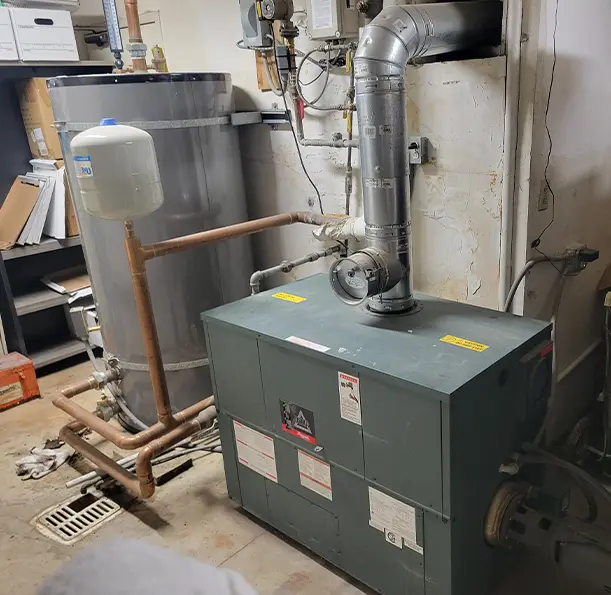
Tank water heater advantages in Newport Beach
1) It’s forgiving in real-world installs
A lot of Newport Beach installs are in:
- garage corners near the side door
- closets in older homes (especially in older pockets near Newport Heights)
- exterior enclosures that see salty air
A tank system usually works well without requiring your home to be “rebuilt around it.”
2) Fewer “surprise upgrades”
Tank installs often reuse existing basics (with updates where needed): straps, shutoff, pan/drain where required, T&P discharge routing, and safe connections.
3) Repairs can be simpler
When a tank unit fails, it’s often a part you can diagnose and address clearly.
Tankless water heater advantages in Newport Beach
1) Longer continuous hot water (when sized correctly)
Tankless can deliver longer runs of hot water for:
- multiple showers
- laundry + showers at the same time
- guest use
But that only happens if the unit is sized properly and the house can supply what it needs.
2) Space savings
In tight garages near Fashion Island / MacArthur areas or compact side-yard installs, tankless can free up space and improve access.
3) Can be a great upgrade — if the “support systems” are done right
Tankless isn’t just the box on the wall. It’s a small system that depends on:
- gas supply
- venting
- electrical power
- water quality and maintenance access
The big difference nobody explains: tankless needs the house to “support it”
This is where Newport Beach installs go sideways. A tankless system can be great, but it’s also easier to install wrong.
Here are the big support categories.
1) Gas line sizing: the #1 tankless shortcut (and why it matters)
Most tankless units need a lot more gas input than a typical tank heater. If the gas line feeding the unit (or the home’s available gas capacity) isn’t adequate, companies sometimes do the “quick install” anyway and hope it works.
What happens when the gas line isn’t increased (or the supply is marginal)?
You’ll often see:
- hot water that goes cold mid-shower
- temperature swings when another gas appliance turns on (furnace, dryer, stove)
- nuisance shutdowns / error codes
- the unit “works fine” during mild weather, then acts up later
That’s not “normal tankless behavior.” It’s usually a fuel supply problem.
In Newport Beach, this shows up a lot in homes where the heater is far from the meter, or where gas loads changed over the years (new appliances, remodels, additions).
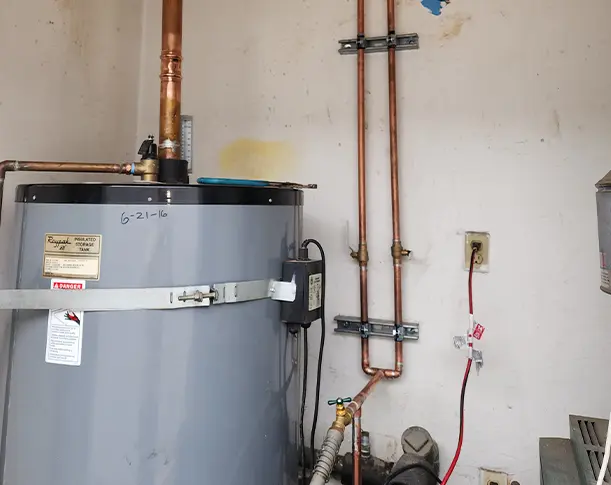
2) Venting: it’s not “whatever pipe fits”
Tankless venting must match the model requirements and safety rules. Some units use special vent materials and very specific termination rules (where it exits).
Common venting shortcuts we see
- using the wrong vent material (or mixing types)
- poor termination placement (where exhaust exits too close to openings)
- cutting corners to avoid opening walls/ceilings
- routing that creates performance issues (too long, too many turns)
This matters more in coastal neighborhoods where installs are often near patios, side yards, or tight exterior spaces.
The right approach: vent it exactly per manufacturer specs and code requirements, and place the termination where it’s allowed and won’t cause nuisance exhaust issues.
3) Electrical: “it’s gas, so it doesn’t need power”… not true
Most gas tankless units still need 120V power for controls, ignition, and safety systems. Local tankless guidelines commonly call out a nearby receptacle and prohibit extension cords; outdoor installs often need GFCI/weather-rated protection.
Common electrical shortcuts
- plugging into a garage outlet across the room with an extension cord
- no GFCI where it’s needed
- outdoor receptacle not weather-protected
The right approach: provide a proper, code-compliant power source in the correct location, using the right protection for the environment.
4) Condensate: only for condensing units, but it must be handled correctly
If you install a condensing tankless water heater, it creates condensate that needs proper routing. Condensate rules (including not combining with certain discharges) show up in code guidance.
Common condensate shortcuts
- dumping condensate where it stains concrete or damages surfaces
- tying it into something it shouldn’t be tied into
- routing it in a way that backs up or freezes (rare here, but routing still matters)
- no thought given to long-term service access
The right approach: route condensate properly, with the correct pipe sizing and slope, and keep it serviceable.
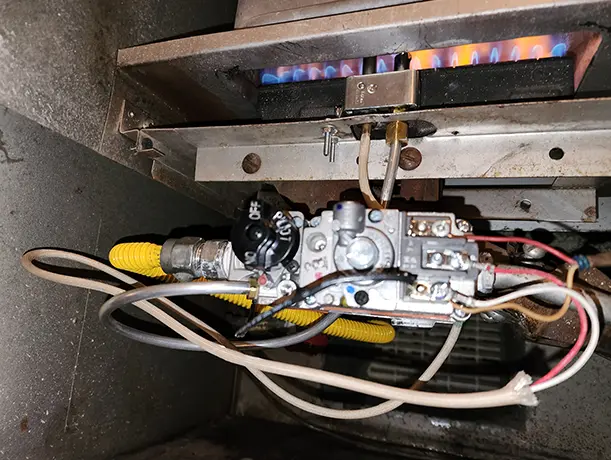
5) Relocating water lines: tankless is often “a new layout,” not a swap
A tank heater is often a simple “swap in place.” Tankless sometimes changes:
- where the hot and cold enter the unit
- where shutoffs sit
- where service valves go
- how you access the unit for maintenance
Common shortcuts
- cramming isolation/service valves into a spot you can’t access later
- installing the unit so tight you can’t service it without removing it
- leaving the water piping unsupported or stressed
The right approach: pipe it clean, provide real service access, and install isolation valves so it can be maintained the right way (which also aligns with California energy guidance for tankless setups).
Permits and “code changes”: what Newport Beach homeowners should know
In Newport Beach, water heater replacement typically requires a permit.
Also, earthquake bracing/strapping is a well-known California requirement for water heaters.
Translation in plain English:
- A real install shouldn’t feel like “swap it and run.”
- It should include the safety basics (strapping, relief discharge, shutoffs, proper venting where applicable).
- And if tankless is involved, it should include the support systems (gas, venting, electrical, condensate when applicable).
The honest “pros and cons” list (Newport Beach edition)
Tank water heater pros
- Usually fewer upgrades
- Often lower install complexity
- Repairs can be simpler
- Works well in tight garages/closets
Tank water heater cons
- Finite stored hot water (you can run out)
- Sediment can build up (popping/rumbling)
- If the tank body fails, replacement is usually the real fix
Tankless pros
- Longer continuous hot water (when sized + supplied correctly)
- Space savings
- Modern upgrade path
Tankless cons
- More sensitive to gas sizing and venting details
- Needs proper electrical supply (even though it’s “gas”)
- Condensing units add condensate routing considerations
- Hard water / scale makes maintenance more important
Need a Local Plumber In Huntington Beach?

Professional Plumbing provides free inspections for current homeowners during business hours. A small fee applies for homes in escrow or for sale; this fee can be credited toward repair costs if we’re hired.
The “shortcut checklist” (how to spot a questionable tankless bid)
If a quote looks too easy, watch for these:
- No mention of gas line sizing or available BTU load
- “We’ll use the existing vent” without confirming model requirements
- No mention of electrical outlet / GFCI / weather-rated protection
- Condensing unit quoted with zero mention of condensate routing
- No mention of permit, even though Newport Beach says water heater replacement requires one
You don’t need scare tactics here. You just want the install to be reliable for years, especially with coastal conditions and real household demand.
Ready to choose? Start here
- Tank Water Heater Installation (Newport Beach): /newport-beach-plumber/water-heater/tank-water-heater-installation/
- Tankless Water Heater Installation (Newport Beach): /newport-beach-plumber/water-heater/tankless-water-heater-installation/
If you’re not sure, pick the one that matches what you already have, and we’ll confirm your layout, demand, and what upgrades (if any) are truly needed.
FAQ: Tank vs Tankless Water Heaters in Newport Beach
No. Tankless is great in the right home, but it’s more sensitive to gas sizing, venting, and scale. A tank unit can be the better choice when you want a simpler, more forgiving system.
Undersized gas supply is a top cause. When the unit can’t get enough fuel under load, you can get temperature swings, shutdowns, or weak performance when other gas appliances run.
Most gas tankless units still need 120V power for controls and ignition, and installs commonly require proper receptacles/protection rather than extension cords.
Newport Beach guidance notes that replacing a water heater requires a permit.
Condensing models create condensate that must be routed properly. That adds another install requirement beyond gas and venting.
Because it’s time, labor, and sometimes drywall/attic work. But skipping it can cause performance problems that look like a “bad unit” when the real issue is fuel supply.
Start with real demand (bathrooms, occupancy, back-to-back showers), then confirm your home’s supply and venting path. A “bigger unit” isn’t always better if the home can’t support it.