

Install a Recirculating Pump Newport Beach
Call 24/7: (949) 822-9548
Professional Plumbing Inc. — 120 Newport Center Dr #60, Newport Beach, CA 92660
Licensed & Insured — CSLB #517514
If you’re tired of waiting for hot water in Newport Beach, a recirculating pump can be the clean fix—especially when the main water heater is far from the primary bathrooms, kitchen, or a back wing of the home. A recirculation setup keeps hot water moving through the hot line (in a controlled way) so the “wait time” drops a lot, and you waste less water down the drain.
This page is focused on installing a recirculating pump. It’s not a sales pitch, and it’s not a tankless conversion page. It’s simply about getting faster hot water the right way.
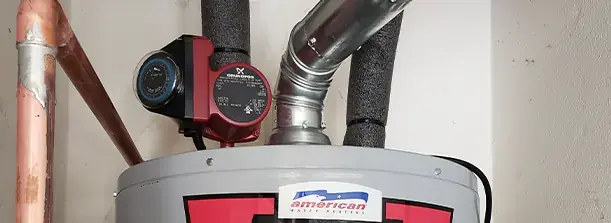
Fast Clues (Before You Scroll)
- If hot water takes 45–120 seconds to reach one or more fixtures, recirculation is worth discussing.
- If only one sink is slow, a point-of-use heater may be a better fit than a whole recirc setup.
- The best systems depend on your piping layout: dedicated return line vs a crossover approach.
Quick Answers
Will a recirculating pump give instant hot water? It usually makes hot water much faster, but “instant” depends on layout and settings.
Do I need a return line? Not always. Some homes have a dedicated return, others use a crossover setup.
Will this raise my energy bill? It can if it runs nonstop. We focus on smart control so it runs only when needed.
What a Recirculating Pump Does
A hot water recirculating pump moves hot water through your hot-water piping so the line is already warm when you open the tap. That means:
- less waiting for hot water
- less wasted water while you wait
- better day-to-day convenience for showers, sinks, and kitchen use
The goal is not to run it 24/7. The goal is to set it up so it works when you actually need it.
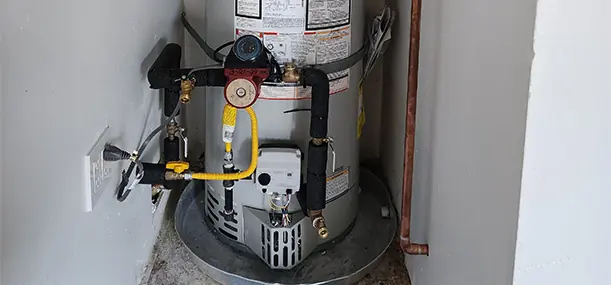
Dedicated Return vs Crossover (Two Common Setups)
Dedicated return line systems
Some homes are plumbed with a return line back to the water heater. That’s usually the cleanest style of recirculation because it’s designed for it. With a dedicated return, we can often:
- place the pump and controls cleanly
- keep performance consistent across the home
- avoid “mixing” concerns
Crossover systems (when there’s no return line)
If the home doesn’t have a dedicated return, there are setups that use a crossover valve at a far fixture area to create a path back. This can work well in the right home, but it must be installed carefully so you don’t end up with odd temperature behavior at faucets.
We’ll recommend the approach that fits your piping—because the wrong style is where people get disappointed.
Where Recirculation Helps Most in Newport Beach
Recirculation is usually the best fit when:
- the water heater is far from the main bathrooms
- the kitchen is on the opposite side of the home from the heater
- there’s a back wing, guest area, or second story that always waits forever
- you have multiple fixtures that are slow, not just one
In Newport Beach homes with longer runs, split layouts, and additions, this is a common comfort upgrade—especially in areas like Newport Heights, Dover Shores, Lido Isle, Corona del Mar, and Newport Coast where layouts can stretch out.
What We Check Before We Install
A good recirculation install is mostly planning. We check:
- your piping layout (dedicated return line vs crossover options)
- where the “worst wait” fixtures are, and how many are affected
- the water heater type and location (tank, tankless, electric, gas)
- access for installation: valves, unions, service room, garage, closet setups
- the best control method: timer, temperature-based control, or demand control
- any signs of existing issues (leaks, failing shutoffs, or poor connections)
We also pay attention to service access—because a good system should be easy to maintain later.
What’s Included in Installation
A proper recirculating pump installation typically includes:
- correct pump placement for your layout
- proper valves and connections so it can be serviced safely
- leak testing at all new connection points
- control setup (timer or smart/demand-style control when applicable)
- performance test at the fixtures that were slow before
- simple walk-through: how to use it so it doesn’t run more than it should
We’ll also show you what we did (photo or quick video), so the setup makes sense and you know where it lives.
Need a Local Plumber In Huntington Beach?

Professional Plumbing provides free inspections for current homeowners during business hours. A small fee applies for homes in escrow or for sale; this fee can be credited toward repair costs if we’re hired.
Common Problems and How We Avoid Them
Recirculation systems aren’t “bad.” Bad installs are bad. These are the issues we prevent:
- Running all the time (wasted energy): If it runs nonstop, you pay for it. We focus on control settings so it runs only when useful.
- Lukewarm water surprises: This is usually a layout or crossover detail problem. The fix is choosing the right setup and placing components correctly.
- No real improvement: That often happens when the pump is installed in a spot that doesn’t match the home’s piping flow path. We map the path first.
- Added leak risk under cabinets: If a crossover valve is used at a far fixture, we install it cleanly and make sure it’s accessible and tested.
Newport Beach Notes
In Newport Beach, long plumbing runs are common—especially with additions, guest wings, and second-story bathrooms. That’s why recirculating pump installs are popular here, but coastal homes also have tight mechanical spaces and cabinetry where access matters. Our goal is a clean install with correct shutoffs, reliable performance, and a control setup that doesn’t waste energy.
Install a Recirculating Pump FAQs
It depends. If multiple fixtures are slow, recirculation is often the better “whole-area” fix. If only one sink is slow, a point-of-use water heater can be a simpler targeted solution.
Not always. Some homes have a return line, and some don’t. If there’s no return, a crossover-style setup can work, but it needs correct placement and testing to avoid temperature weirdness.
It usually makes hot water arrive much faster, but “instant” depends on your layout, your control settings, and how far the fixtures are from the heater.
It can if it runs constantly. With proper controls—like a timer, temperature logic, or demand-style control—the system can be set up to run only when it’s actually useful.
Often, yes, but the setup matters. The pump and control strategy need to match the tankless unit and the home’s piping so it performs well without short-cycling or odd temperature behavior.
That depends on the style of system and your piping. Some pumps install at or near the water heater, while some crossover components install near the far fixtures. The goal is always a clean, serviceable install.