
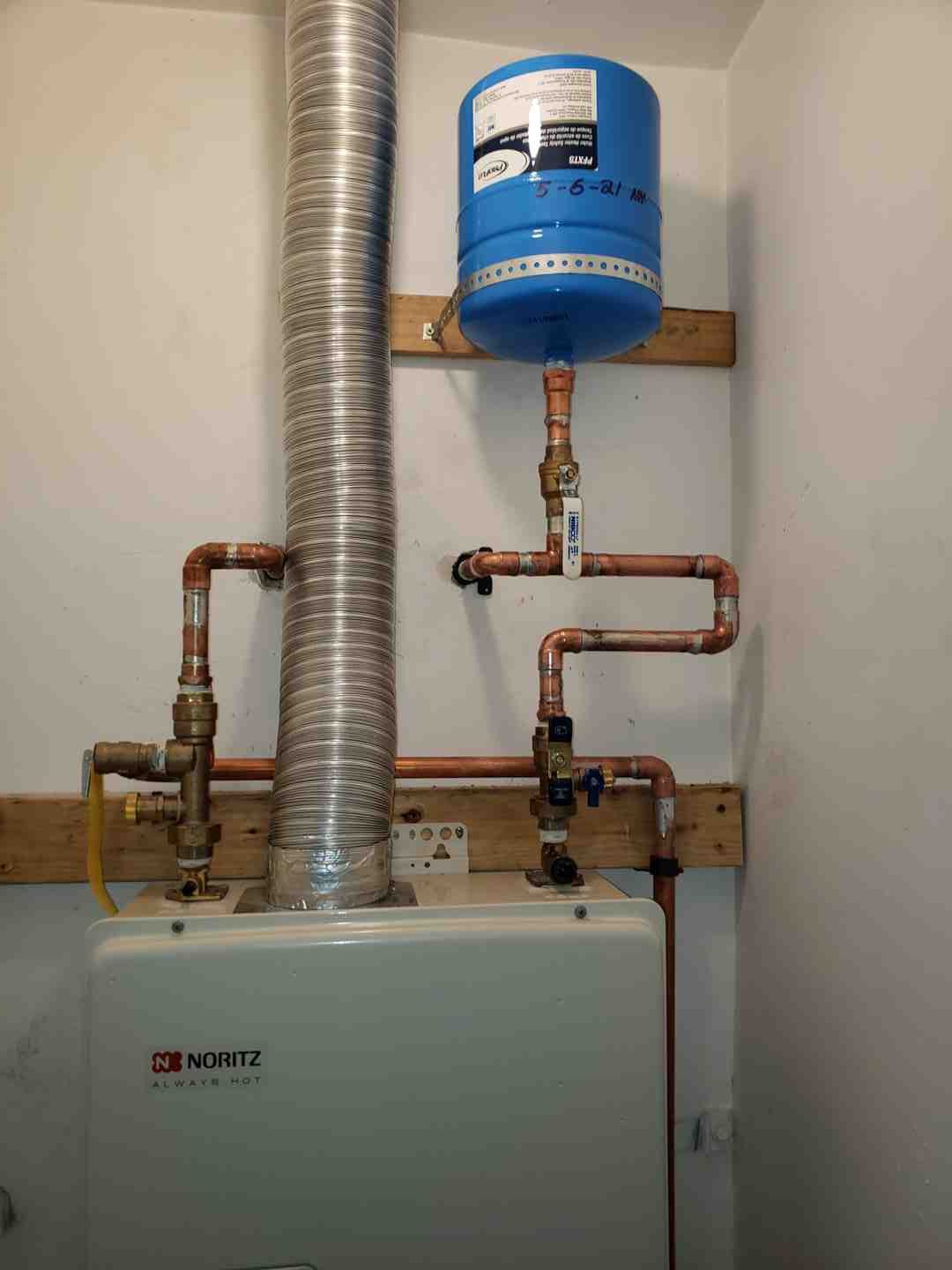
Continuous gas hot water system: Endless Hot Water 2026
Never Run Out Again: The Continuous Gas Hot Water System Solution for Fountain Valley Homes
A continuous gas hot water system (also known as a tankless gas water heater) heats water on demand as it flows through the unit, eliminating the need for a storage tank and delivering an endless supply of hot water whenever you need it.
Quick Answer: What You Need to Know
| Feature | What It Means for You |
|---|---|
| How It Works | Cold water flows through a heat exchanger, heated instantly by a gas burner activated by a flow sensor |
| Key Benefit | Never run out of hot water, even during back-to-back showers or when running multiple appliances |
| Energy Efficiency | 24-34% more efficient than tank heaters for typical household use (homes using 41 gallons/day or less) |
| Lifespan | 15-20 years, up to twice as long as traditional tank water heaters |
| Space Savings | Compact wall-mounted units free up valuable garage or closet space |
| Best For | Fountain Valley families tired of running out of hot water, homeowners remodeling, or anyone looking to reduce energy bills |
If you’ve ever had a shower turn ice-cold or had to schedule your family’s hot water use, you know the frustration of a traditional tank water heater. In Fountain Valley homes—from condos near Mile Square Park to larger houses—the demand for reliable hot water is constant. A continuous gas hot water system solves this by heating water only when you need it, ending the wait and the waste.
Water heaters can account for 20% of your energy bill, mostly from keeping a large tank of water hot 24/7. A tankless system eliminates this standby heat loss. I’m William Horsky, founder of Professional Plumbing Inc. With over 42 years of experience in Fountain Valley, I’ve seen how upgrading to a continuous flow system provides Fountain Valley families with lower bills, endless hot water, and decades of reliability.
Signs Your Old Water Heater Is Letting You Down
Is your old water heater struggling to keep up with your family’s needs? If you’re experiencing any of these common frustrations in your Fountain Valley home, it might be time to consider an upgrade to a continuous gas hot water system:
- Running out of hot water: The most common complaint. A traditional tank has a finite supply and needs time to reheat.
- High energy bills: Your tank heater constantly uses energy to keep water hot, even when you’re not using it. This “standby heat loss” inflates your utility bills.
- Long wait times for hot water: Waiting for hot water at a faucet on the other side of the house wastes both time and water.
- A bulky or leaking tank: Tanks take up valuable space and can corrode and leak over time, risking water damage. A puddle or rust is a major red flag.
- Inconsistent water temperatures: Wild temperature swings from hot to cold are a sign your heater is failing.
- Strange noises: Gurgling or rumbling sounds often mean sediment buildup is reducing efficiency and shortening the unit’s lifespan.
These issues point to an inefficient system that costs you money and comfort. A tankless system offers a modern solution.
How a Continuous Gas Hot Water System Delivers Endless Comfort
A continuous gas hot water system provides non-stop hot water through an intelligent, on-demand process. Here’s how it works when you turn on a tap:
- Cold Water Enters: Cold water flows into the tankless unit.
- Flow Sensor Activation: A sensor detects the water flow and activates the system.
- Gas Burner Ignition: The powerful gas burner ignites instantly.
- Heat Exchanger Function: Water travels through a heat exchanger, where it is rapidly heated by the burner.
- Electronic Control Unit (ECU): The ECU, or the system’s “brain,” monitors water flow and temperature, modulating the gas burner to deliver water at your precise set temperature.
- No Standby Heat Loss: Since water is heated only when needed, there is no tank and therefore no wasted energy from standby heat loss.
The result is a continuous supply of hot water for as long as you need it.
Traditional Tank vs. On-Demand Flow
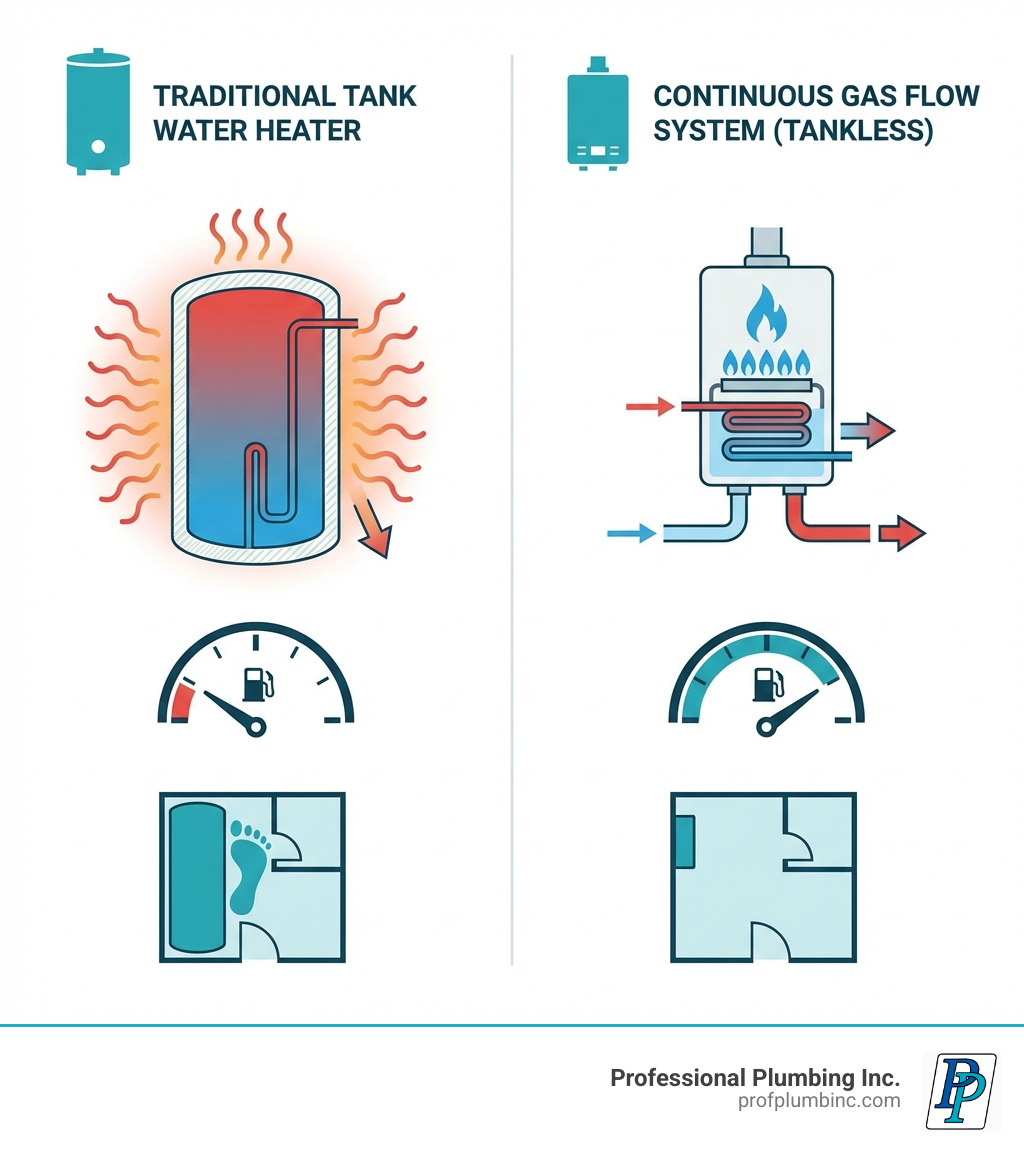
The key difference is how water is heated. A traditional tank heats and stores 40-80 gallons of water, leading to standby heat loss and a limited supply that requires recovery time once depleted. A continuous gas hot water system heats water on-demand as it flows through the unit. This on-demand approach eliminates standby heat loss, provides an endless supply of hot water, and saves significant space.
The Brains of the Operation: The ECU
The Electronic Control Unit (ECU) is the hero of a tankless system. It precisely modulates the gas flame to maintain your desired water temperature, regardless of how cold the incoming water is. It also ensures safety by monitoring the flame and gas flow, and it will automatically shut the unit off if it detects any unsafe condition, such as overheating. This smart technology is what makes modern tankless systems so reliable, efficient, and safe.
Key Considerations Before You Go Tankless in Fountain Valley
While a continuous gas hot water system offers incredible benefits, it’s not a one-size-fits-all solution. Before making the switch in your Fountain Valley home, there are several important factors we’ll help you consider:
- Initial Purchase Cost: Tankless units typically have a higher upfront purchase price than traditional tank heaters. However, their longer lifespan and significant energy savings often lead to a lower total cost of ownership over time.
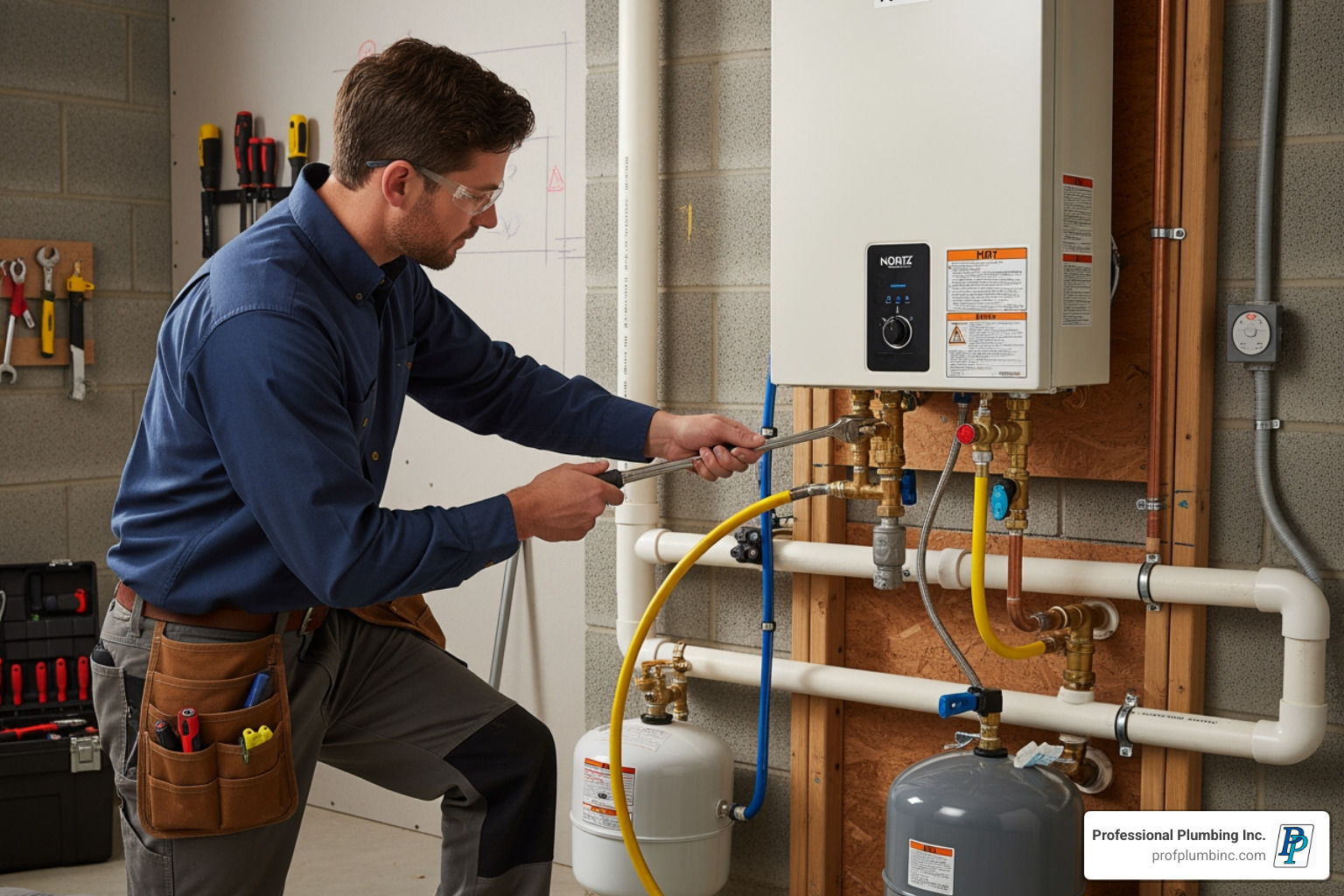
- Installation Requirements: This is where professional expertise truly matters. Tankless units often require upgrades to your existing gas line and venting system, especially if you’re replacing an older, smaller tank heater. They demand a higher volume of gas when operating at full capacity.
- Gas Supply Upgrades: Many older homes in Fountain Valley may have smaller gas lines that were sufficient for a tank water heater but are inadequate for the higher BTU (British Thermal Unit) demands of a tankless unit. We often need to run a larger gas line from your meter to the unit, which adds to installation complexity and cost.
- Minimum Flow Rate: Continuous flow systems need a minimum flow rate (usually around 0.5 GPM) to activate. A slow-leaking tap or very low-flow fixture might not trigger the unit to heat water.
- Water Hardness in Fountain Valley: Fountain Valley has moderately hard water. Hard water contains dissolved minerals like calcium and magnesium, which can lead to scale buildup in the heat exchanger over time. Regular descaling maintenance is crucial to maintain efficiency and prolong the unit’s lifespan.
- Potential for “Cold Water Sandwich”: While rare and often minimal, some users may experience a brief “cold water sandwich” effect. This can happen if you turn off the hot water for a short period (e.g., lathering in the shower) and then turn it back on. The small amount of unheated water still in the pipes between the unit and your faucet can cause a momentary temperature dip before the unit fully reheats and delivers hot water again. Modern units are designed to minimize this.
A Technician’s Take on Local Installations
“We see this a lot in older homes near Mile Square Park – the original gas lines often need to be upsized to safely handle the high-demand burner of a new tankless unit. It’s a crucial safety and performance check we always perform. Without the correct gas line size, the unit won’t operate efficiently, and in some cases, it won’t even turn on correctly. It’s why professional installation by experienced plumbers like us is non-negotiable for these systems. We make sure your home’s infrastructure is ready for the endless hot water a tankless system provides.”
For professional installation that accounts for all these local nuances, trust our team: Tankless Water Heater Installation Fountain Valley
Choosing the Right System: The Fix for Your Hot Water Woes
Selecting the right continuous gas hot water system for your Fountain Valley home means matching the unit’s capacity to your family’s lifestyle and needs.
Sizing Your Unit: More Than Just Square Footage
Sizing a tankless unit is about two key factors: flow rate and temperature rise. You need to determine the maximum flow rate (in Gallons Per Minute, or GPM) your household will demand at one time.
- Calculate Peak Flow Rate (GPM): Add up the GPM of all fixtures you might use simultaneously. A standard shower is about 2.5 GPM, while a water-saving one might be 1.8 GPM. A dishwasher uses about 1.5 GPM.
- Consider Simultaneous Use: The most critical factor is how many people shower at once or if you run laundry while someone is in the shower. The number of bathrooms is a good general indicator of potential demand.
Sizing for Your Household
Household needs vary across Fountain Valley. For a condo with 1-2 bathrooms, a 6-7 GPM unit might suffice for a shower and an appliance. A typical 3-bathroom home may need an 8-9 GPM unit to handle two showers at once. For larger homes with 4+ bathrooms and high demand, a 10+ GPM unit or even two parallel units might be the best solution to guarantee uninterrupted hot water for everyone.
We can help you assess your needs. For personalized service, contact us: Water Heater Service Fountain Valley
Indoor vs. Outdoor Installation
- Outdoor Units: These are a popular choice in Fountain Valley’s mild climate. They save valuable garage or closet space and don’t require complex indoor venting. They are built to withstand the elements.
- Indoor Units: If an outdoor location isn’t practical, indoor models are available. These require professional installation of a dedicated venting system to safely exhaust combustion gases to the outside. Some can be installed in recessed wall boxes for a clean, flush look.
Our technicians can help you determine the best and most cost-effective location for your home. For expert installation: Tankless Water Heater Installation Fountain Valley
Your Continuous Flow Questions, Answered by the Pros
Here are answers to some of the most common questions we get about continuous gas hot water systems in Fountain Valley.
What maintenance does a continuous gas hot water system require?
To ensure a long life, we recommend professional servicing every one to two years. The most important task, especially with Fountain Valley’s hard water, is descaling the heat exchanger to remove mineral buildup. A technician will also inspect the burner, clean filters, and flush the system to maintain peak efficiency and safety. Regular maintenance protects your investment and warranty.
Schedule your maintenance with us: Tankless Water Heater Maintenance Fountain Valley
What is the lifespan of a continuous gas hot water system?
A well-maintained continuous gas hot water system can last 15-20 years, which is often twice as long as a traditional tank heater. Lifespan depends on factors like installation quality, usage, and, most importantly, regular maintenance and descaling to combat hard water effects.
Are there different models, like condensing vs. non-condensing?
Yes, there are two main types. Non-condensing units are the standard, highly efficient models (around 82% efficiency). Condensing units are even more advanced, using a second heat exchanger to capture extra heat from exhaust gases. This pushes their efficiency to 90-96%+, resulting in greater long-term energy savings, though they have a higher initial cost.
How do LPG and Natural Gas systems compare?
Most homes in Fountain Valley are connected to natural gas, which is the most convenient and cost-effective fuel source. Natural gas is piped directly to your home and is generally cheaper than LPG (propane). LPG is an alternative for homes without a natural gas line but requires a storage tank on your property and is more expensive to run.
What safety precautions are essential?
Safety is paramount. Professional installation by a licensed plumber is the most critical step to ensure correct gas line sizing, venting, and connections. We also strongly recommend installing carbon monoxide (CO) detectors in your home. Finally, keep the area around the unit clear of any flammable materials. Our team ensures every installation meets all local safety codes.
Cost & Performance: Tankless vs. Traditional Gas Storage Water Heaters
When upgrading, it’s helpful to compare the initial costs, operational expenses, and long-term value of a continuous gas hot water system versus a traditional tank.
| Feature | Continuous Gas Hot Water System (Tankless) | Traditional Gas Storage Tank Water Heater |
|---|---|---|
| Upfront Cost (Unit + Install) | $3,000 – $6,000+ (Higher initial cost, may require gas/venting upgrades). These are industry-standard ranges and not a binding quote. | $1,500 – $3,000+ (Lower unit cost, simpler replacement). These are industry-standard ranges and not a binding quote. |
| Average Lifespan | 15-20 years (Longer life with proper maintenance, especially descaling for Fountain Valley’s hard water). | 10-15 years (Lifespan often shortened by sediment buildup). |
| Monthly Operating Cost (Estimate) | Lower (24-34% more efficient by heating water only on demand, eliminating standby heat loss). | Higher (Constantly reheats a tank of water, causing standby heat loss that accounts for ~20% of home energy use). |
| Pros | – Endless hot water – High energy efficiency, lower bills – Compact, space-saving design – Longer lifespan (up to 2x) – Precise temperature control |
– Lower initial cost – Simpler installation for replacement – Proven, familiar technology |
| Cons | – Higher upfront cost – Installation can be more complex – Requires minimum flow to activate – Needs regular descaling maintenance |
– Limited hot water supply – Wastes energy via standby heat loss – Bulky, takes up floor space – Shorter lifespan – Risk of tank leaks and water damage |
Who Should Call a Plumber Now?
If you’re in Fountain Valley and nodding along to any of these points, it’s time to talk to the experts at Professional Plumbing Inc. about a continuous gas hot water system:
- You consistently run out of hot water: If your family’s morning routine is a race against the cold, or you can’t run the dishwasher and shower simultaneously, a tankless system is your solution.
- Your energy bills are climbing: If you suspect your old, inefficient water heater is silently draining your wallet, an energy-efficient tankless unit will provide significant long-term savings.
- Your current water heater is over 10 years old: Old tanks are not only inefficient but also nearing the end of their lifespan, increasing the risk of failure and costly water damage.
- You’re remodeling or building a new home in Fountain Valley: This is the perfect opportunity to integrate a modern, space-saving, and highly efficient hot water solution from the start.
- You see leaks or rust on your current tank: These are urgent signs of a failing water heater. Don’t wait for a catastrophic flood; address it proactively.
Don’t settle for cold showers or high utility bills. We’re here to provide honest, upfront pricing and expert advice custom to your Fountain Valley home. For reliable water heater service, contact us today: Water Heater Service Fountain Valley
The Smart Choice for Fountain Valley Homeowners
For Fountain Valley homeowners, choosing a continuous gas hot water system is more than just an appliance upgrade; it’s an investment in comfort, efficiency, and long-term value. We’ve seen how these systems transform daily life, providing endless hot water exactly when and where you need it, all while significantly reducing your energy footprint.
With their impressive energy efficiency, compact design, and extended lifespan, continuous flow systems are a smart choice for the modern Fountain Valley lifestyle. Imagine never having to worry about running out of hot water again, even during the busiest mornings or when entertaining guests. Plus, the energy savings over the life of the unit can be substantial, making it a financially sound decision.
For expert advice and a seamless installation of your new continuous flow system, trust the experienced team at Professional Plumbing Inc. We’re dedicated to providing fast, clean, and hassle-free solutions that keep your Fountain Valley home running smoothly.
Contact us for your water heater service needs in Fountain Valley
About the Author
William Horsky is a licensed Master Plumber and the founder of Professional Plumbing Inc., bringing over 42 years of hands-on experience to homes in Fountain Valley. He specializes in high-efficiency water heater installations and is passionate about helping homeowners save money and enjoy modern plumbing comforts.