Direct Burial Gas Line: Ultimate Guide 2026
Direct Burial Gas Line in Huntington Beach: A Local Plumber’s Guide
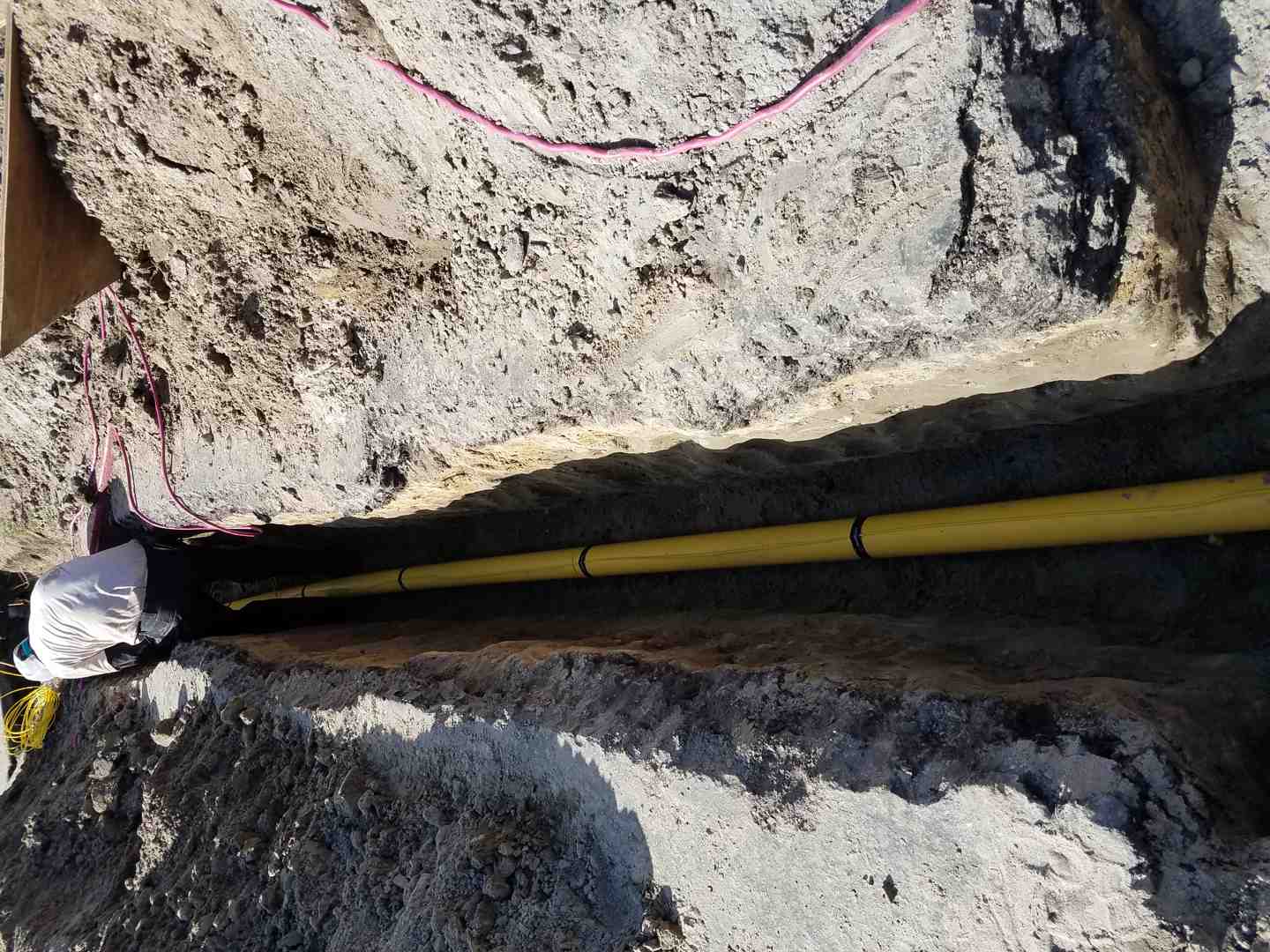
A direct burial gas line is a natural gas or propane pipe installed underground to supply fuel to outdoor appliances like pool heaters, fire pits, BBQ islands, and generators. Here’s what you need to know about burial requirements in Huntington Beach:
Key Burial Requirements:
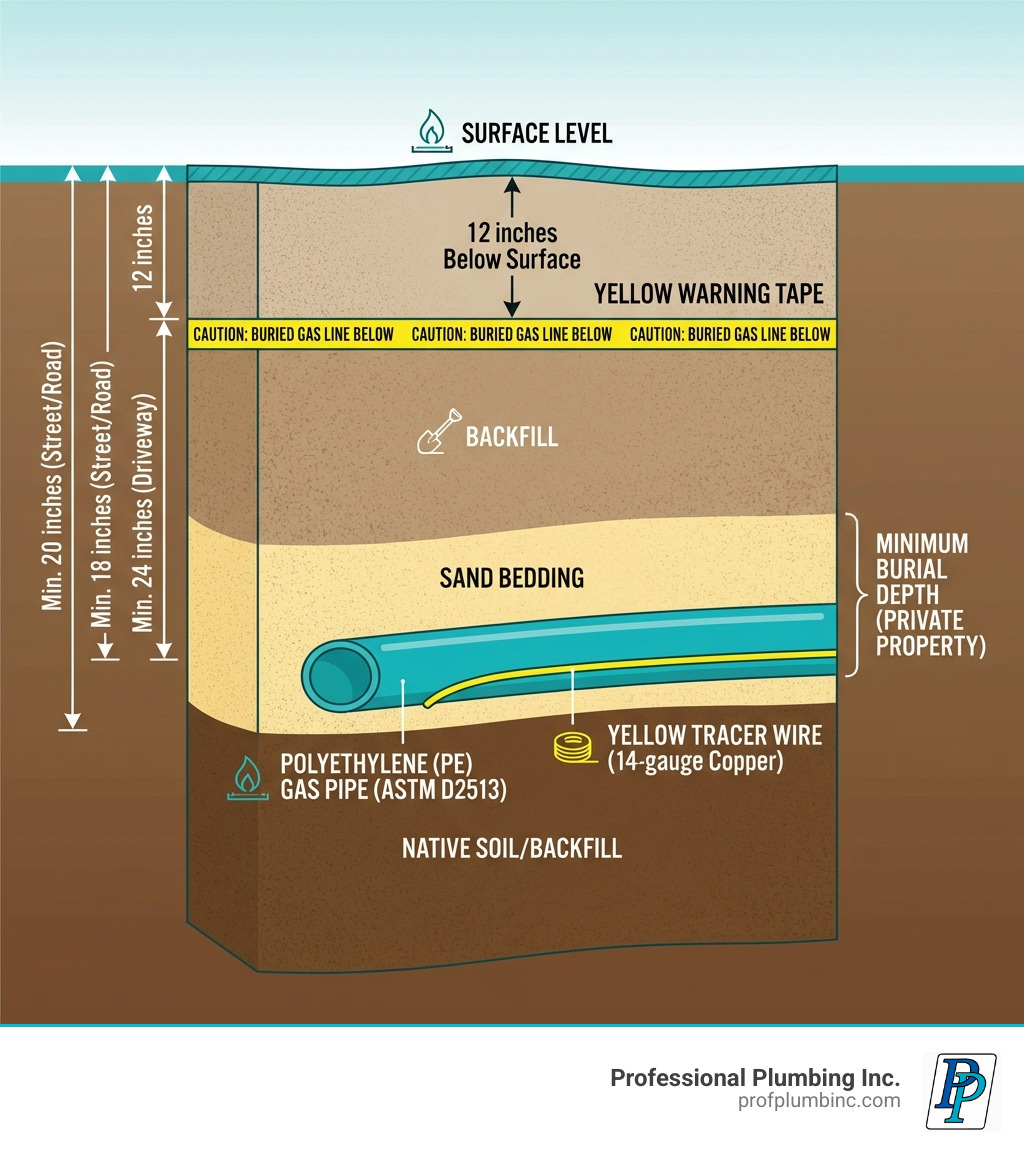
- Minimum Depth: 12 inches on private property, 18 inches in streets/roads, 24 inches under driveways
- Approved Materials: Polyethylene (PE) pipe meeting ASTM D2513, steel pipe with corrosion protection, or Type L copper tubing
- Tracer Wire Required: Minimum 14-gauge copper wire must run alongside non-metallic pipe for future location
- Pressure Testing: System must hold 1.5 times working pressure (minimum 25 psig) for at least 30 minutes
- Never Allowed: Inside buildings, under building foundations, or above ground (for PE pipe)
- Permits & Inspections: Required by the City of Huntington Beach
Whether you’re installing a gas line for a new pool heater in your Seacliff home or running natural gas to a backyard kitchen in Huntington Harbour, understanding these requirements protects your family and ensures code compliance.
Direct burial gas lines have transformed outdoor living across Huntington Beach. Instead of unsightly exposed piping running along your home’s exterior, modern polyethylene systems run safely underground, delivering reliable fuel to your outdoor appliances while maintaining your property’s curb appeal. The installation requires precise attention to depth, materials, tracer wire placement, and pressure testing—each step critical for long-term safety.
I’m William Horsky, and in over 42 years as a master plumber serving Surf City, I’ve installed countless direct burial gas line systems for homeowners throughout Huntington Beach, from the historic downtown bungalows to the homes lining the Bolsa Chica wetlands. Our team at Professional Plumbing Inc. has seen how proper installation prevents leaks, protects against accidental dig-ins, and ensures decades of trouble-free service.
Why Bury Your Gas Line? Benefits for Huntington Beach Homeowners
Imagine your beautiful backyard oasis in Huntington Beach, complete with a sparkling pool and a cozy fire pit for those cool coastal evenings. The last thing you want is an unsightly metal pipe snaking across your carefully designed landscape. This is where a direct burial gas line shines, offering a host of benefits beyond just aesthetics.
One of the most immediate advantages is improved aesthetics. Exposed gas lines can be a real eyesore, detracting from your outdoor living space. By burying the line, we eliminate this visual clutter, allowing your landscape design to truly flourish, whether it’s a lush garden in your Edwards Hill property or a sleek modern patio near the Pier.
Beyond looks, safety is paramount, especially with our salty coastal air that can accelerate corrosion on exposed metal pipes. Buried gas lines are inherently safer than exposed ones. They are protected from accidental damage caused by lawnmowers, landscaping tools, or even vehicles. This physical protection significantly reduces the risk of leaks and potential hazards. Fewer exposed components also mean reduced maintenance requirements over time, as they aren’t subjected to weathering or physical impacts. This means less worry for you and fewer repair calls for us!
Furthermore, burying a gas line often allows for fewer fittings compared to an above-ground installation. Each fitting is a potential leak point, so minimizing them improves the overall integrity and safety of your gas system. This attention to detail translates into increased property value and, most importantly, peace of mind for you and your family.
For high-demand appliances like pool heaters in Huntington Harbour or natural gas generators needed for backup power, a dedicated direct burial gas line ensures an uninterrupted and adequate fuel supply. Branching directly from your gas meter, these dedicated lines can handle the higher flow required by powerful appliances without impacting the supply to other household items. It’s the smart, safe, and sophisticated way to power your Huntington Beach outdoor dreams.
Approved Materials, Fittings, and Sizing for Underground Gas Lines
When it comes to installing a direct burial gas line, selecting the right materials is crucial for safety, longevity, and compliance with local codes here in Huntington Beach. We’ve seen many advancements over our 40+ years in the business, but some core principles remain.
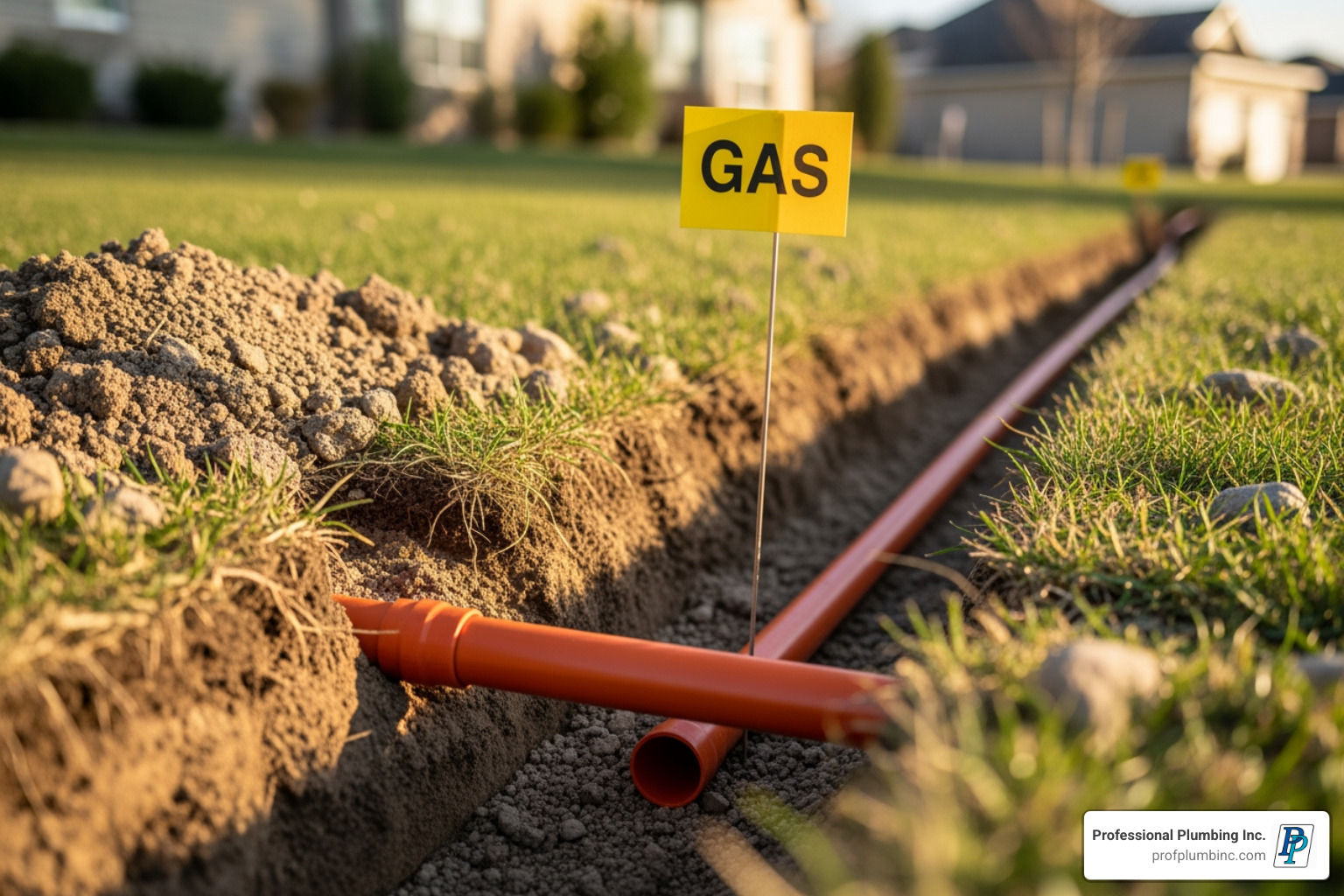
The primary approved materials for underground gas line installations include:
- Polyethylene (PE) Pipe: This is the modern standard for direct burial. It’s a type of plastic pipe specifically engineered and certified for underground use.
- Steel Pipe: While less common for new residential direct burial lines due to corrosion concerns, steel pipe can be used if properly protected with specialized coatings and cathodic protection.
- Copper Tubing: Type L copper tubing is approved for underground use in some applications, but its use is often limited by gas composition (sulfur content) and requires robust corrosion protection.
To help you understand the differences, here’s a quick comparison:
| Feature | Polyethylene (PE) Pipe | Steel Pipe | Copper Tubing |
|---|---|---|---|
| Corrosion | Excellent resistance; will not rust or corrode | Requires extensive protection (coatings, cathodic) | Requires robust protection |
| Flexibility | Highly flexible, reduces need for fittings | Rigid, requires fittings for turns | Flexible, but can kink if bent too sharply |
| Cost | Generally cost-effective for direct burial | Higher cost due to protection needs | Moderate to high, depending on application |
| Installation | Relatively easy, minimal assembly equipment | More labor-intensive, welding/threading | Requires brazing or specialized fittings |
| Lifetime | Long lifespan (decades) when properly installed | Long, but dependent on protection integrity | Long, dependent on protection integrity |
| Prohibited Use | Never inside/under buildings, never above ground | Can be used above/below ground (with protection) | Can be used above/below ground (with protection) |
Polyethylene (PE) Pipe: The Modern Standard for Direct Burial
Polyethylene pipe, often referred to as MDPE (Medium Density Polyethylene) or simply “poly gas pipe,” is our go-to for direct burial gas line projects in Huntington Beach. It’s manufactured in accordance with the ASTM D2513 standard, ensuring its suitability for gas distribution.
The benefits of PE pipe are clear:
- Durability and Corrosion Resistance: Unlike metallic pipes, PE pipe will not rust or corrode when properly installed, making it ideal for the harsh underground environment. This means a longer lifespan and fewer worries about leaks from deteriorating material.
- Flexibility: Its inherent flexibility allows for easier installation, often requiring fewer joints and fittings, which as we mentioned, reduces potential leak points.
- Cost-Effectiveness: Generally, the material and installation costs for PE pipe are more favorable than for heavily protected metallic alternatives for underground use.
However, there are critical restrictions: PE pipe is strictly for outdoor, underground use. It is never to be installed in a building or house, never to be installed under a building or house, and never to be installed above grade. These are universal safety codes adopted by the City of Huntington Beach, not just local quirks. All yellow gas pipe needs to be at or below code-mandated burial levels.
Understanding Pipe Sizing and Common Fittings
When discussing gas pipe, you’ll often hear about IPS and CTS sizing.
- IPS (Iron Pipe Size) refers to pipes with an outside diameter similar to that of traditional iron pipes. Most modern underground PE gas pipe, like the HOME-FLEX™ brand, is IPS.
- CTS (Copper Tubing Size) refers to pipes with an outside diameter similar to copper tubing. IPS and CTS sizes are significantly different and not interchangeable without a specific conversion fitting. A 1/2″ IPS pipe will not work with a 1/2″ CTS fitting! Always ensure the pipe and fitting sizes match.
For joining polyethylene gas pipes underground, several types of fittings are commonly used:
- Mechanical Fittings: These are popular for their ease of installation. Our team often uses compression-type fittings, which don’t require chamfering the pipe end (though some stab-type fittings, like Con-Stab ID Seal®, might). Many of these fittings can even be disassembled and reused if adjustments are needed, unlike some push-to-connect types.
- Transition Fittings: These are essential for connecting PE pipe to metallic pipes (like black steel pipe) or to gas meters. They typically feature steel Male Pipe Threads on one end for a secure, sealed connection to metal systems.
- Risers: These specialized components are used to transition the underground PE pipe safely to an above-ground metallic pipe, typically leading to a gas meter or an appliance connection. The metallic portion of the riser is designed to withstand above-ground exposure, while the PE portion is buried.
All fittings must be rated for gas use and compatible with the specific PE pipe material and pressure. We always ensure every component meets ASTM D2513 standards and is approved for use with Natural Gas or LP gas, depending on your system.
Code Requirements for Your Direct Burial Gas Line in Huntington Beach
Navigating the regulations for a direct burial gas line in Huntington Beach can feel like a maze, but it’s essential for your safety and to avoid costly issues down the line. Our experience working exclusively in Huntington Beach has taught us that local codes, permits, and inspections are non-negotiable. Skipping these steps is a recipe for disaster.
Before any digging begins, we consult the City of Huntington Beach Building & Safety Department guidelines, which are based on the California Plumbing Code (CPC). These local adoptions dictate the specific rules we must follow for every installation.
How Deep to Bury Your Direct Burial Gas Line
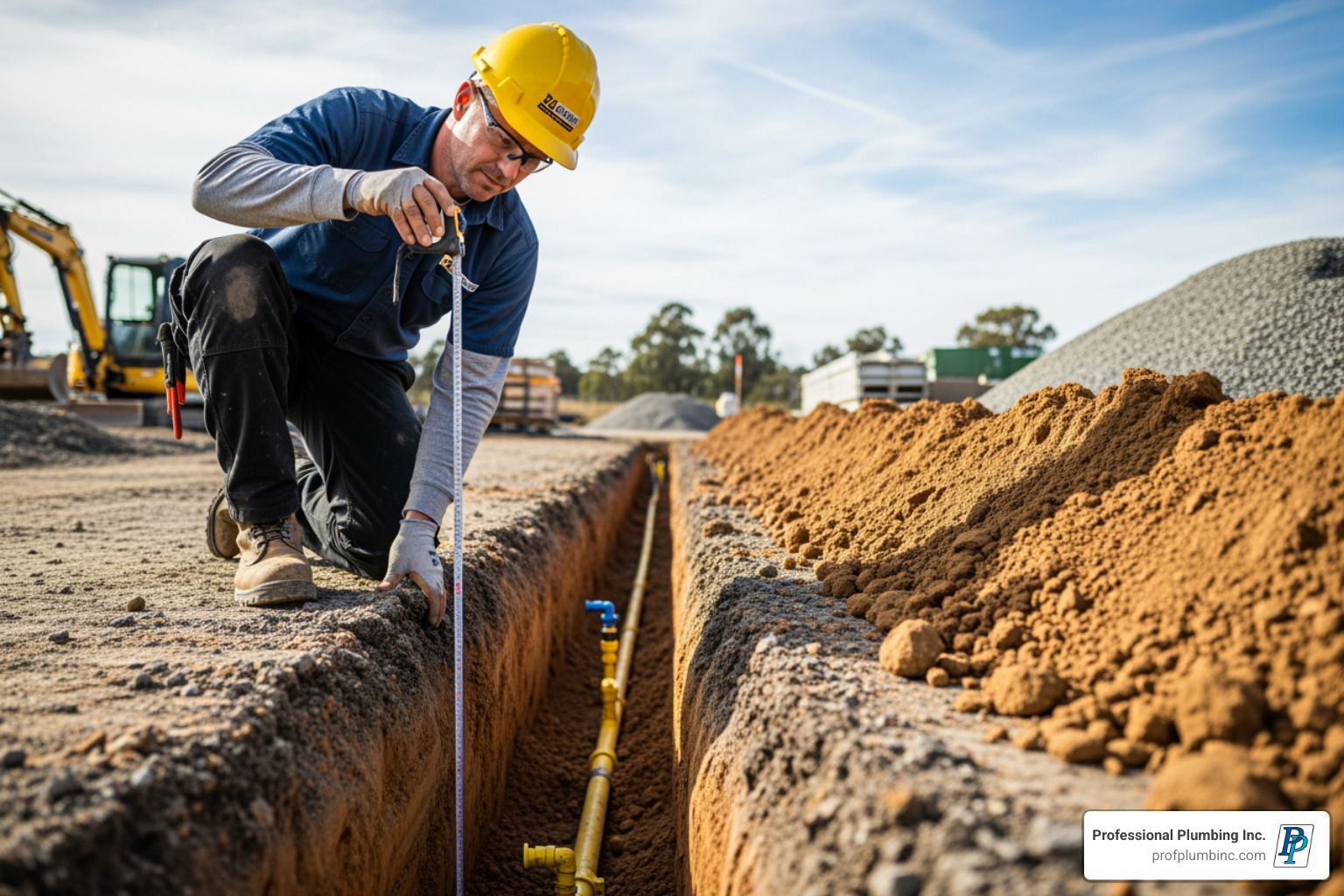
The depth at which your direct burial gas line is installed is critical. It protects the pipe from damage due to surface activities and ensures stability. Federal regulations, which form the baseline for the CPC and Huntington Beach’s local code, specify minimum cover depths:
- Private Property: A buried service line must have at least 12 inches (305 millimeters) of cover. This applies to most residential yards, from Sunset Beach to the neighborhoods around Marina High School.
- Streets and Roads: In areas like public rights-of-way, the minimum cover increases to at least 18 inches (457 millimeters).
When we’re digging, we ensure the service lines are properly supported on undisturbed or well-compacted soil. The backfill material we use is free of any substances that could damage the pipe or its coating, which is especially important in our sandy soil. We also make sure the lines are graded for drainage, preventing any condensate buildup that could interrupt your gas supply. For a comprehensive overview of federal requirements, you can refer to the Federal installation regulations.
We often exceed these minimum depths, especially in high-traffic areas or where future landscaping might occur, to provide an extra layer of protection. It’s always better to be safe than sorry!
The Critical Role of Tracer Wire
Because polyethylene (PE) gas pipe is non-metallic, it cannot be easily detected by standard utility locating equipment. This is where tracer wire comes in, playing an absolutely critical role in the safety of your direct burial gas line.
A minimum of 14-gauge insulated copper wire is installed directly alongside the PE pipe before burial. This wire extends to the surface, typically secured to the riser where the gas line emerges from the ground. In the future, if any excavation needs to happen near your gas line—whether it’s for new landscaping for your home near the Equestrian Center or a fence repair—a utility locating service can connect their equipment to this tracer wire to accurately pinpoint the exact underground routing of your gas pipe.
This simple addition prevents accidental dig-ins, which can be incredibly dangerous and costly. It’s why we always stress the importance of calling 811 (DigAlert), the free “Call Before You Dig” service, before any excavation. The City of Huntington Beach Public Works department also provides information on preventing damage to underground utilities.
Special Rules: Under Driveways and Through Walls
Some areas of your property require extra precautions for direct burial gas line installation.
- Under Driveways or Other Structures: If a gas line needs to pass under a driveway, sidewalk, or other paved structure, the minimum burial depth typically increases significantly. We often adhere to a minimum of 24 inches (600 mm) of cover in these situations. This extra depth provides improved protection against the weight and pressure of vehicles or the stress from shifting concrete. In some cases, protective sleeving or conduit may also be required to further shield the pipe from external loads and potential shearing action.
- Through Foundation Walls: When a gas line enters your home through a foundation wall, specific measures are taken to prevent damage and ensure a gas-tight seal. We protect plastic service lines from shearing action and backfill settlement. The space where the pipe passes through the wall is carefully sealed to prevent any gas from leaking into the building. If conduit is used, the annular space between the conduit and the gas line must also be sealed, and if the conduit is sealed at both ends, it must be properly vented to a point where any potential gas leak would not pose a hazard.
These special requirements are designed to safeguard your gas system in vulnerable areas, ensuring long-term integrity and preventing potential leaks that could impact your home.
The Professional Installation and Testing Process
Installing a direct burial gas line is a complex job that requires specialized knowledge, tools, and strict adherence to safety protocols. It’s definitely not a DIY project! That’s why working with experienced, licensed gas fitters like our team at Professional Plumbing Inc. is essential. We’ve been doing this for over four decades, bringing expertise to every gas line installation in Huntington Beach.
The installation process typically involves:
- Trenching: Excavating the trench to the required depth, ensuring a smooth, undisturbed bed for the pipe.
- Pipe Laying: Carefully laying the polyethylene pipe, making sure it’s free of kinks or damage.
- Joining: Connecting sections of PE pipe using approved methods such as mechanical fittings (compression or stab-type). Manufacturer instructions are strictly followed, which may include chamfering the pipe ends for certain fittings, though our preferred HOME-FLEX™ compression fittings do not require it. We also use stiffeners inside the pipe when installing these fittings to ensure a secure connection.
- Tracer Wire Installation: Running the 14-gauge tracer wire alongside the pipe, extending it to the surface at both ends and securing it to the riser.
- Transitioning and Connecting: Using risers to bring the gas line above ground and transition fittings to connect to existing metal piping or directly to appliances.
- Backfilling: Carefully backfilling the trench with appropriate material, free of sharp objects, and compacting it to support the pipe.
Here are some best practices we always follow:
- Adhere to minimum trench depths, and often exceed them for added protection.
- Install tracer wire for all non-metallic underground gas lines.
- Use polyethylene piping systems specifically engineered and certified for the underground environment.
- Only use fittings compatible with the specific PE pipe and gas type (Natural Gas or LP).
- Never install polyethylene gas pipe inside or under a building, or above grade.
- Ensure the tracer wire extends to the surface and is secured to the riser for future location.
- Handle, transport, and store plastic pipe and fittings carefully to prevent damage.
- Inspect all piping for defects before installation.
- Ensure all components, including pipe and fittings, are of the same size to maintain system integrity.
The Final Step: How Underground Gas Lines are Pressure Tested
Before any direct burial gas line is backfilled and put into service, it undergoes a critical pressure test. This step is non-negotiable and ensures the entire system is leak-free and structurally sound.
Here’s how we approach pressure testing:
- System Integrity: The primary goal is to verify the integrity of all joints and the pipe itself. We use air or an inert gas (never natural gas or propane) for the test.
- Test Pressure Requirements: Local codes in Huntington Beach typically require the system to be tested at 1.5 times the proposed maximum working pressure. However, there’s usually a minimum, often not less than 25 psig (pounds per square inch gauge), though some product manufacturers might recommend 15 psi. We always adhere to the higher of the local code or manufacturer’s specification.
- Test Duration: The pressure must be maintained for a minimum of 30 minutes, though some larger or more complex systems may require longer, up to 8 hours or more, as specified by code or utility. We typically perform a 30-minute test, as overnight testing can sometimes lead to “false positives” due to temperature and barometric changes.
- Using a Proper Pressure Gauge: We use a calibrated pressure gauge with an incrementation of 2 psi or less, and a range not greater than twice the test pressure applied. This ensures accurate readings.
- Isolating Regulators: Crucially, any shutoff valves or gas pressure regulators are isolated from the system during the pressure test. These components are not designed to withstand the higher test pressures and could be damaged.
Once the pressure test is successfully completed and documented, and all local inspections are passed, only then can the direct burial gas line be safely backfilled and prepared for connection to your gas supply.
Safety, Maintenance, and When to Call for Gas Line Repair
The safety of your direct burial gas line is paramount. While polyethylene pipes are incredibly durable and resist corrosion, external factors or improper installation can still lead to issues. Knowing the signs of a gas leak and how to react is crucial for every Huntington Beach homeowner.
Signs of a Gas Leak:
- Smell: The most common indicator is a distinct “rotten egg” smell. Natural gas is odorless, but utilities add a chemical called mercaptan for easy detection.
- Sound: A hissing or whistling sound near a gas line or appliance.
- Sight:
- Bubbling water or mud in puddles or wet areas over a buried line.
- Dirt being blown into the air, or patches of discolored, blackish-green soil.
- Dead or discolored vegetation in a specific area of your lawn, especially if other plants nearby are healthy.
- Flies or other insects congregating near a specific spot.
Emergency Procedures if You Suspect a Gas Leak:
- Evacuate Immediately: Get everyone, including pets, out of your home and away from the area.
- Do NOT:
- Attempt to locate the leak yourself.
- Turn on or off any electrical appliances (lights, fans, cell phones inside the house).
- Try to shut off any gas valves.
- Smoke or use any open flames.
- Start any vehicles or power equipment.
- Call for Help: Once you are in a safe location, call 911, your gas company, and Professional Plumbing contractor. Our team is available 24/7 for gas line emergencies.
Beyond leaks, seismic activity, common here in Huntington Beach, poses another risk. We highly recommend installing an automatic earthquake shut-off valve. These devices activate when an earthquake measures greater than magnitude 5.4, automatically shutting off your gas supply and significantly reducing the risk of fire or explosion, which are common after seismic events.
While direct burial gas lines minimize maintenance compared to exposed metal pipes, annual inspections by a qualified professional are still a good idea. This allows us to check risers, connections, and above-ground components for any wear or potential issues before they become serious. Regular maintenance helps ensure the long-term safety and efficiency of your gas system.
If you ever suspect an issue with your gas line or need professional inspection and repair services in Huntington Beach, don’t hesitate to contact us. We specialize in Professional gas line repair in Huntington Beach.
Your Trusted Partner for Safe Gas Line Installation
This guide provides the essential knowledge for a safe and compliant direct burial gas line project, whether you’re near the Pier, in Huntington Harbour, or right here in Huntington Beach. Ensuring every step, from choosing the right pipe to passing the final pressure test, is done correctly is non-negotiable for your family’s safety. Professional installation focuses on safety, cleanliness, and meeting all applicable codes. Professional Plumbing Inc. has been serving Huntington Beach for over 40 years with honest, upfront pricing and skilled, certified plumbers. Extending gas service for features like fire pits or pool heaters involves specific permitting and installation requirements.