
Connecting Generator to Natural Gas Line: Top 3 Safe Steps
Be Ready for Power Outages in Huntington Beach with a Natural Gas Generator Installation
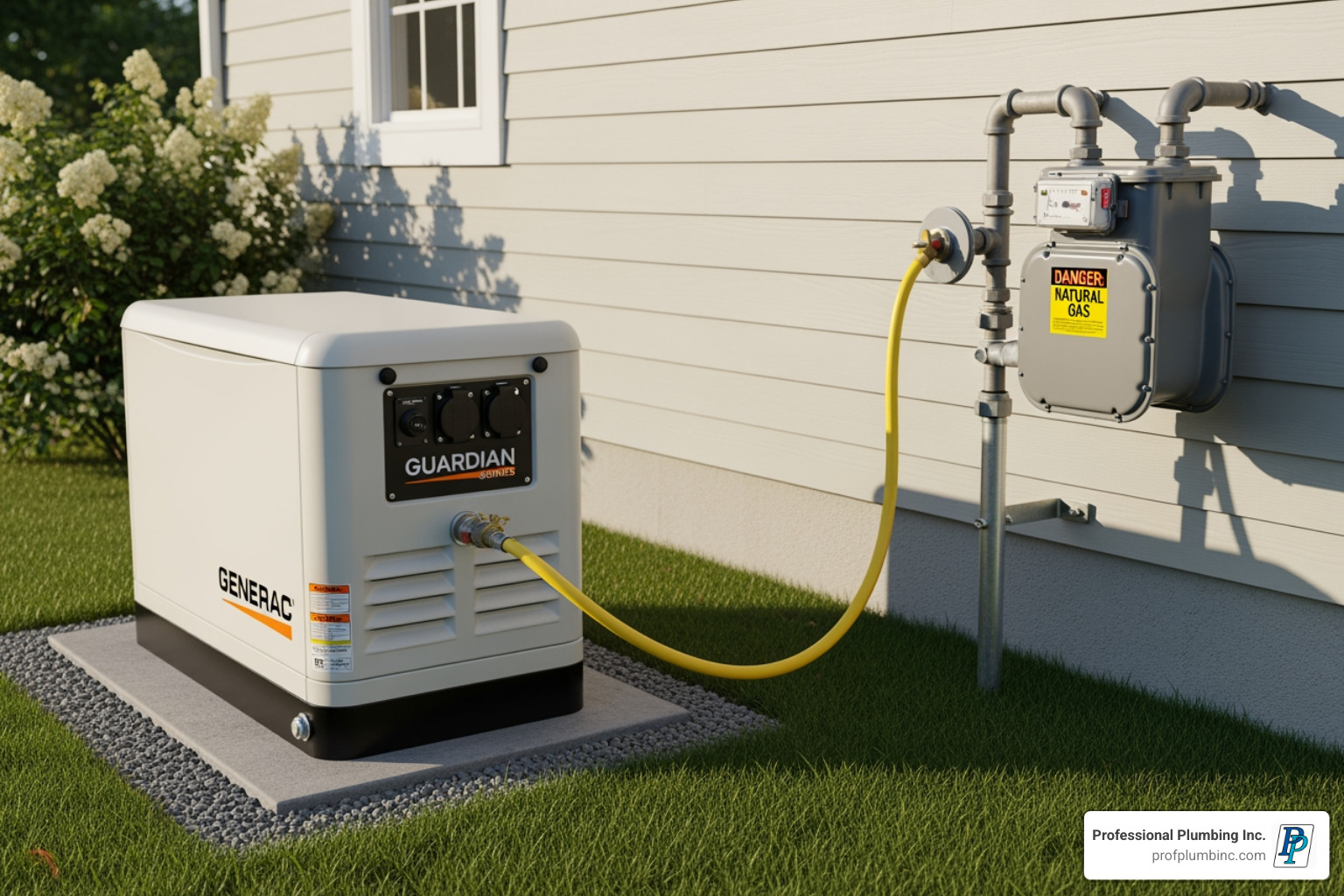
Connecting a generator to a natural gas line is the smartest way to ensure your home stays powered during outages—without the hassle of storing gasoline or running out of fuel. Here’-s what you need to know:
Quick Answer: Key Steps to Connect Your Generator to Natural Gas
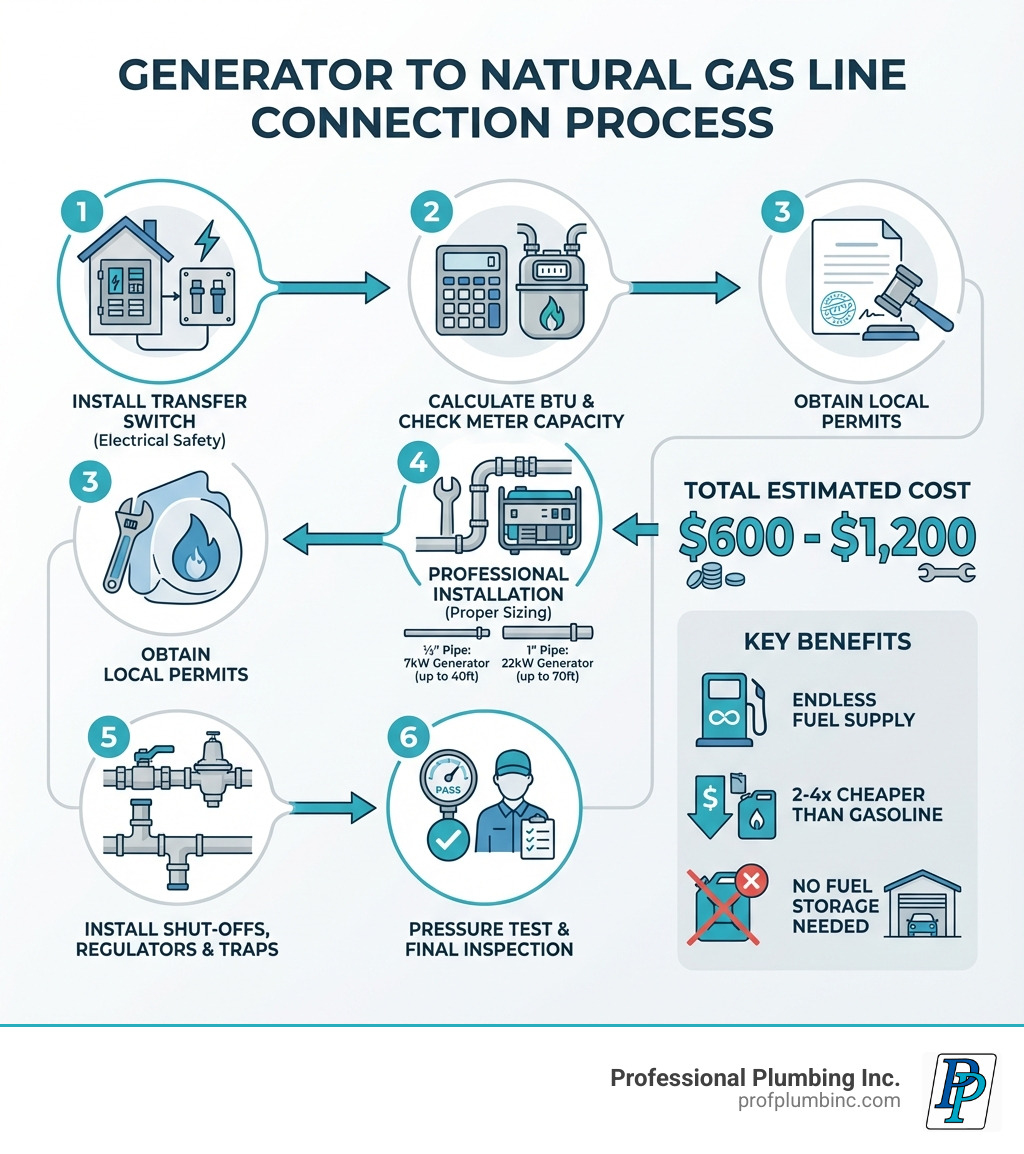
- Electrical Connection First: Install a transfer switch to safely isolate your home from the utility grid
- Calculate Your Needs: Determine your generator’s BTU requirements and verify your gas meter capacity
- Get Permits: Secure required permits from the City of Huntington Beach
- Professional Installation: Hire a licensed plumber to tap the main line, install shut-off valves, regulators, and sediment traps
- Pressure Test: Complete leak testing and final inspection
- Typical Cost: $600-$1,200 for labor, materials, and permits
Power outages from Santa Ana winds, summer heatwaves, and unexpected grid failures are a reality in Orange County. When the lights go out in neighborhoods from Huntington Harbour to Seacliff, you want peace of mind—not a scramble for gasoline. Natural gas generators offer continuous fuel supply, no storage headaches, and significant cost savings compared to gasoline models. They’re perfect for Huntington Beach homes that need reliable backup power for essentials like refrigerators, air conditioning, and medical equipment.
But here’s the critical part: connecting a generator to a natural gas line isn’t a DIY project. It requires proper planning, permits, pipe sizing, and professional installation to meet local codes and keep your family safe. Get it wrong, and you risk gas leaks, explosions, or a generator that won’t run when you need it most.
I’m William Horsky, founder of Professional Plumbing Inc., and I’ve spent over 40 years helping Orange County homeowners with safe, reliable gas installations—including connecting generators to natural gas lines for countless families who want worry-free backup power. Whether you’re in Huntington Beach, Fountain Valley, Costa Mesa, or Garden Grove, I’ll walk you through exactly what it takes to get your generator connected safely and legally.
Learn more about connecting a generator to a natural gas line:
First Things First: How Will You Connect Power to Your Home?
Before thinking about fuel, you need a safe way to connect your generator to your home’s electrical system. This step is crucial for safety and convenience, ensuring that when we power up your generator, the electricity flows exactly where it’s supposed to go.
The Dangers of Backfeeding and the Simplicity of Extension Cords
When the power goes out, the thought of simply plugging your portable generator directly into a wall outlet might cross your mind. Please, never do this. This dangerous practice is known as “backfeeding,” and it poses severe safety risks. Backfeeding sends electricity from your generator back into the utility grid, potentially electrocuting utility workers who are trying to restore power in our Huntington Beach communities. It can also damage your home’s wiring and even start fires. This is why it’s illegal and incredibly dangerous.
For small, portable generators, the simplest method to get power into your home is through individual extension cords. This approach is suitable only for powering a few essential appliances directly, such as a refrigerator, a few lights, or a phone charger. When using extension cords, always ensure they are the correct gauge for the appliance’s power draw and the length of the cord to prevent overheating, which can lead to fire hazards. We recommend using heavy-duty, outdoor-rated cords and checking them for damage before each use. While extension cords are the cheapest option, they can be time-consuming to set up and manage, especially for larger portable generators.
Generator cords (often called Gen-Cords) offer a slightly more organized way to connect multiple extension cords indoors from a portable generator. These typically have a single heavy-duty plug that connects to the generator and then splits into several standard household outlets. This can be more convenient than running many individual extension cords but still requires careful management and is only suitable for powering specific, easily accessible appliances.
Why a Transfer Switch is the Gold Standard
For larger portable generators and especially for hard-wired appliances, a transfer switch is the safest, most convenient, and most recommended method. A transfer switch acts as a critical intermediary between your generator, your home’s electrical panel, and the utility grid. It completely isolates your home’s electrical system from the utility grid during an outage, preventing any chance of dangerous backfeeding.
With a transfer switch, you can safely power hard-wired circuits that extension cords simply can’t reach, such as your furnace, central air conditioning, well pump, or security system. This means that during an outage in Huntington Beach, you can keep your entire home comfortable and functional, not just a few select items.
There are two main types of transfer switches:
- Manual Transfer Switches: These require us to manually flip a switch to disconnect from utility power and connect to generator power. They’re a reliable and cost-effective option for many homeowners.
- Automatic Transfer Switches (ATS): These are the ultimate in convenience. An ATS automatically detects a power outage, starts your generator, transfers the electrical load to generator power, and then switches back to utility power and shuts down the generator once grid power is restored. This seamless operation ensures minimal disruption to your home’s power supply.
Power transfer systems, which include transfer switches, are highly recommended for larger portable generators because they energize entire circuits, providing maximum power, safety, and convenience. While we don’t install the electrical transfer switch ourselves, we often work with trusted electricians in Huntington Beach to ensure a seamless and safe generator setup. You can find more information about our gas installation services, which complement the electrical setup, here: More info about our gas installation services.
The Main Event: Connecting a Generator to a Natural Gas Line in Huntington Beach
Once you have a plan for how your generator will connect to your home’s electrical system, the next crucial step is ensuring it has a reliable and continuous fuel source. For many of our clients in Huntington Beach, connecting a generator to a natural gas line is the preferred choice due to its convenience and cost-effectiveness. However, this process involves specific steps, strict safety protocols, and adherence to local codes.
Step 1: Planning, Sizing, and Permits
Before any pipes are laid or connections are made, thorough planning is essential. This isn’t just about getting gas to your generator; it’s about ensuring your entire gas system can handle the new demand without compromising safety or performance.
- Calculate Your Generator’s BTU Requirements: Every generator has a specific British Thermal Unit (BTU) consumption rate at different loads. We’ll need this figure to correctly size the gas line. A general rule of thumb is that a generator consumes about 2500 BTU per horsepower.
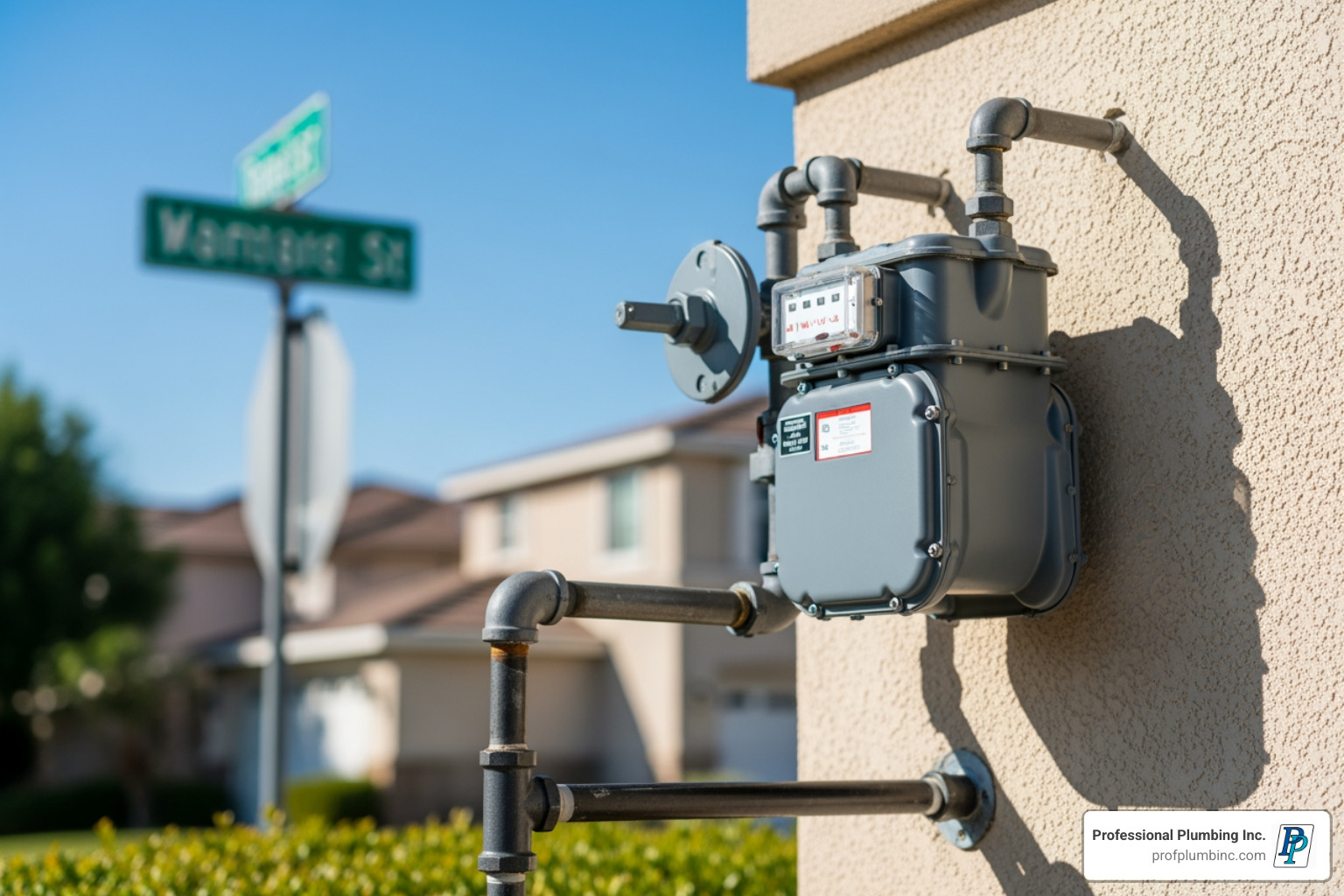
- Check Your Gas Meter’s Capacity: Your home’s existing natural gas meter has a maximum BTU output capacity. We need to ensure it can supply enough gas for your generator in addition to all your other gas appliances (furnace, water heater, stove, dryer) running simultaneously. This rating is usually found on the gas meter label. If it’s insufficient, we’ll need to coordinate with your gas company for a meter upgrade. This process can sometimes take one to two months, so it’s best to start early.
- Pipe Sizing is Critical: This is one of the most common mistakes we see. An undersized gas line or one that’s too long will restrict gas flow, leading to low pressure and preventing your generator from operating efficiently, or even starting at all. Undersized lines are like trying to run a marathon while breathing through a straw – you won’t get very far!
- For example, a 7kW generator may require a ½-inch pipe size for a maximum length of 40 feet.
- A 12kW generator might need a ¾-inch pipe for up to 50 feet.
- A 22kW generator could require a 1-inch pipe size for a maximum length of 70 feet.
- For generators 30kW+ or longer runs (beyond 50-100 feet), even larger pipes (e.g., 1¼ inch for 100 feet) may be necessary to prevent pressure drop.
We also account for pipe bends, tees, and drip legs, as each can add an equivalent of 2.5 feet to the pipe’s effective length, further impacting flow.
- Consider Elevation: For homes at higher elevations (e.g., 5000ft above sea level), the thinner air can cause a 4% loss in engine horsepower for every 1000ft. In such cases, propane might be a more efficient fuel source due to its higher BTU content.
- Permits and Code Compliance: This is non-negotiable. Any modification to your natural gas line requires permits from the City of Huntington Beach and strict adherence to federal, state, and local codes, including NFPA 37, 54, and 58. Attempting work without approval can lead to fines, unsafe conditions, and even void your home insurance. We handle all the necessary permitting and ensure our installations meet the stringent requirements of cities like Costa Mesa and Garden Grove. Our Natural Gas Installation Guide provides more details on the importance of code compliance.
Step 2: The Professional Installation Process
Once planning and permits are in place, our licensed plumbers get to work. This is a complex process that demands expertise to ensure safety and functionality.
Essential Components for a Professional Installation:
- Tapping the Main Gas Line: We tap into your home’s main natural gas line, ideally at or upstream of the gas meter. This ensures your generator has a dedicated, consistent fuel supply that won’t be disrupted if other gas appliances (like your furnace or water heater) kick on. Tapping downstream from other appliances can starve your generator of fuel.
- Installing a New Branch: A dedicated branch line is run from the main gas supply to the generator’s location. This line is sized precisely based on your generator’s BTU needs and the distance it needs to travel.
- Shut-off Valves: We install a minimum of one approved full-flow manual shut-off valve in the gaseous fuel supply line, typically near the meter, and another close to the generator. These allow for quick isolation of the gas supply for maintenance or in an emergency.
- Sediment Traps (Drip Legs): A sediment trap (or drip leg) is installed in the gas line just before the generator. This U-shaped pipe leg collects any debris, moisture, or rust particles in the gas line, preventing them from entering and damaging your generator’s engine. Many manufacturers, including Generac, recommend or require these.
- Pressure Regulators: Natural gas systems typically operate at a low pressure (around 0.25-0.50 PSI or 4-8 inches of water column). Your generator’s fuel system is designed to operate within a very specific pressure range. We install a regulator near the generator to ensure the gas delivered matches the generator’s requirements. Too much or too little pressure can cause performance issues or damage.
- Running the Pipe: We carefully route the gas pipe from the tap point to the generator’s location. This often involves trenching if the generator is placed away from the house. We use appropriate materials, typically black iron pipe, and ensure proper support and protection for the line.
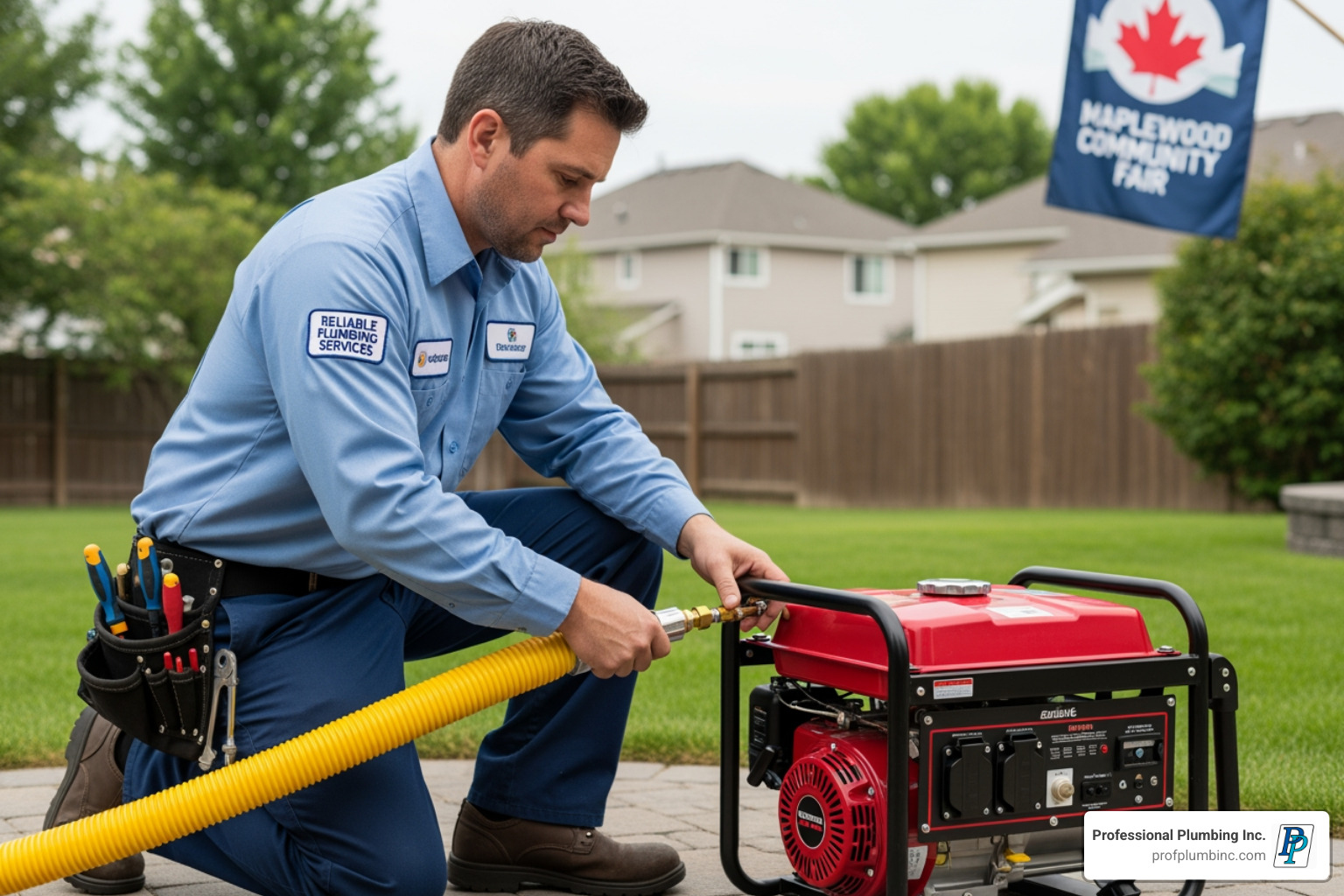
- Flexible Connector Hose: The final connection to the generator is made with a UL Listed or AGA-approved flexible fuel line. This is crucial because generators vibrate when running. The flexible hose absorbs these vibrations, preventing stress on rigid piping that could lead to dangerous gas leaks. We ensure the hose is installed with as few bends as possible and is never bent sharply.
- Quick-Connect Fittings: For portable generators, we can install quick-connect fittings on the flexible hose, allowing for faster and easier connection and disconnection when you need to use or store your generator.
- Pressure Testing for Leaks: After installation, the entire new gas line is thoroughly pressure-tested to confirm there are no leaks. We use a soap solution on all connection points; the absence of bubbles indicates a leak-free system. This step is critical for safety.
- Final Inspection: The local building authority will inspect the installation to ensure it complies with all codes and safety standards. This final inspection provides peace of mind that your system is safe and legal.
As experienced professionals, we understand the intricacies of gas line installations. If you’re wondering, “Do plumbers install natural gas lines?” The answer is a resounding yes! It’s one of our core specialties: Do Plumbers Install Natural Gas Lines?
Step 3: Common Problems and How to Avoid Them
Even with the best intentions, mistakes can happen if you don’t rely on experienced professionals. Here are some common pitfalls we help our clients avoid when connecting generator to natural gas line:
- Low Pressure or Poor Flow: This is often caused by an undersized gas line or one that’s too long for the generator’s BTU demands. It leads to the generator struggling to start, running poorly, or even shutting down under load. Our meticulous pipe sizing calculations prevent this.
- Using a BBQ Grill Outlet: We often get asked if a generator can be connected to an existing outdoor BBQ gas stub. Almost always, the answer is no. Most BBQ grill natural gas outlets are ¼-inch or ⅜-inch, which is far too small and restrictive for a generator’s fuel needs. Trying to power a generator (especially 3000 watts or higher) through such a small line will starve the engine, causing it to run inefficiently, get damaged, or fail entirely. A minimum of a ⅜-inch, or ideally a ½-inch, outlet fitting is recommended for generators 3000 watts or higher.
- Mismatched Connectors and Regulators: Using incompatible fittings or regulators can lead to leaks or improper gas pressure delivery, both of which are dangerous and can damage your generator. We ensure all components are matched to your system’s specifications.
- DIY Shortcuts: Working with natural gas is inherently dangerous. Gas leaks can lead to explosions, fires, and carbon monoxide poisoning. Attempting a DIY installation without the necessary expertise, tools, and permits is a recipe for disaster. Always trust a licensed, insured professional like us to handle your gas line work to keep your home and family safe.
If you’re interested in seeing how a quick-connect hookup works for a natural gas generator, you can watch this video, but remember, professional installation is key for safety: QUICK CONNECT HOOK UP FOR NATURAL GAS GENERATOR.
Fuel Choices and Installation Costs in Huntington Beach
Choosing the right fuel source for your generator is a long-term decision that impacts convenience, performance, and cost. While gasoline is common for portable units, natural gas offers distinct advantages, especially for continuous backup power in Huntington Beach. Understanding the long-term running costs and upfront investment is key for homeowners from Bolsa Chica to Seacliff.
Natural Gas vs. Propane: Which is Right for You?
Both natural gas (NG) and propane (LP) are excellent choices for generator fuel, especially when compared to gasoline. Each has its pros and cons, and the best choice often depends on your location and specific needs.
| Feature | Natural Gas (NG) – | Propane (LP) – |
|---|---|---|
| Availability | Readily available in most urban and suburban areas like Huntington Beach. – Requires on-site storage in a large tank, which must be refilled by a supplier. – | |
| Cost | Generally more affordable than propane. Natural gas prices in Southern California are often lower, making it a cost-effective long-term solution. – Propane is typically more expensive per unit of energy than natural gas. – | |
| Installation | Requires a connection to the existing gas main, which must be done by a licensed plumber. – Requires a large storage tank to be installed on your property, which can be an eyesore and takes up space. – | |
| Maintenance | Minimal maintenance, as the fuel supply is continuous and doesn’t require refilling. – Requires regular monitoring of fuel levels and scheduling refills. – | |
| Efficiency | Natural gas has a lower energy density than propane, meaning a generator will consume more of it to produce the same amount of power. – Propane is more energy-dense, providing more power per gallon. – |
For most homeowners in Huntington Beach, the convenience and cost-effectiveness of natural gas make it the superior choice. You’ll never have to worry about running out of fuel during an extended outage, and the long-term savings are significant.
Cost of Connecting a Generator to a Natural Gas Line
The cost of connecting a generator to a natural gas line in Huntington Beach can vary depending on several factors, but here’s a general breakdown:
- Permit Fees: These are set by the City of Huntington Beach and are a necessary part of the process. They typically range from $100 to $300.
- Labor: This is the largest component of the cost. A licensed plumber will need to run the new gas line, install fittings, and perform a pressure test. Expect labor costs to be between $400 and $800, depending on the complexity of the job (e.g., the distance from the meter to the generator, whether trenching is required).
- Materials: This includes the pipe, fittings, shut-off valves, and a flexible connector. The cost of materials can range from $100 to $300.
Total Estimated Cost: $600 – $1,200
This estimate does not include the cost of the generator itself or the electrical work for installing a transfer switch, which is a separate but equally important part of the project. For a detailed, personalized quote for your Huntington Beach home, it’s best to contact a professional plumber.
Why Choose a Professional for Your Gas Line Installation?
While it might be tempting to try and save money with a DIY approach, working with natural gas is not a project for amateurs. The risks are simply too high. A licensed and insured plumber like those at Professional Plumbing Inc. brings:
- Safety and Compliance: We are experts in local building codes and safety standards, ensuring your installation is done right and passes inspection.
- Proper Sizing and Installation: We have the knowledge and tools to correctly size the gas line for your specific generator, preventing performance issues and potential damage.
- Peace of Mind: Knowing that your gas line is installed correctly by a professional provides invaluable peace of mind, especially when you’re relying on it during an emergency.
Don’t take chances with your family’s safety. For a reliable and code-compliant generator gas line installation in Huntington Beach, trust the experts. Learn more about our gas line services and how we can help you prepare for the next power outage.