

Best tankless water heater 2025: Perfect Choice
The Plumber’s Guide to the Best Tankless Water Heater in Fountain Valley
Best tankless water heater options are changing how families in Fountain Valley enjoy hot water. Here’s what you need to know right now:
Top Considerations for Choosing:
- Flow Rate (GPM) – 6-8 GPM for most families, 10+ GPM for larger homes
- Fuel Type – Natural gas for higher demand, electric for condos/smaller homes
- Energy Efficiency – Look for 0.90+ UEF rating and Energy Star certification
- Household Size – Calculate simultaneous fixture usage (showers, dishwasher, etc.)
- Temperature Rise – Factor in Fountain Valley’s average 60-65°F groundwater temperature
Top-Rated Brands in Our Fountain Valley Service Area:
- Rinnai – Best overall reliability and pro installer favorite
- Navien – Best energy efficiency with condensing technology
- Rheem – Best value with solid performance and affordability
- Noritz – Best for high-demand commercial applications
- EcoSmart – Best electric option for smaller spaces
Traditional tank water heaters waste energy by constantly heating 40-80 gallons of water, even when you’re asleep or at work. Tankless systems heat water only when you turn on the tap. For Fountain Valley homeowners facing rising SoCalGas and SCE rates, this matters.
The average family in Fountain Valley can save $100-200 per year on energy bills. That’s real money back in your pocket, year after year.
Here’s what going tankless means for your home:
- Never run out of hot water during back-to-back showers
- Free up valuable garage or utility closet space
- Cut your water heating energy use by 24-34%
- Enjoy a 15-20 year lifespan (nearly double a tank heater)
- Qualify for federal tax credits up to $2,000
But here’s the catch: choosing the wrong size or type can leave you with lukewarm showers when you need hot water most. And poor installation? That’s a recipe for expensive callbacks and voided warranties.
I’m William Horsky, and I’ve been installing and servicing water heaters in Fountain Valley for over 42 years. I’ve personally helped thousands of local families find the best tankless water heater for their specific needs, from the townhomes near the Promenade to the single-family homes in the Green Valley neighborhood. Let me walk you through exactly how to choose the right system for your home.

Why Ditch the Tank? The Perks of Going Tankless in Fountain Valley
For years, the bulky tank water heater was a staple in every Fountain Valley garage or utility closet. But times are changing, and for good reason! Many homeowners are finding the undeniable benefits of making the switch to a tankless system. The shift isn’t just about modernizing your home; it’s about smarter living in “A Nice Place to Live.”
One of the most compelling reasons to go tankless is the promise of endless hot water. Imagine never again having to cut a shower short because someone else used up all the hot water, or waiting for the dishwasher to finish before you can bathe the kids. Tankless water heaters heat water on demand, meaning you won’t run out of hot water. This continuous supply is a game-changer for busy households in the Westmont neighborhood, where multiple hot water demands often coincide.
Beyond convenience, tankless water heaters save money by using less energy. Traditional tank heaters constantly heat and reheat a large reservoir of water, leading to “standby heat loss.” This means you’re paying to keep water hot even when you’re not using it. Tankless units eliminate this waste by only activating when you open a hot water tap. This energy-efficient approach helps save money on utility bills, a significant advantage for any Fountain Valley resident. The U.S. Department of Energy suggests potential savings of up to $100 per year by switching to a tankless water heater.
Space is often at a premium in Fountain Valley homes. Tankless water heaters are compact and can fit almost anywhere in your home, saving valuable space. They are typically wall-mounted and significantly smaller than their tank-style counterparts, freeing up precious square footage in your garage, laundry room, or even a closet. This flexibility in placement can be particularly appealing for homeowners undertaking remodels in neighborhoods like Old Farm or New Chase.
Finally, tankless water heaters are a better investment because they can last twice as long as tanks. With a typical lifespan of 15–20 years, compared to 8–12 years for traditional models, a tankless unit offers greater longevity and a better return on your initial investment. Plus, a modern, energy-efficient tankless system can even increase your home’s value, making it a win-win for Fountain Valley homeowners.
Finding the Best Tankless Water Heater for Your Fountain Valley Lifestyle
Choosing the best tankless water heater for your home isn’t a one-size-fits-all decision, especially in a community like Fountain Valley. From the bustling family homes in the Green Valley neighborhood to the quiet townhomes near the recreation center, each household has unique hot water needs. When we help our neighbors in Fountain Valley select a new system, we always guide them through key considerations like flow rate, fuel type, sizing, temperature rise, energy efficiency, and household size. Understanding these factors ensures you get a system perfectly custom to your lifestyle. For more in-depth information on sizing, you can visit the Energy Saver website’s guide on Sizing a new water heater.
Best for Condos & Townhomes (Near the FV Promenade)
For compact living spaces common in Fountain Valley, including condos, apartments, or townhomes, efficiency and space-saving are paramount. Here, electric tankless water heaters often shine. They are generally the least expensive option to purchase and install, making them attractive for budget-conscious homeowners or those with limited access to natural gas lines.
These smaller units are perfect for 1-2 person households or point-of-use installations, like under a kitchen sink or near a shower, providing instant hot water exactly where it’s needed. While electric models might have lower flow rates compared to gas, they are typically sufficient for one or two simultaneous hot water demands. However, it’s crucial to consider your electrical panel; electric tankless heaters often require dedicated 240-volt circuits and can draw significant amperage, so an electrical upgrade might be necessary. Our team can assess your home’s electrical capacity during a consultation. For more information on our services in your area, explore our water heater services.
Best for Mid-Sized Family Homes (Green Valley & Westmont)
In family-centric neighborhoods like Green Valley and Westmont, where mid-sized homes often house 3-5 people, natural gas tankless water heaters are frequently the preferred choice. These units tend to have a higher flow rate, allowing them to heat more water at a faster rate, which is essential when juggling multiple showers for kids after practice at the Fountain Valley Sports Park, laundry, and a dishwasher simultaneously.
When we talk about flow rate, we’re referring to gallons per minute (GPM), which is the amount of hot water the appliance can deliver at a specific temperature rise. For instance, a shower typically uses 2-2.5 GPM, while a dishwasher might use 1-2.5 GPM. A mid-sized Fountain Valley home with 2-3 bathrooms needs a system that can comfortably handle 6-8 GPM to avoid cold surprises. Natural gas models excel at balancing efficiency with robust output, ensuring everyone gets a hot shower even during the morning rush. We understand the specific needs of families in Fountain Valley, and our experts can guide you through the ideal installation process. Learn more about tankless water heater installation with us.
Best for Large & Custom Homes (Old Farm Estates)
Fountain Valley’s larger properties, such as those in the Old Farm Estates neighborhood, often present unique hot water demands. Large households, multi-generational families, or homes with multiple bathrooms and high-end fixtures like jetted tubs or multiple shower heads require powerful, high-capacity gas tankless units. These systems are designed to deliver exceptional flow rates, often exceeding 10 GPM, ensuring an uninterrupted supply of hot water for even the most demanding scenarios.
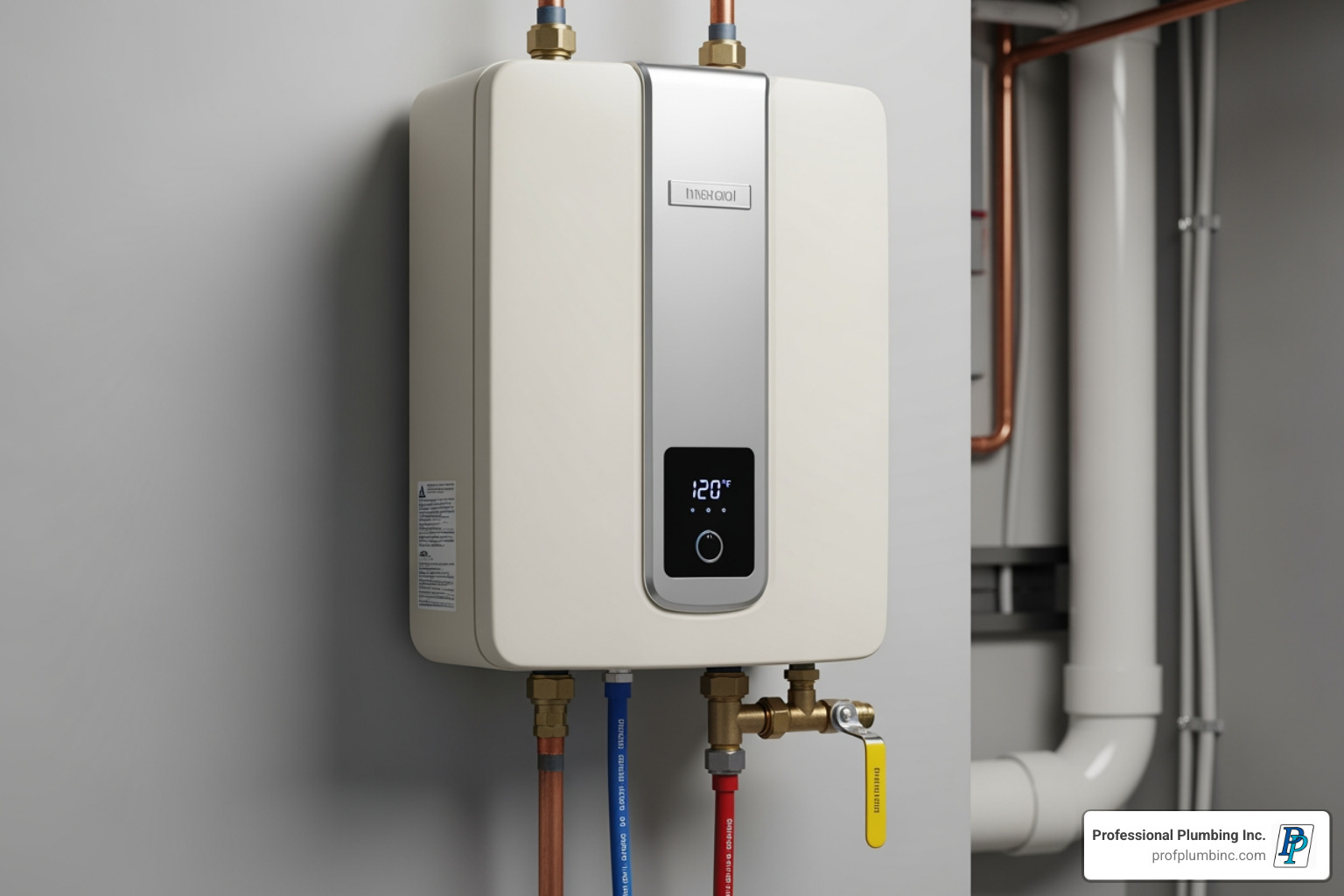
For ultimate comfort and convenience, features like recirculation pumps are highly valued. These pumps ensure hot water is instantly available at the faucet, eliminating the wait and conserving water – a smart choice for our environmentally conscious community in Fountain Valley. Wi-Fi connectivity and smart home integration are also popular, allowing homeowners to monitor and control their water heater remotely, adjust temperatures, and even receive maintenance alerts from their smartphones. Imagine setting your hot water schedule from your phone before you even leave the office! Our local team is well-versed in the specific requirements of Fountain Valley residents. Find more about our premium water heater services in Newport Beach.
Understanding the Tech: How to Choose with Confidence
Choosing the best tankless water heater means understanding a bit about how these clever devices work. Don’t worry, we’ll keep it simple! At its core, a tankless water heater operates on a simple principle: heat water only when you need it. When a hot water tap is opened, cold water flows into the unit. A flow sensor detects this movement and signals the control panel. For gas models, a burner ignites; for electric models, heating elements activate. The water then passes through a heat exchanger, which rapidly heats it to your desired temperature. A mixing valve ensures the water is delivered at a consistent, safe temperature before it heads to your faucet. Exhaust gases (for gas models) are safely vented outside.

This on-demand system is fundamentally different from a traditional tank, which continuously stores and heats water. Understanding these internal components and operational differences empowers you to make an informed decision. We’ll also dig into the pros and cons of gas vs. electric models and the distinctions between condensing and non-condensing technology, all impacting the Uniform Energy Factor (UEF), a key measure of efficiency.
Gas vs. Electric: What’s Right for Your Fountain Valley Home?
The choice between a gas (natural gas or propane) and electric tankless water heater is one of the most critical decisions for Fountain Valley homeowners. Both have distinct advantages and considerations.
Gas Tankless Water Heaters (Natural Gas & Propane):
- Pros: Natural gas tankless water heaters tend to have a higher flow rate, allowing them to heat more water at a faster rate. This makes them ideal for larger homes in Fountain Valley with higher hot water demands. Propane tankless water heaters can be effective for small homes or point-of-use installations where natural gas isn’t available.
- Cons: Gas units require venting to the outside to expel combustion byproducts. This can add to installation complexity and cost. They also need a dedicated gas line, which may require an upgrade if your existing line isn’t sufficient.
Electric Tankless Water Heaters:
- Pros: Electric tankless water heaters are generally the least expensive option to purchase and install. They don’t require venting, offering more flexible installation locations, often making them a good fit for condos or townhomes in Fountain Valley. They are also ideal for point-of-use applications.
- Cons: Electric models typically have lower flow rates, meaning they might struggle to supply multiple simultaneous hot water demands in a larger home. They require substantial electrical power, often necessitating a dedicated 240-volt circuit and potential electrical panel upgrades, which can offset some of the initial cost savings. Their operating costs can be higher than gas models, depending on local electricity rates.
The right choice depends on your home’s existing infrastructure, hot water needs, and local utility costs from SoCalGas and Southern California Edison.
Condensing vs. Non-Condensing Models
When exploring gas tankless water heaters, you’ll encounter two main types: condensing and non-condensing. The difference lies in how they handle exhaust gases, and it significantly impacts energy efficiency.
Non-Condensing Tankless Water Heaters:
- These are the more traditional type. They heat water and vent the hot exhaust gases directly outside, similar to a conventional furnace. Because the exhaust is hot, it requires special, more expensive stainless steel venting. Their energy efficiency (UEF) typically ranges from 0.80 to 0.82.
Condensing Tankless Water Heaters:
- These are the high-efficiency champions. They feature a secondary heat exchanger that extracts additional heat from the exhaust gases before they are vented. This cools the exhaust significantly, allowing for less expensive PVC venting. Condensing technology in tankless water heaters maximizes energy utilization by extracting heat from exhaust gases, leading to higher efficiency. This means less energy waste and more savings for you, our Fountain Valley neighbors. Their UEF ratings can reach up to 0.98, making them significantly more energy-efficient.
- Pros: Higher energy efficiency means lower operating costs and a smaller carbon footprint. They are often eligible for more rebates and incentives.
- Cons: They typically have a higher upfront cost than non-condensing models due to the added technology. They also produce condensate (mildly acidic water) that needs to be drained, requiring a connection to a drain line.
While condensing models have a higher initial price tag, their superior energy efficiency often leads to substantial long-term savings on utility bills, making them a wise investment for many homes in Fountain Valley.
The Real Cost: Installation & Maintenance in Fountain Valley
Investing in the best tankless water heater means looking beyond the sticker price. The total cost of ownership for Fountain Valley homeowners includes the unit’s purchase price, installation, and ongoing maintenance. While the average tankless water heater cost is $2,600, with a range of $1,300–$3,900, the national average for installation is around $2,500. This might seem higher than a traditional tank, but let’s look at the bigger picture.
| Feature | Traditional Tank Water Heater (Avg.) | Tankless Water Heater (Avg.) |
|---|---|---|
| Upfront Cost | $1,500 – $2,100 | $2,600 – $5,000 |
| 10-Year Energy Cost | $4,000 – $6,000 | $2,000 – $4,000 |
| Lifespan | 8 – 12 years | 15 – 20 years |
| Space Required | Large floor space | Compact, wall-mounted |
| Hot Water Supply | Limited by tank size | Endless (properly sized) |
Heat pump water heaters, while not tankless, are also gaining traction for their efficiency. Energy Star estimates that an Energy Star heat pump water heater uses about 70 percent less energy than a standard electric water heater. Through the 2022 Inflation Reduction Act, Energy Star certified heat pump water heaters are currently eligible for a federal tax credit of 30 percent (up to $2,000) of a project’s costs. While these are different technologies, it highlights the government’s push for energy-efficient solutions and the potential for savings. Always check for available federal tax credits and local SoCalGas or SCE rebates in Fountain Valley, as these can significantly offset the initial investment for any high-efficiency water heater.
How to Properly Size Your New Water Heater
Properly sizing your tankless water heater is perhaps the most crucial step to ensure you always have enough hot water. An undersized unit can lead to frustrating lukewarm showers, while an oversized one might be an unnecessary expense. The key is understanding flow rate and temperature rise.
The flow rate of the tankless water heater refers to the amount of water the appliance can heat within a specific amount of time, measured in gallons per minute (GPM). To size your unit correctly for your Fountain Valley home, you need to:
- Estimate Peak Hot Water Demand: Identify all the hot water fixtures and appliances that might run simultaneously during peak usage hours (e.g., morning showers, dishwasher, washing machine). Assign a GPM value to each (e.g., shower 2.5 GPM, dishwasher 1.5 GPM, faucet 1 GPM). Sum these to get your total peak GPM.
- Determine Temperature Rise: This is the difference between your incoming cold water temperature and your desired hot water temperature (usually 120°F). In Fountain Valley, our groundwater temperatures generally hover around 60-65°F. So, a desired 120°F output would mean a temperature rise of 55-60°F. Colder incoming water requires a more powerful unit (or lower GPM output) to achieve the same temperature rise.
Once you have your peak GPM and required temperature rise, you can match these to the specifications of different tankless models. Our team at Professional Plumbing Inc. has extensive experience helping families in Fountain Valley with precise sizing. For expert guidance on finding the perfect fit, reach out for tankless water heater installation.
Why Professional Maintenance is Key for the Best Tankless Water Heater
You’ve invested in the best tankless water heater for your home, but your journey to endless hot water doesn’t end with installation. Just like any high-performance appliance, regular, professional maintenance is absolutely critical, especially here in Fountain Valley. Our local water is quite hard, leading to mineral buildup that can impact your unit’s efficiency and lifespan.
The primary maintenance task for tankless water heaters is descaling and flushing the system. Hard water minerals (like calcium and magnesium) can accumulate in the heat exchanger, forming scale. This scale reduces the unit’s efficiency, forcing it to work harder and consume more energy to heat water. Over time, it can even cause damage to internal components. Professional descaling involves circulating a cleaning solution through the unit to dissolve these mineral deposits.
Regular annual inspection by a qualified plumber ensures that all components are functioning correctly, preventing minor issues from becoming major, costly repairs. For instance, Rinnai tankless water heaters can last up to 20 years with proper inspection and maintenance. This proactive approach not only extends the lifespan of your unit but also maintains its energy efficiency, keeping those utility bills low. Don’t let a lack of maintenance cut short the life of your investment! Our experts in Fountain Valley are ready to help keep your system running perfectly. Find out more about our tankless water heater maintenance services.
Frequently Asked Questions about Tankless Water Heaters
How long do tankless water heaters last compared to tanks?
A well-maintained tankless water heater can last 15-20 years or more, which is nearly double the 8-12 year lifespan of a traditional tank heater. This longevity makes them a more sustainable and cost-effective choice in the long run for Fountain Valley homeowners.
Can a tankless unit really provide endless hot water?
Yes, a properly sized tankless heater will heat water on demand for as long as you need it, unlike a tank which can run out of its stored hot water. The key is “properly sized” – ensuring the unit’s GPM and temperature rise capacity meet your household’s peak demands.
Is the higher upfront cost of a tankless water heater worth it?
For most Fountain Valley homeowners, yes. While the initial purchase and installation cost is typically higher, the significant energy savings over time, longer lifespan, and available federal tax credits (up to $2,000) and local utility rebates often make it a smarter long-term investment. Many homeowners find the savings can offset the higher cost in as little as three years.
Ready for Endless Hot Water? Here’s Your Next Step
Choosing the best tankless water heater is a smart decision for any Fountain Valley homeowner. You’ll gain unparalleled energy efficiency, a continuous supply of hot water, and valuable reclaimed space, all while potentially increasing your home’s value and reducing your environmental footprint. From the neighborhoods surrounding Mile Square Park to the homes near the Santa Ana River Trail, we’ve seen how a well-chosen and expertly installed tankless system can improve daily life.
At Professional Plumbing Inc., we pride ourselves on our over 40 years of local experience, helping our neighbors in Fountain Valley make the best choices for their homes. We offer honest, upfront pricing, ensuring you know exactly what to expect. Our skilled plumbers are experts in tankless technology, guaranteeing fast, clean, and hassle-free solutions. We don’t just install water heaters; we provide peace of mind and guaranteed workmanship.
Don’t let the technical details overwhelm you. We’re here to make the process simple and straightforward. If you’re ready to explore the endless possibilities of a tankless water heater for your Fountain Valley home, we’re just a call away.
Contact us for your tankless water heater installation in Fountain Valley today, and let’s get you set up with the perfect system for endless hot water!