
The Case of the Curious Floor: What’s Causing Warm and Cold Patches?
Warm Spots on Floor: Top 3 Alarming Causes
What That Warm Spot on Your Floor Means for Huntington Beach Homeowners
Warm spots on floor surfaces aren’t just quirky sensations—they’re often signals of underlying issues that demand your attention. Here’s what you need to know right away:
Common Causes of Warm Floor Spots:
- Slab Leak – Hot water pipe leaking beneath your concrete foundation (most serious)
- HVAC Ductwork – Heating ducts running below the floor or poor insulation
- Recessed Lighting – Heat from sealed downlights transferring through the floor above
- Electrical Issues – Overheating wiring or junction boxes beneath flooring
- Radiant Heating – Normal operation or trapped heat from floor heating systems
When to Call a Professional:
- Warm spot accompanied by increased water bills
- Sound of running water when fixtures are off
- Damp carpets or buckling floors
- Low water pressure throughout your home
- Musty or moldy smell
Whether you’re in your home near the Bolsa Chica wetlands or a downtown condo, a mysterious warm patch on the floor is often a distress signal. In Huntington Beach, where many homes sit on concrete slab foundations, these temperature anomalies can indicate anything from minor HVAC quirks to serious plumbing emergencies like slab leaks.
While some causes are harmless (like sunlight or a radiant heating system), others—particularly slab leaks—can lead to significant foundation damage, mold growth, and thousands in repairs if ignored. The challenge is knowing the difference. A hot water pipe leak under your slab creates a localized warm area, while heat from a recessed light in the ceiling below can be completely normal.
I’m William Horsky, and with 41 years of experience serving Huntington Beach, I’ve seen it all. At Professional Plumbing Inc., we’ve helped families all over Huntington Beach, from Seacliff to Sunset Beach, diagnose and resolve these temperature mysteries before they become major problems.
This guide will help you identify the cause of your warm floor spots, know when to call for help, and understand the repair options if you’re facing a plumbing issue.

Glossary for warm spots on floor:
The Usual Suspects: Common Causes of Floor Temperature Changes
Before assuming a plumbing disaster, it’s worth considering a few less dramatic reasons for a toasty floor. Sometimes, these temperature fluctuations are normal or point to non-plumbing issues.

Is It Your Heating or Cooling System?
One of the most common and benign reasons for a warm spot on floor in Huntington Beach homes is the heating or cooling system.
If you have a radiant heating system, a warm spot usually means it’s working correctly. However, items like thick rugs or beanbag chairs can cause “trapped heat,” preventing warmth from dissipating and creating overly hot areas. This can damage some floor types. To learn more about managing this, you can review tips on Avoiding Trapped Heat with an Electric Floor Heating System.
Your HVAC system is another common culprit. Ductwork running beneath your floors can radiate heat, which might be normal. However, it could also signal poor insulation or a leaking duct, wasting energy. Blocked vents can also cause heat to build up in the surrounding floor.
Could It Be an Electrical Issue?
While less common, electrical issues can create warm spots on floor surfaces and are a serious fire hazard. Localized heat could indicate faulty wiring or overheating components under the floor.
In many Huntington Beach homes, especially those with remodels from the pier to the marina, recessed lighting is popular. Heat from a sealed light fixture in the ceiling below can transfer through the floor, creating a warm spot. As one expert noted, “The only place for the heat to go is through the floor.”
Other electrical causes include faulty wiring, overloaded circuits, or hidden junction boxes. If you notice a faint burning smell, flickering lights, or scorch marks near outlets, call a licensed electrician immediately. It’s always better to be safe than sorry with electrical heat.
Let’s find out — and tell you straight.
Family-owned and serving Orange County for 40+ years. We’ll pinpoint the leak and give you an honest price — and you approve the price before we start. No hidden fees, no pressure, no upselling.
Trusted Since 1985 · Licensed #517514, Bonded & Insured · 24/7 Emergency Service
The Prime Suspect: Investigating Warm Spots on Your Floor for Slab Leaks
Now for the big one: slab leaks. In many Huntington Beach homes with concrete slab foundations, a persistent warm spot on floor is a classic sign of a hot water line leak beneath the concrete.

A slab leak is a leak in the water lines running beneath your home’s foundation. When a hot water pipe leaks, it warms the surrounding concrete, and that heat transfers to your flooring. As one Master Plumber put it, “A hot spot on your floor absolutely sounds like a slab leak. This means there’s a hot water pipe leaking beneath the floor, around or under your foundation.”
The unique conditions in Huntington Beach—from the shifting sandy soil to the corrosive salt air—make slab leaks a particular concern. For more in-depth information, read our guide on Concrete Slab Leak.
What are the Telltale Signs of a Slab Leak?
Beyond a warm floor, a slab leak leaves other clues. Recognizing these signs early can save you from major damage and costly repairs.
Here are the most common signs that a warm spot on floor could be a slab leak:
- Sudden Spike in Water Bill: If your usage hasn’t changed but your bill has skyrocketed, a hidden leak is likely.
- Sound of Running Water: Hearing water when all faucets and appliances are off is a key indicator.
- Low Water Pressure: A drop in water pressure suggests water is escaping somewhere in the system.
- Damp Carpets or Buckling Floors: Unexplained dampness or warping in flooring materials like hardwood, laminate, or tile points to water coming up through the slab.
- Cracks in Walls or Foundation: Water eroding the soil can cause the foundation to shift, leading to cracks in drywall or the exterior foundation.
- Mold or Mildew Smell: A persistent musty odor, even without visible mold, signals hidden moisture.
- Standing Water: In severe cases, you might see puddles around your house’s perimeter.
While hot water leaks cause warm spots, cold water lines can also leak, presenting these other symptoms. Learn more in our article on Cold Water Slab Leak.
Why Are Slab Leaks a Major Concern in Huntington Beach?
Homeowners in Huntington Beach are particularly vulnerable. Many homes in established neighborhoods were built decades ago with copper pipes that are now aging and prone to corrosion. Furthermore, the shifting coastal soil and proximity to the Newport-Inglewood Fault Zone can stress underground pipes, causing them to rub against concrete and eventually leak. Finally, the hard water common in Huntington Beach contributes to internal pipe corrosion over time. For more insights, see our Concrete Slab Leak Repair Guide.
Gathering Evidence: How to Diagnose the Problem
If you suspect a slab leak, a few simple tests can help confirm your theory before calling the experts. These DIY checks won’t pinpoint the location but can indicate a leak is present.
The easiest test involves your water meter. First, ensure no water is being used in your home. Turn off all faucets, showers, and water-using appliances. Locate your water meter (usually near the street) and check if the small dial is spinning. Wait 15-30 minutes without using any water, then check again. If the dial is still spinning or the reading has changed, you likely have a leak.
For advanced diagnostics in Huntington Beach, professional leak detection is the most reliable path. Our team offers comprehensive Plumbing Leak Detection Huntington Beach services.
How Do Professionals Pinpoint a Leak?
Our team at Professional Plumbing Inc. uses non-invasive, high-tech equipment to pinpoint a leak’s exact location without damaging your property, saving you time and money.
Here are some of the tools our technicians employ:
- Acoustic Listening Devices: These sensitive microphones amplify the sound of water escaping under pressure, allowing our plumbers to trace the leak to its source through concrete.
- Thermal Imaging Cameras: For hot water leaks, these cameras detect temperature differences on your floor, revealing the path of the warm water and the precise location of the warm spots on floor.
- Video Camera Inspection: For drain lines, we insert tiny cameras into the pipes to visually inspect for cracks or breaks.
- Pressure Sensors: By isolating sections of your plumbing and applying pressure, we can determine which line is losing pressure and has a leak.
These technologies allow for precise slab leak detection and help us locate older pipes right here in Huntington Beach. Our goal is to find the problem efficiently with minimal disruption to your home.
The Resolution: Repair Options and Next Steps
Finding a slab leak is stressful, but rest assured, several effective repair methods are available. The right approach depends on the leak’s location, severity, and your home’s foundation. Our priority is a lasting solution that minimizes disruption.
The risks of ignoring a slab leak are significant. Continuous water seepage can erode the soil supporting your foundation, leading to structural instability and costly damage. The constant moisture also creates a perfect environment for mold and mildew, which pose health risks. A small leak today can become a major disaster tomorrow.
Many homeowners wonder about insurance coverage. Policies typically handle claims based on the cause of the damage. Sudden and accidental water damage is often covered, but the cost to repair the pipe itself may not be, especially if the leak was due to gradual deterioration. It’s crucial to review your policy and consult your provider. Our team can provide the necessary documentation for your claim. For repair services in Huntington Beach, check out our Slab Leak Repairs Huntington Beach page.
What Are the Different Methods for Repairing Slab Leaks?
Once a leak is located, we’ll discuss the best repair options for your Huntington Beach home. Each method has pros and cons regarding cost, invasiveness, and long-term effectiveness.
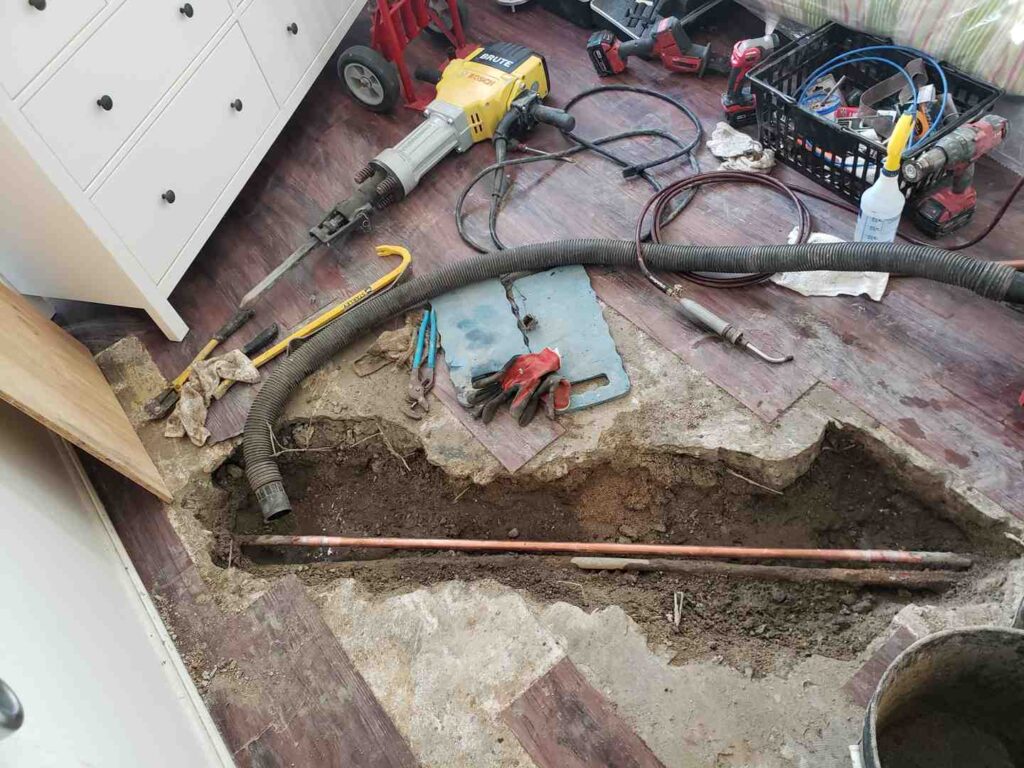
| Repair Method | Description | Pros | Cons |
|---|---|---|---|
| Spot Repair | Breaks the slab directly above the leak to access and repair a small, damaged section of pipe. | Targeted and often less expensive if the leak is easily accessible. | Invasive, requires demolition and patching of flooring and concrete; risk of future leaks in other parts of the aging pipe. |
| Pipe Rerouting | Bypasses the leaking pipe by running a new line through walls or the attic, abandoning the old pipe. This is a common method that involves rerouting the pipe, abandoning the old line under the slab. | Less invasive than breaking the slab; provides a new pipe section, reducing future leak risk in that area. | May require opening walls or ceilings; can be more expensive than a spot repair depending on the complexity of the reroute. |
| Epoxy Pipe Lining | A trenchless method where epoxy resin is applied inside the existing pipe, creating a new, seamless pipe within the old one. | Non-invasive, no need to break the slab or walls; restores pipe integrity and can extend the life of the entire system. | Not suitable for all types of damage (e.g., collapsed pipes); more expensive than spot repairs; requires the pipe to be thoroughly cleaned first. |
| Full Repipe | Replaces all old plumbing lines under the slab with new, more durable materials like PEX. | Eliminates all existing slab leaks and prevents future ones; provides peace of mind with a new plumbing system. | The most expensive and disruptive option, often requiring extensive demolition and possible temporary relocation. |
The choice depends on the number of leaks, the condition of your pipes, and your budget. We will provide a clear explanation of each option to help you make the best decision for your home.
Frequently Asked Questions about Warm Spots on Floors
Finding a warm spot on floor leads to many questions. Here are answers to common ones we hear from homeowners throughout Huntington Beach.
How much does it cost to fix a slab leak?
The cost to fix a slab leak varies widely, from a few hundred dollars for a simple spot repair to several thousand for complex reroutes or extensive damage.
Several factors influence the final cost:
- Location of the leak: A leak under an accessible part of the slab is cheaper to fix than one under a load-bearing wall.
- Repair method chosen: A spot repair is usually less expensive than a full pipe reroute or epoxy lining.
- Extent of damage: Water damage to flooring, subfloor, or the foundation will add to the restoration costs.
- Type of pipe: Some materials are easier to work with, influencing labor time.
Because of these variables, a professional assessment is the only way to get an accurate estimate. We provide honest, upfront pricing after a thorough diagnosis. For a quote, visit our Slab Leak Repairs Huntington Beach page or call us.
Does my homeowners insurance cover slab leak repairs?
The answer is usually, “it depends.” Coverage hinges on the cause of the leak and the type of damage.
- Sudden vs. Gradual Damage: Most policies cover “sudden and accidental” water damage (e.g., from a burst pipe), but may not cover the pipe repair itself if the leak was from gradual deterioration.
- Damage vs. Pipe Repair: Even if water damage is covered, the policy might not cover the cost of repairing the pipe that caused it.
- Deductibles and Exclusions: Be aware of your deductible and any specific exclusions for water damage or mold.
Our advice is to review your policy, consult your insurance agent immediately, and document everything. We can provide detailed reports for your claim.
Can I prevent slab leaks from happening?
While you can’t eliminate the risk entirely, you can take preventative measures to reduce the likelihood and catch issues early.
- Regular Maintenance: Annual plumbing inspections can identify weaknesses before they become major leaks.
- Monitor Water Pressure: High water pressure stresses pipes. A pressure regulator can protect your system.
- Water Quality Consideration: In Huntington Beach, our notoriously hard water can contribute to pipe corrosion over time.
- Be Observant: Pay attention to the subtle signs we discussed—an unexplained increase in your water bill, the sound of running water, or that suspicious warm spot on floor. Early detection is your best defense.
- Maintain Your Foundation: Proper drainage around your home helps prevent soil movement that can stress pipes.
Taking these proactive steps invests in the long-term health of your home.
Your Local Experts for Floor Warmth Issues in Orange County
Finding warm spots on floor surfaces can be alarming, but as we’ve discussed, it’s often the first crucial step toward protecting your home. By understanding the potential causes, from simple HVAC issues to serious slab leaks, you can take swift and appropriate action. For homeowners across Huntington Beach, from the harbor to the inland neighborhoods, addressing these signs early is key to preventing catastrophic damage.
If you’ve done your initial investigation, ruled out the obvious, and still suspect a plumbing issue—especially a slab leak—it’s time to call the professionals. The team at Professional Plumbing Inc. has over 40 years of experience and the advanced technology to accurately diagnose and resolve the problem, ensuring your peace of mind. We pride ourselves on honest, upfront pricing, skilled plumbers, and guaranteed workmanship, providing fast, clean, and hassle-free solutions for all your plumbing needs.
Don’t let a curious warm spot turn into a costly nightmare. Contact us today for expert Slab Leak Detection in Huntington Beach and the surrounding area. We’re here to help you solve the mystery of your floor and keep your Huntington Beach home safe and sound.