
Clogged Main Sewer Line: 1 Emergency Fix
Clogged Main Sewer Line in Huntington Beach? A Master Plumber’s Guide
A clogged main sewer line is one of the most urgent plumbing emergencies a Huntington Beach homeowner can face. If you’re dealing with this right now, here’s what you need to know immediately:
Quick Action Guide for a Clogged Main Sewer Line:
- Stop using all water – Don’t flush toilets, run sinks, or use appliances
- Turn off your main water supply to prevent sewage backup
- Check your sewer cleanout (usually in your yard or basement) for standing water
- Call a professional plumber if multiple drains are affected or sewage is backing up
- Try a basic auger only if the clog appears minor and accessible
A single slow drain is a localized problem, but when multiple fixtures back up simultaneously—especially on your home’s lowest level—you’re likely dealing with the main sewer line. This pipe carries all wastewater from your home to the municipal sewer system. Huntington Beach homeowners often discover this when water backs up into a bathtub after flushing a toilet or gurgling sounds come from drains. Clearing a main line can exceed $500, and ignoring it can lead to excavation costs over $1,000. While some clogs can be addressed with DIY methods if caught early, it’s crucial to know when to call for professional help.
I’m William Horsky, and in my 42+ years as a master plumber serving Huntington Beach, I’ve cleared countless clogged main sewer lines in homes throughout the city. I’ve seen everything from simple grease buildups in newer homes to major tree root invasions in the older neighborhoods, and I’m here to walk you through what you can do—and what you shouldn’t attempt.
First, Is It Really Your Main Sewer Line? Telltale Signs in Your Huntington Beach Home
When your home’s plumbing system starts acting up, it’s easy to jump to conclusions. But how can you be sure it’s a clogged main sewer line and not just a simple drain issue? Recognizing the specific signs is the first step to addressing the problem effectively in your Huntington Beach home.
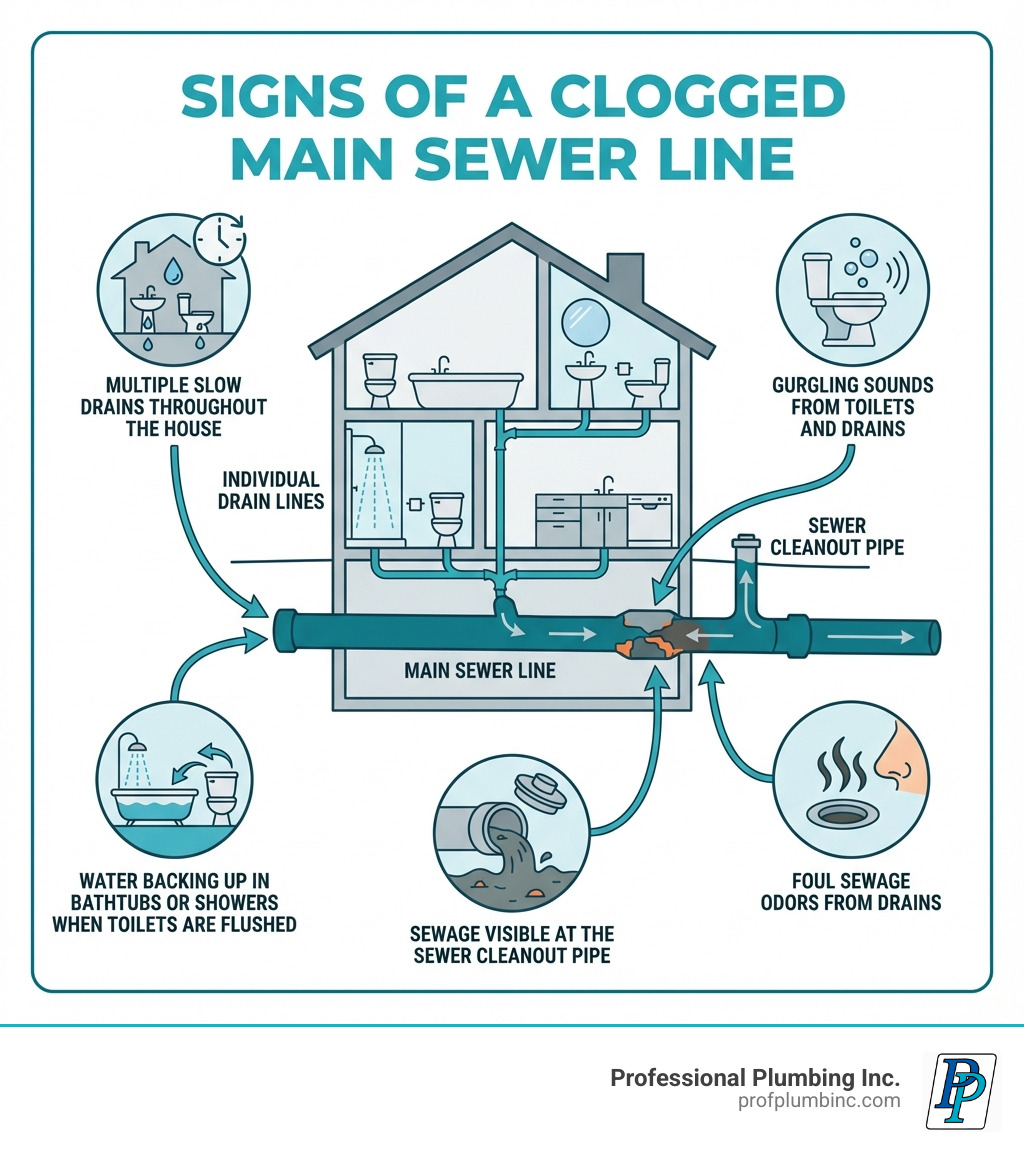
The most telling sign is when multiple drains are affected simultaneously. If your toilet gurgles when you run the shower, or if water backs up into your bathtub when you flush a toilet, that’s a strong indicator. Foul, rotten-egg odors from drains also signal a main line problem. Another classic symptom we see in neighborhoods from Huntington Harbour to the downtown area is slow drains across all fixtures, not just one. If you’re plunging your toilet constantly, something bigger is at play.
The Difference Between a Clogged Drain and a Clogged Sewer Line
Here’s how to tell a simple clogged drain from a clogged main sewer line:
- Clogged Drain: A localized issue affecting one fixture (a sink, shower, or toilet). The clog is usually near the drain opening and can often be fixed with a plunger.
- Clogged Main Sewer Line: A whole-house problem. This main pipe collects wastewater from all drains. A blockage here affects multiple fixtures, as wastewater has nowhere to go.
A key differentiator is that the lowest drains show symptoms first. Gravity dictates that water will back up into the lowest available opening once the main line is blocked. If you see water backing up into a ground-floor shower or floor drain after flushing an upstairs toilet, your main sewer line is the culprit.
Common Causes of a Clogged Main Sewer Line
Over our years serving Huntington Beach homeowners, we’ve identified several recurring causes for a clogged main sewer line.
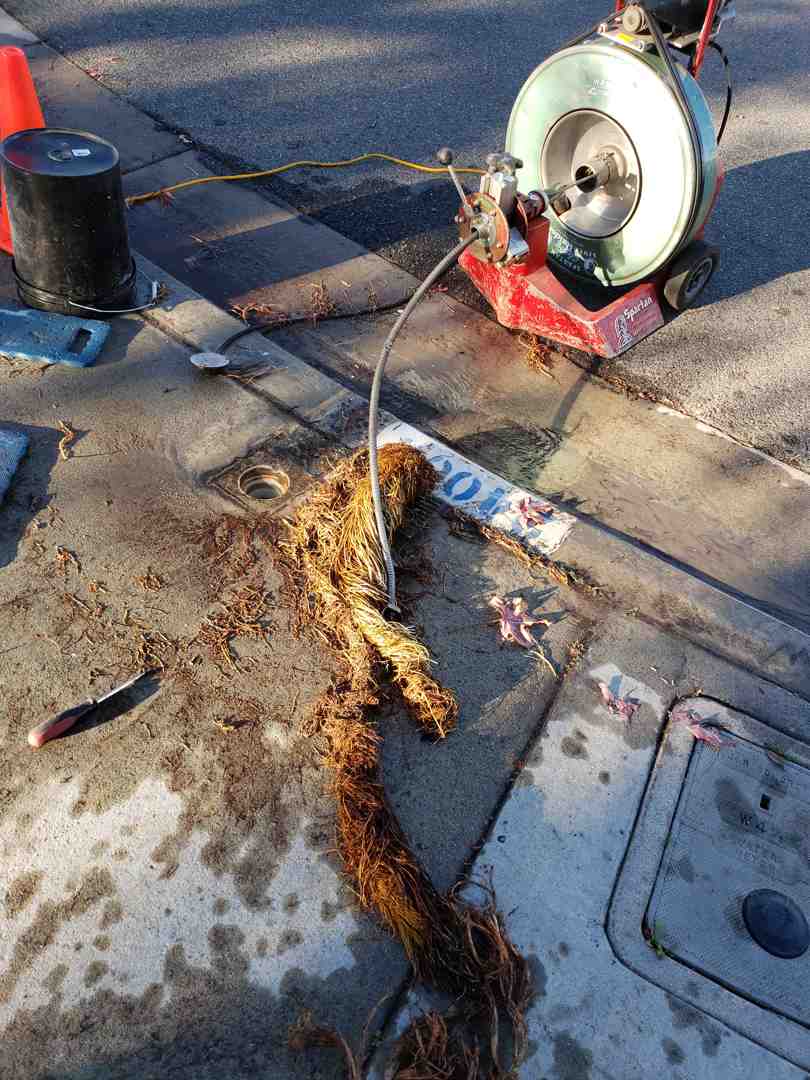
- Tree Root Intrusion: A common and stubborn problem, especially in older clay pipes found in established Huntington Beach neighborhoods. Tree roots seek moisture and can invade pipes through tiny cracks, forming dense masses that can crush or collapse the line.
- Grease and Fat Buildup: Pouring grease, oil, and fats down the drain is a primary cause of clogs. They solidify as they cool, clinging to pipes and trapping debris. Over time, this builds up and creates a complete blockage.
- Flushing Non-Flushable Items: Toilets are only for human waste and toilet paper. Items like paper towels, cotton swabs, feminine hygiene products, and even “flushable” wipes do not break down and are notorious for causing severe blockages.
- Sagging or Broken Pipes: The pipe itself can be the problem. The sandy, shifting soil common in coastal Huntington Beach can cause pipes to sag, creating a “belly” where waste collects. Pipes can also crack or break from ground movement or age, leading to blockages.
- Scale Buildup: In areas with hard water, mineral deposits (scale) can build up inside pipes over time. This narrows the pipe’s diameter, making clogs more likely.
- Other Debris: Foreign objects flushed down the toilet (often by children) or even excessive toilet paper can accumulate and form a blockage.
For more detailed insights into various plumbing issues, you can explore our resources on Drainage Problems.
Emergency Stop! What to Do Immediately When You Suspect a Backup
A clogged main sewer line isn’t just an inconvenience; it’s a potential health hazard and can lead to significant property damage. When you suspect a backup, immediate action is crucial to minimize the mess and mitigate risks.
First and foremost, stop all water use immediately. This means no flushing toilets, no running sinks, no showers, and no using dishwashers or washing machines. Every drop of water you send down a drain when your main sewer line is blocked has nowhere to go but back up into your home. We’ve seen situations where ignoring this simple step led to wastewater flooding homes in our local Huntington Beach communities.
Next, if you’re experiencing a severe backup, turn off your main water supply to the house. This prevents any additional water from entering your plumbing system, giving you a chance to assess the situation without making it worse.
The health hazards associated with raw sewage are serious. Wastewater contains bacteria, viruses, and other pathogens that can cause illness. Exposure can lead to sanitation-related outbreaks, as highlighted in studies like Drainage Systems, an Occluded Source of Sanitation Related Outbreaks. Beyond health risks, the potential for property damage is immense. Sewage can ruin flooring, drywall, furniture, and personal belongings. The cleanup costs alone can be substantial, often exceeding the cost of clearing the initial clog. Ignoring a main sewer line clog can lead to costs upwards of $1,000 to dig up the yard and clear the main sewer line.
When faced with a clogged main sewer line and potential sewage backup, your best course of action is to call for immediate professional help. We offer 24/7 Emergency Plumbing Services and are ready to respond swiftly with our 24/7 Emergency Plumbing Services in Huntington Beach to protect your home and health.
Your DIY Toolkit: What You Can Safely Try Before Calling a Pro
We know that as homeowners, you often want to try a quick fix before calling in the cavalry. For minor clogged main sewer line issues, some DIY methods can be effective, but it’s crucial to understand their limitations and when to stop. Safety should always be your top priority.
| Method | Effectiveness (Main Sewer Line) | Cost | Risk | When to Call a Pro |
|---|---|---|---|---|
| Plunger | Low (for main line) | Low | Minimal | If it doesn’t clear a single drain, it won’t help the main line. |
| Basic Hand Auger | Moderate (for accessible clogs) | Low-Med | Pipe damage if used improperly | If you hit a stubborn obstruction, can’t reach the clog, or experience recurring issues. |
| Baking Soda/Vinegar | Low (for minor grease/scum) | Low | Minimal | Ineffective for solid blockages or tree roots. |
| Chemical Drain Cleaners | Low (not recommended) | Low | Corrosive, pipe damage, health hazard | Almost always. These are not for main lines and can make professional clearing more dangerous. |
| Professional Hydro-Jetting | High | High | Minimal (when done by pros) | When DIY fails, for severe grease, tree roots, or recurring clogs. |
| Professional Camera Inspection | High | High | Minimal | To diagnose the exact cause and location of a clog or pipe damage, especially for recurring problems. |
Finding and Using Your Sewer Cleanout Fitting
Your sewer cleanout is your direct access point to the main sewer line, designed for clearing blockages.
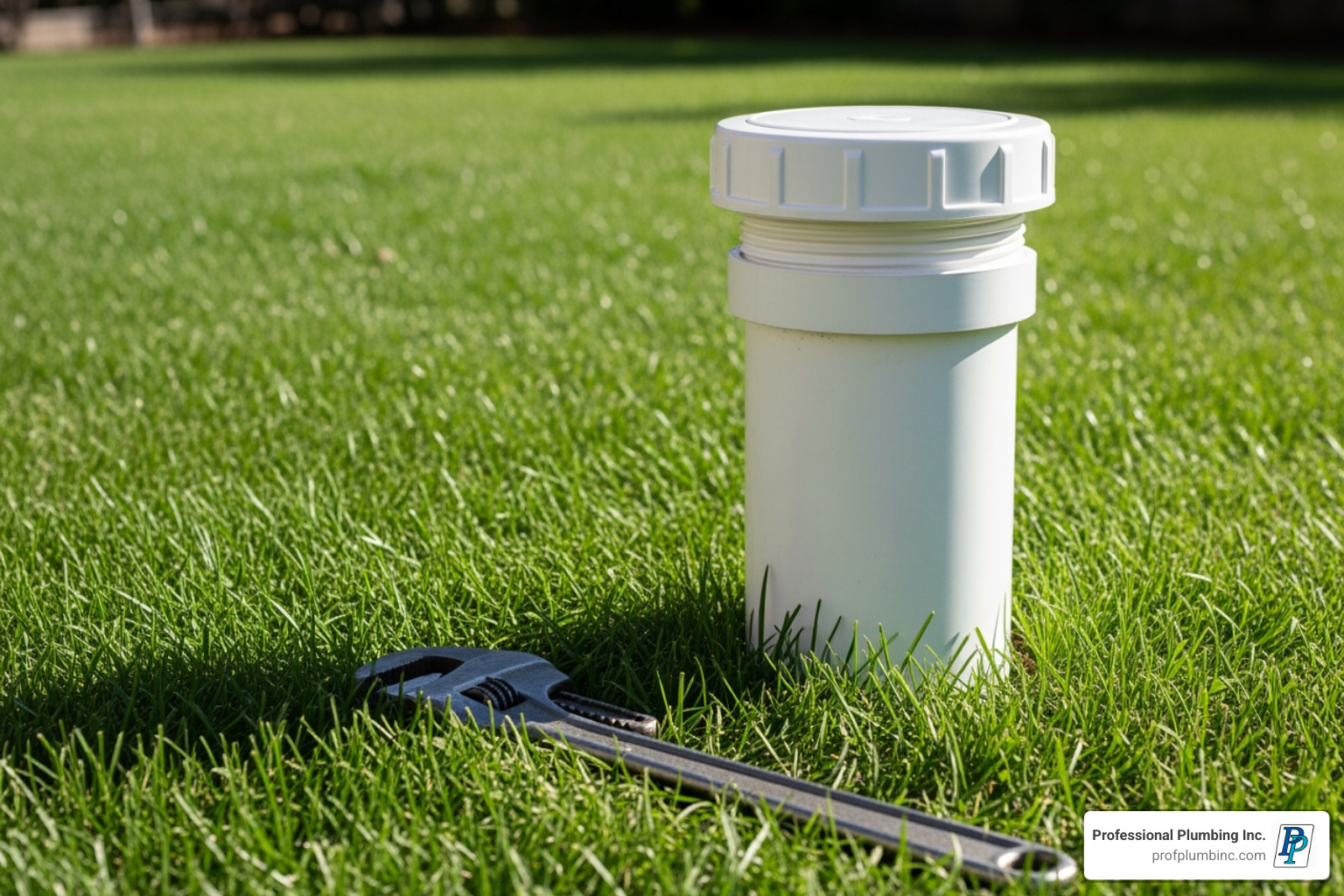
Locating the Cleanout: Look for a capped pipe (usually white PVC or black cast iron) outside near your foundation, in the basement, or in the yard. It might be hidden by landscaping. If you can’t find it, your home inspection report may have its location.
How to Safely Open the Cap:
- Wear protective gear: Heavy-duty gloves and safety glasses are a must. Raw sewage can contain harmful bacteria.
- Prepare for a mess: Lay down a tarp or have a bucket ready, especially if the cleanout is indoors.
- Slowly loosen the cap: Slowly loosen the cap (counter-clockwise) with a pipe wrench. WARNING: If you hear hissing or see water oozing, there’s significant pressure. Tighten the cap immediately and call a professional. Forcing it open can cause a hazardous sewage spill.
- Inspect with a flashlight: Once the cap is off, shine a flashlight into the pipe. If you see standing water, it confirms a clog in the main line.
Attempting to Clear a Minor Clogged Main Sewer Line
If the backup isn’t severe after opening the cleanout, you can try using a plumbing auger (drain snake). Always prioritize safety by following basic [DIY plumbing project](https://www.rent.com/blog/easy-diy-plumbing-fixes/) guidelines.
- Select the right auger: Use a heavy-duty main line auger with a 25-50 foot cable to reach the clog.
- Feed the snake: Feed the cable into the cleanout until you feel resistance, which is likely the clog.
- Break up the clog: Crank the handle to rotate the cable and break up the clog. Gently push and pull to work through the obstruction.
- Retrieve the snake: When the clog clears, slowly retrieve the auger, cleaning the cable as you go.
- Flush the line: Flush the cleanout with a garden hose for several minutes to wash away remaining debris.
- Test your drains: Test your home’s drains. If they still back up, the clog isn’t fully cleared.
- Replace the cleanout cap: Once satisfied, securely replace the cleanout cap.
Limitations of DIY Methods: A basic auger often isn’t powerful enough for tough clogs like tree roots or hardened grease. Chemical drain cleaners are never recommended for a clogged main sewer line; they are ineffective on major blockages and can damage pipes. If your efforts fail or the problem returns, it’s time to call a licensed plumber. For more detailed instructions, you can consult guides like [How to Unclog the Main Household Drain](https://www.lowes.com/n/how-to/unclog-main-drain-line) or [How to Unclog a Sewer Line: A Homeowner’s Step-by-Step Guide](https://www.redfin.com/blog/how-to-unclog-sewer-line/). We also have additional tips at [How to Unclog Your Main Sewer Line](https://www.hometips.com/articles/how-to-unclog-your-main-sewer-pipe.html).
When to Call the Pros: Tackling Tough Clogs and Collapsed Lines
While we encourage homeowners to try simple DIY fixes, there comes a point where professional intervention is essential, especially for a clogged main sewer line. If your DIY attempts fail, clogs are recurring, or you suspect a more serious issue like a broken pipe, it’s time to call us.
Signs that indicate you’re dealing with something beyond a simple blockage include persistent soggy spots or foul sewage odors in your yard, or even sinkholes developing. These are red flags for a damaged or collapsed sewer line. Tree root intrusion, a common issue in many of Huntington Beach’s established, tree-lined neighborhoods, also requires professional tools.
How Professionals Diagnose and Clear a Clogged Main Sewer Line
When you call Professional Plumbing Inc. for a clogged main sewer line, we bring more than just a plunger. Our approach is thorough and designed for long-term solutions.

- Video Camera Inspection: We often start with a video camera inspection. A high-resolution camera is inserted into the sewer line to pinpoint the exact cause and location of the clog—be it roots, grease, or a broken pipe. This also lets us assess the pipe’s overall condition.
- Professional-Grade Augers: For tough clogs, we use powerful, motorized augers. Their specialized cutting heads can bore through dense tree roots and solidified grease that DIY snakes can’t handle.
- Hydro-Jetting: This highly effective method uses high-pressure water (up to 4,000 PSI) to blast away grease, scale, and roots. It doesn’t just clear the clog; it thoroughly cleans the pipe walls, restoring flow.
- Trenchless Sewer Line Repair: If the camera reveals a broken or collapsed pipe, we may recommend trenchless
[Sewer Line Repair](https://profplumbinc.com/garden-grove-plumber/drainage-service/sewer-line-repair/). This modern technique repairs pipes without major excavation, using methods like pipe bursting or CIPP lining that are less invasive and faster.
The costs for professional services vary. Clearing a main drain line can start around $500, while complex repairs requiring digging can range from $60-$200 per foot. We always provide honest, upfront pricing. For clearing specific issues, you can learn more about our [Clear Main Line Stoppage](https://profplumbinc.com/fountain-valley-plumber/drainage-service/clear-main-line-stoppage/) services.
Preventing Future Clogs: Proactive Maintenance Tips
An ounce of prevention is worth a pound of cure. Many clogged main sewer line issues are preventable with simple habit changes and routine maintenance.
Here’s our essential list of items that should never go down your drains or toilets:
- “Flushable” Wipes
- Feminine Hygiene Products
- Paper Towels & Tissues
- Cotton Balls & Swabs
- Dental Floss
- Hair
- Grease, Oils, & Fats
- Coffee Grounds
- Food Scraps
- Medications
- Cat Litter
Proper Grease Disposal: Let grease cool and solidify, then scrape it into the trash instead of pouring it down the drain.
Using Drain Strainers: Use drain strainers in sinks and showers to catch hair and debris. Clean them regularly.
Scheduling Routine Drain Clearing Service: Some buildup is inevitable. We recommend a routine Drain Clearing Service every 1-2 years, especially for older homes or properties with large trees, to prevent major clogs.
Managing Tree Roots: If you have large trees near your sewer line, especially in Huntington Beach, consider professional root management. This can include regular inspections and mechanical root removal to prevent pipe damage.
Frequently Asked Questions about Main Sewer Line Clogs
We often get asked similar questions by homeowners dealing with a clogged main sewer line. Here are some of the most common ones:
Who is responsible for the sewer line – me or the city?
Responsibility depends on the clog’s location. In the City of Huntington Beach, the line is divided:
- Homeowner Responsibility: You are responsible for the “lateral line” that runs from your home to the city’s main sewer connection, which is typically at the property line (often near the sidewalk or curb).
- City Responsibility: The city is responsible for the public sewer main that runs under the street and serves multiple properties.
If only your home is affected, the clog is almost certainly your responsibility. If neighbors have the same issue, it’s probably the city’s main line. You can learn more from resources like [From Street To Sink: Water System Responsibility](https://water.phila.gov/pool/files/customerresponsibilitydiagram.pdf).
Will my homeowner’s insurance cover a sewer line backup?
Coverage for sewer backups varies. Standard policies often exclude it, requiring you to purchase a special “water backup” rider. Even then, coverage may depend on the cause (e.g., sudden damage vs. poor maintenance). Check your policy or contact your provider to understand your coverage. If you have a backup, document all damage with photos and keep detailed expense records for a potential claim.
How often should I have my main sewer line cleaned?
The frequency depends on your home, but here are general guidelines for Huntington Beach residents:
- Every 1-2 Years: This is a good rule of thumb for most homes, especially older ones in Huntington Beach with original clay pipes or properties with large, mature trees. Proactive cleaning prevents major clogs.
- After a Major Clog: Following a significant clogged main sewer line from roots or grease, we recommend a follow-up cleaning in 6-12 months.
- Older Homes: Aging pipes (cast iron or clay) benefit from regular inspections and cleanings to prevent emergencies.
Routine maintenance is like an oil change for your plumbing—it prevents major breakdowns and saves you money in the long run.
Don’t Let a Clog Ruin Your Day – Get Expert Help in Huntington Beach
A clogged main sewer line is more than just an inconvenience; it’s a plumbing emergency that can disrupt your entire household and lead to costly damage if not addressed promptly and correctly. While some minor issues might be resolved with careful DIY attempts, it’s crucial for Huntington Beach residents to recognize the limits of what you can safely and effectively do.
For persistent clogs, recurring backups, or any suspicion of a damaged or collapsed sewer line, professional diagnosis and repair are essential. Our experienced plumbers at Professional Plumbing Inc. use advanced tools like video camera inspections and hydro-jetting to accurately identify the problem and implement the most effective, long-lasting solution. We pride ourselves on honest, upfront pricing and guaranteed workmanship for our neighbors in Huntington Beach.
If you’re in Huntington Beach, we’re here to help. Don’t let a clogged main sewer line ruin your day. For comprehensive Drainage Service that you can trust, contact us today. We’re ready to get your drains flowing freely again!